Our Blog
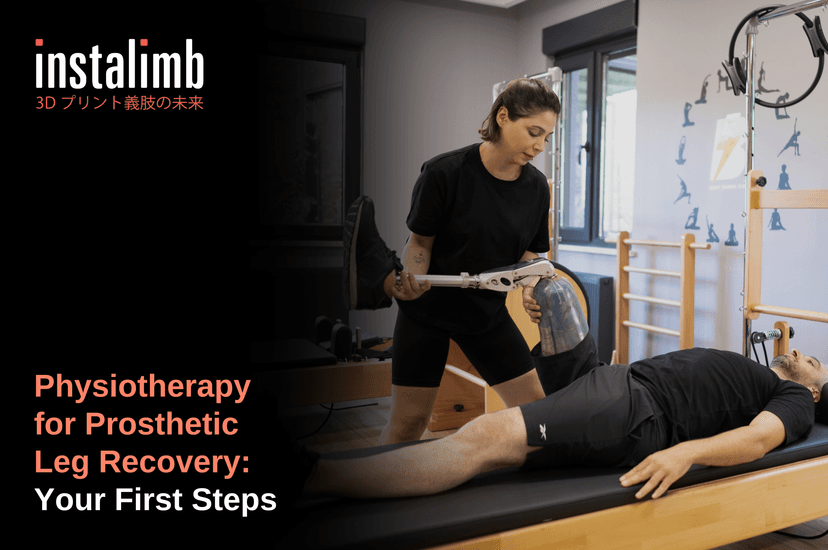
Physiotherapy for Prosthetic Leg Recovery: Your First Steps
8 September is World Physiotherapy Day, a global day that celebrates the physiotherapy profession worldwide. This year's international theme focuses on cardiovascular disease and stroke, not amputee rehabilitation, but the date is still a fitting moment to talk about a corner of physiotherapy that changes lives every single day: helping you walk again after limb loss.
Waking up after amputation surgery, you probably ask yourself the same question everyone does: will I walk normally again? The honest answer is that physiotherapy for prosthetic leg recovery, not the prosthetic limb alone, is what gets you there. Whether you are recovering near Delhi, travelling to our Gurugram clinic, or preparing for a first fitting in Hyderabad, this guide walks you through exactly what your early weeks involve.
What Physiotherapy for Prosthetic Leg Recovery Actually Involves
Physiotherapy for prosthetic leg recovery is a supervised process that rebuilds strength, balance, and walking patterns so a new limb feels natural rather than forced. It typically starts with parallel-bar practice, then gradually adds balance drills, gait correction, and real-world terrain training over several weeks, guided closely by how well the socket fits.
Sessions usually happen two to three times a week at first, tapering as you gain independence. Your physiotherapist and prosthetist work closely together throughout, because a well-built limb still needs a trained body to use it well.
The First Weeks: What to Expect in Early Prosthetic Recovery
Physiotherapy actually starts before your prosthetic limb arrives, typically within 24 to 72 hours after amputation surgery. Early sessions focus on positioning the wound, preventing joint stiffness, and maintaining strength in your residual and sound limb.
In India, trauma causes roughly 70% of lower-limb amputations, with diabetes, peripheral vascular disease, a circulation problem that reduces blood flow to the limbs, and diabetic foot disease accounting for much of the rest, according to a 2023 review in the World Journal of Clinical Cases.
You are far from alone in managing this kind of mobility change. The 2011 Census of India recorded 2.68 crore persons with disabilities nationwide, 2.22% of the population, and many of them are navigating a recovery much like yours.
This pre-prosthetic phase can last six to twelve weeks, and it matters more than you might expect.
Building Strength Before Your First Steps
Your physiotherapist will guide you through desensitising (gently reducing tenderness in) the residual limb, gentle strengthening, and exercises that protect your joints from stiffening while you heal. This groundwork determines how quickly you progress once a socket is ready. You may also find it helpful to understand [coping with grief after amputation], since your emotional and physical readiness tends to move together.
Setting a Realistic Pace, Not Comparing to Anyone Else
Progress is rarely a straight line, and it should never be measured against someone else's timeline. Your prosthetist and physiotherapist will assess your [K-level mobility classification], which describes your expected mobility potential and shapes realistic goals for your recovery. Slower progress often reflects age or health conditions, not lack of effort.
How Socket Fit Shapes Your Gait Training Progress
Gait training, the process of relearning a smooth, symmetrical walking pattern, only works if your socket fits precisely, whether you have a below-knee (transtibial) or above-knee (transfemoral) amputation. A socket that shifts even slightly forces your body to compensate, and those compensations can undo weeks of hard-won progress.
At Instalimb, we have designed over 500 prosthetics across Delhi, Hyderabad, Bangalore, Mumbai, and Vizag, and the pattern is consistent: socket precision changes gait training outcomes.
Instalimb's [sub-millimetre digital socket scanning] captures your residual limb to an accuracy of 0.3 to 0.5 millimetres, compared with 2 to 4 millimetres for traditional plaster casting. AI-assisted design then refines the socket geometry to within 1 millimetre, roughly the thickness of a couple of sheets of paper or a small coin.
That level of precision matters for a practical reason: it is what keeps your gait training on track.
Your residual limb's volume changes substantially over the first six to twelve months as post-surgical swelling settles. That is exactly why an interim or test socket is standard practice before any permanent build. A socket that fits today may need adjusting next month, and that is normal, not a setback.
Common Gait Patterns Physiotherapy Helps You Correct
When a socket does not fit well, or when muscles have not yet relearned their new job, your body finds workarounds. These are not signs of failure; they are simply your body solving a problem the wrong way, and they are very treatable. Your physiotherapist learns to spot these patterns early and correct them before they become habits:
-
Hip hiking: lifting the hip to swing the prosthetic leg through, usually because the leg feels too long or the knee will not bend freely.
-
Circumduction: swinging the whole leg outward in an arc instead of stepping straight through, often to avoid catching the toe.
-
Vaulting: rising onto the toes of the sound foot to give the prosthetic leg extra clearance.
If uncorrected, these patterns waste energy and can cause back or hip pain over time. Your physiotherapist retrains the underlying muscles and, where needed, flags the pattern to your prosthetist so the socket or alignment can be adjusted.
A Caregiver's Guide: Supporting Recovery Without Overstepping
Family members often want to help but are not sure how, and that uncertainty is completely normal. The most useful thing you can do is show up consistently: attend sessions when you can, learn the home exercises your physiotherapist prescribes, and gently remind rather than nag.
Johns Hopkins Medicine notes that nearly 41% of amputees experience anxiety, depression, or PTSD during recovery. Emotional support from family carries real weight in that recovery, standing alongside the physiotherapy itself.
Resist the urge to compare your loved one's progress to anyone else's story you have read online. Every residual limb, every socket, and every recovery timeline is different, and comparison usually adds pressure rather than motivation.
Practical support matters too: helping with residual limb skin checks, tracking socket comfort between clinic visits, and celebrating small wins like a first unaided step in the parallel bars. Your steady presence, listening patiently instead of constantly advising, often does as much for their confidence as the exercises themselves.
Staying Motivated: Milestones, Festivals, and Family Moments
Recovery goes faster when it is anchored to something meaningful, not just a chart of exercises. You might set your sights on standing comfortably for the aarti during Ganesh Chaturthi, or on walking confidently through a Diwali gathering with family in the weeks ahead.
These occasions give physiotherapy a purpose beyond the clinic. As your balance improves, your physiotherapist will introduce more real-world challenges, including [walking on uneven terrain] like courtyards, temple steps, and crowded pandals, so festival season does not catch you unprepared.
Small milestones deserve genuine celebration: your first step without support, your first outdoor walk, and your first family function on your own two feet. Each one is worth marking.
Is It the Socket or the Training? When to Ask for Help
If progress has stalled, it is natural to wonder whether the problem is your effort or your equipment. Most often, the real explanation is simpler: your socket no longer fits the way it did at your first fitting.
Watch for signs that point to the socket, not your training. These include new pain in specific spots, redness or skin marks after wearing the limb, and a feeling of pistoning, where the limb moves up and down inside the socket. A sudden return of compensatory walking patterns you had already corrected is another red flag. Raise any of these immediately, not at your next scheduled visit.
Our guide to [socket fit and skin care troubleshooting] covers these warning signs in detail. When in doubt, ask your prosthetist to check the fit before assuming you simply need to try harder.
Frequently Asked Questions
How soon after amputation surgery does physiotherapy start?
Your physiotherapy typically begins within 24 to 72 hours after amputation surgery, well before a prosthetic limb is fitted. Early sessions focus on positioning your wound, preventing joint stiffness, and maintaining strength in your residual and sound limb. This pre-prosthetic phase, often lasting 6 to 12 weeks, builds the foundation for your gait training once a socket is ready.
How long does it take to walk again after a leg amputation?
If you have a below-knee (transtibial) amputation, you will typically begin gait training with a prosthesis 8 to 12 weeks after surgery, once the limb has healed and swelling has reduced. If you have an above-knee (transfemoral) amputation, or you are managing diabetes or vascular disease, you may need longer. Confident, independent walking typically develops over 3 to 6 months, with your timeline varying by socket fit and consistency of practice.
Why does my prosthetic socket feel loose or uncomfortable after a few weeks?
A socket that felt snug at fitting often loosens because your residual limb's volume shrinks as swelling subsides over the following months. This is normal, and it is not a sign of poor effort. However, an ill-fitting socket forces compensatory movements like hip hiking or circumduction, which can undo your gait training progress. Socket adjustments, or a new test socket, is usually all it takes to put things right.
What is the role of a physiotherapist in prosthetic rehabilitation?
Your physiotherapist guides every stage of your prosthetic rehabilitation, from pre-prosthetic strengthening and limb care before a device is fitted, to gait training, balance work, and functional exercises once your prosthesis is in place. They work alongside your prosthetist and wider care team, adjusting your plan as your socket fit and mobility improve.
Can you try a prosthetic socket fitting before committing to a permanent limb?
Yes. Many Indian prosthetic providers, including Instalimb, offer a test-fitting socket, often built using 3D printing and precise digital design, so you can try the fit, comfort, and walking pattern before committing to a final custom prosthesis.
This matters because only an estimated 5% of amputees in India currently have access to a prosthetic device. Getting the fit right before you commit helps you and your physiotherapist agree the socket truly matches your gait and your goals.
Conclusion
Recovery after amputation is not measured in days, but in the small, steady steps that add up to a life you recognise as fully your own. With the right physiotherapy, a precisely fitted socket, and family beside you, walking confidently again is not a distant hope; it is simply the next milestone in front of you. Whether you are just weeks out from surgery or wondering why your gait has not improved yet, support is closer than you think, often just a conversation with your prosthetist or physiotherapist away.
Check out our blog section for more!

Sensory Feedback Prosthetic Leg: Could You Feel the Ground?
You know the moment: a wet footpath in late September, one loose paving stone and half a second when you cannot be sure your foot has landed flat. If you walk with a prosthetic limb, you have probably wondered whether technology will ever hand back that quiet certainty of feeling the ground beneath you. That question now has a name in research labs around the world, and it is the sensory feedback prosthetic leg.
What Is Sensory Feedback in a Prosthetic Leg?
Sensory feedback in a prosthetic leg means that sensors on an artificial foot or knee connect to your nervous system through a surgically implanted nerve interface, so your brain perceives ground contact, pressure, and movement rather than relying solely on motor control. Today this remains experimental technology, tested only in small international clinical trials.
Think of it like a phone line that was cut during amputation. Your prosthetic leg can already receive instructions from you. The research question is whether it can ring you back.
That two-way conversation is what separates a sensory-feedback system from every prosthesis available in clinics today.
The Global Research: How Close Are We, Really?
The ETH Zurich Nerve-Linked Leg Trial
A 2025 Nature Medicine study led by ETH Zurich researchers found that above-knee amputees using a sensory-feedback bionic leg walked faster with lower oxygen consumption than with a standard prosthetic, and that one participant reported complete elimination of phantom limb pain while a second saw an approximate 80% reduction.
The team, led by Stanisa Raspopovic, connected sensors in the prosthetic foot to nerves in the residual limb. Walking felt less like concentration and more like walking. If phantom limb pain is part of your daily reality, speak to your clinical team about [managing phantom limb pain] rather than waiting on research.
Brain-Computer Interface Breakthroughs in the US
Separately, teams at the University of Pittsburgh and UChicago Medicine have been stimulating the brain directly. In January 2025, they showed that paired electrodes produce clearer, better-localised touch sensations. Carefully orchestrated electrode patterns can even recreate the feeling of an object's edge or something sliding across the skin.
That is remarkable work. It is also, for now, research conducted with a handful of volunteers wired to laboratory equipment.
What the Latest Research Review Actually Says
Here is the honest part. As of 2025, the tactile sensations these neuroprosthetic systems induce are not yet consistently stable. Nor do people perceive them as naturalistic over time or across different subjects.
That assessment comes from a peer-reviewed review in the journal Biomimetics. In practical terms, it means the technology remains confined to research trials rather than routine clinical use.
Sensory-feedback prosthetics are genuine science, but they are not yet a product you can be fitted with anywhere in the world.
Why India's Amputee Reality Is Different
Trauma-Led Amputations and Everyday Terrain
In India, traumatic injury causes an estimated 73.1% of major limb amputations. Around 90.8% affect the lower limb, and 81.3% occur in men. Those figures come from a 2026 systematic review of 7,272 patients across 14 Indian studies, published in the International Journal of Community Medicine and Public Health.
That profile matters. Most Indian amputees are younger, working and moving daily across terrain no laboratory floor resembles: broken kerbs, monsoon-slicked lanes, unlit stairwells, and crowded market gullies. Your need is not a futuristic sensation. It is dependable footing tomorrow morning.
Diabetes, Nerve Damage and Sensation Loss Before Amputation
For many families, sensation was lost long before surgery. Diabetic peripheral neuropathy, nerve damage caused by prolonged high blood sugar, quietly removes protective feeling from the feet. A small wound then goes unnoticed until it becomes serious.
Researchers recently pooled 18 Indian studies covering 55,988 people with diabetes. They found diabetic foot ulcer prevalence at 6.2% nationally, rising to 9.5% in East India. The analysis appeared in the International Journal of Diabetes in Developing Countries in September 2024. If this is your family's story, it helps to understand the link between diabetes and amputation.
Should You Wait for This Technology Before Getting Fitted?
No. And this is worth saying kindly but clearly.
Consider what waiting actually involves:
-
Timeline. Trials of two to a few participants typically need years of larger studies before approval anywhere.
-
Surgery. These systems require an implanted nerve interface, not a device you simply strap on.
-
Access. Even after approval, availability begins in a small number of specialist research centres abroad.
-
Your body, meanwhile. Muscle strength, balance reflexes and confidence all decline during long periods without walking.
Every month spent waiting for tomorrow's technology is a month of walking, working and gait training you do not get back. The strongest position to be in when new technology arrives is already walking well.
The Foundation Any Future Sensory Tech Will Need
Why Fit Precedes Feeling
A prosthetic socket is the load-bearing interface between your residual limb and your artificial leg. Any future sensory-feedback system would have to build on that same structure. Sensors and nerve interfaces under research today simply cannot function on a poorly fitted base.
Feeling Grounded Today, Through Gait Confidence
You will not feel temple marble through your prosthesis this year. You can, however, feel steadier on it. A socket that grips accurately transmits load cleanly through your residual limb, and your body reads that as stability.
Walking with Confidence This Festive Season
Navratri and Dussehra arrive in early October, and with them come garba circles, temple steps, stone courtyards and long evenings on your feet. It is a footwork-heavy season, landing just as the monsoon loosens its grip on North and West India.
A few things help:
-
Practise turning and pivoting before the celebrations, not during them.
-
Choose the outer edge of a garba circle for your first evening.
-
Watch for wet marble near temple entrances, which is far slipperier than dry stone.
-
Build in rest breaks rather than pushing through discomfort.
Our guide covers the rest, including [tips for walking on uneven terrain]. Confidence is not a feeling you wait for; it is one you build, one well-supported step at a time.
Frequently Asked Questions
1. What is sensory feedback in a bionic leg, and how does it work?
Sensory feedback in a bionic leg means sensors built into the artificial foot or knee detect information like ground contact and pressure, then relay it to the wearer's nervous system through a surgically implanted nerve interface. In a 2025 Nature Medicine study led by ETH Zurich researchers, this connection let above-knee amputees walk faster and with lower oxygen consumption than a standard prosthetic leg allowed.
2. Can amputees in India get a prosthetic leg with real sensory feedback today?
Not for routine use. Sensory-feedback bionic legs are still in the research-trial stage, tested on small groups of amputees mainly through university-led studies such as the ETH Zurich trial published in Nature Medicine in 2025. A 2025 review of the field found induced tactile sensations are not yet consistently stable or naturalistic across patients, so no clinic, in India or globally, currently offers this as standard care.
3. Can a sensory-feedback prosthetic help with phantom limb pain?
Early trial results are encouraging but limited. In the ETH Zurich sensory-feedback study, one above-knee amputee using the nerve-connected prosthetic leg reported complete elimination of phantom limb pain, and a second participant saw roughly an 80% reduction. These findings come from a two-person trial, so they point to a promising research direction rather than a proven treatment available to amputees generally.
4. Why do people with diabetes lose feeling in their feet, and how is that related to amputation?
Diabetic peripheral neuropathy is nerve damage from prolonged high blood sugar that gradually destroys protective sensation in the feet, so injuries, pressure sores and infections can go unnoticed until they worsen. This is a leading precursor to diabetic foot ulcers, which affect an estimated 6.2% of people with diabetes in India, and untreated ulcers are a major pathway to non-traumatic lower-limb amputation.
5. If sensory-feedback prosthetics are not available yet, what can help me feel more confident and connected while walking?
A precision-fit prosthetic socket is what is available today. While sensory-feedback prosthetics remain experimental, a socket built to fit the residual limb with millimetre-level accuracy improves stability, balance and gait confidence on uneven ground immediately.
Key Takeaways
-
Sensory-feedback prosthetic legs exist in research trials in Switzerland and the United States, not in clinics.
-
The ETH Zurich results on walking speed, effort and phantom limb pain are genuinely promising, but they come from a very small study.
-
In India, most amputations follow trauma and affect the lower limb, which makes everyday terrain, not laboratory sensation, the immediate challenge.
-
A precision-fit socket is the foundation any future sensory technology will be built upon, so getting fitted well today prepares you for whatever comes next.
You are not behind, and you are not waiting for permission to walk well. The science will keep moving, and when it arrives, it will arrive on top of the same thing that helps you most right now: a socket that fits your body exactly as it is today.
Check out our blog section for more!
Pregnancy After Amputation: A Complete Guide for India
If you are pregnant or planning a family after limb loss, three questions probably keep circling: will my socket still fit, will my doctors and family take my pregnancy seriously, how will I carry my baby once she arrives? Pregnancy after amputation is one of the least discussed subjects in Indian prosthetic care, even though women in Delhi, Mumbai, Hyderabad and every city in between are living it right now, mostly without a single local resource to guide them.
This guide is India's first dedicated resource on the topic. It walks you through what genuinely changes in your residual limb trimester by trimester, what delivery and the postpartum weeks look like, and how to keep moving safely while your body shifts around you.
Can You Have a Safe Pregnancy After Amputation?
Yes. Clinical research shows most women with limb loss continue prosthetic use throughout pregnancy, with 14 of 16 women in one 2025 study staying mobile on their prosthesis. Expect socket fit to change as your residual limb swells, especially in the second and third trimesters, so regular prosthetist check-ins matter.
That finding comes from an April 2025 survey published in Prosthetics and Orthotics International, which tracked 31 pregnancies among women with limb loss. What India lacks here is data, not capability: no national registry from ICMR or the Health Ministry currently tracks pregnancy outcomes among Indian amputees, which is exactly why so many women plan a pregnancy with no local reference point at all. Your amputation is a mobility variable to manage, not a medical reason to avoid motherhood.
How Pregnancy Affects Your Residual Limb and Socket Fit
Think of your socket like a well-fitted shoe. Change the shape of the foot even slightly and suddenly the whole thing rubs, slips or pinches. Pregnancy changes that shape more than once.
Trimester 1: Small Shifts You Feel Before You See Them
Hormones soften your ligaments, fluid balance changes and fatigue arrives early. Many women notice their walking pattern feels subtly “off” long before a bump shows, and the sound-side hip and knee quietly start taking extra load.
Trimester 2: Swelling, and a Socket That No Longer Sits Right
This is when residual-limb swelling becomes the main story. Fluid retention commonly alters the volume of a transtibial (below-knee) or transfemoral (above-knee) residual limb, and in everyday clinical experience that volume can fluctuate over short periods, so a socket that felt perfect at breakfast may press uncomfortably by evening. Across the full pregnancy, six of the 16 women in the 2025 survey needed a completely new prosthetic fitting, so a refit partway through is common rather than a sign that something has gone wrong.
Trimester 3: New Weight, New Balance
Your centre of gravity moves forward and upward, which changes how your prosthesis loads with every step. Across pregnancy overall, the same survey found that 64% of women reported lower back pain and roughly 38% experienced a fall, and shifting third-trimester balance is a major contributor to that risk. Residual-limb volume changes throughout pregnancy and again after childbirth, which is why amputee mothers often need more than one socket adjustment between the first trimester and the postpartum period.
Staying Mobile Through Each Trimester: Practical Guidance
Tell your prosthetist you are pregnant as early as you are comfortable doing so, then book check-ins roughly every six to eight weeks rather than waiting for pain to force the appointment. Fit problems caught early are usually solved with liner changes, socket modifications or a fresh scan; fit problems ignored for a month become skin breakdown.
At Instalimb, we have designed over 500 prosthetics across Delhi, Gurugram, Hyderabad, Bangalore, Mumbai and Vizag, and our 3D-CAD and 3D-printing workflow lets us redesign a socket iteratively to 1mm-level precision. That matters during pregnancy, because your limb is not going to hold one shape for nine months.
A few practical habits protect you:
-
Footwear and balance. Choose flat, closed, non-slip footwear on both feet, keep floors dry and use a cane or walker without embarrassment in the third trimester. Ask your physiotherapist about [stretches that maintain hip and knee mobility], which matter more as your posture changes. World Physical Therapy Day on 8 September is a good annual prompt to book that session.
-
Nutrition. Ask your obstetrician about [supporting bone and skin health during pregnancy], since your skin is now doing harder work inside the socket.
-
Monsoon and humidity. Indian humidity plus pregnancy sweating is a genuine fit problem. Damp liners slip, and slipping causes friction sores. Practise a strict routine of drying, cleaning and rotating liners, and read our guide to [managing socket sweat] before the rains set in.
Delivery and Postpartum: What Indian Mothers Should Know
Both vaginal and caesarean deliveries are possible after amputation, and your amputation alone does not decide the route. The 2025 survey reported a caesarean rate of 45% among its participants, so it is worth discussing positioning, anaesthesia and post-operative mobility with your obstetrician well before your due date.
Most women get back on their prosthesis quickly: 64% resumed prosthetic use within days of delivery. Do not assume that will be you, though. Nearly 40% had no backup mobility plan, which is a risky gap if swelling or a caesarean recovery slows you down. Arrange a cane, walker or wheelchair in advance, so it is a spare tyre you never needed rather than an emergency purchase.
Mental health deserves the same planning. That survey recorded postpartum depression in 25% of participants, roughly three times the national average of 8.7%. Broken sleep makes everything harder, so our tips for [better rest during pregnancy and postpartum fatigue] are worth reading early. Speak up if you feel low. It is a clinical symptom, not a character flaw.
Caring for Your Baby With a Prosthetic Leg
The first weeks are about stable positions, not heroics. Practise picking up, settling and soothing your baby while seated, with your back supported and your prosthesis planted, before you attempt it while walking across a room. Pivot with your whole body instead of twisting on your socket.
For feeding, choose positions that keep your hips level and your residual limb unloaded: a chair with arms, a firm cushion under the baby and your feet flat rather than tucked under you. Side-lying feeding takes the socket out of the equation altogether during night feeds.
Here Indian families have a real advantage. Traditional postpartum confinement practices and joint-family caregiving mean you may have grandparents, sisters-in-law and aunts around for weeks, exactly when your balance and socket fit are still settling. Accepting that help is a mobility strategy, not a failure. Ask specifically for the tasks that involve carrying the baby on stairs or across wet floors, and get your socket professionally rechecked before you return to full-time standing childcare.
Addressing the Doubts: What Family and Community Often Get Wrong
You may hear that pregnancy will “damage” your remaining limb, that delivery is too dangerous or that a mother who wears a prosthesis cannot raise a child. None of that is supported by evidence.
What the evidence does show is a care gap, not an ability gap. Women with disabilities in India, most commonly locomotor disability, receive significantly fewer antenatal care visits than women without disabilities, according to Annual Health Survey data covering more than 140,000 married women in Rajasthan. The 2014 SIDE Study in BMC Women's Health found women with disabilities in South India were far less likely to report a pregnancy at all, alongside much higher odds of depression. The problem is how the system treats these women, not what their bodies can do.
When to See Your Prosthetist: A Pregnancy Checklist
Book an appointment when any of these appear:
1. Your socket feels tight, loose or uneven, or you notice pistoning (where your limb slides up and down inside the socket as you walk).
2. You see redness, blisters or skin that stays marked more than 20 minutes after removal.
3. You have had a fall, a near-fall or new instability on stairs.
4. Lower back, hip or sound-side knee pain is increasing.
5. Your liner slips repeatedly in humid weather.
6. You are entering your third trimester, even if nothing hurts.
7. You have delivered and swelling has started to settle.
Instalimb provides iterative, 1mm-level socket customisation and test-fitting for below-knee and above-knee amputees across Delhi, Gurugram, Hyderabad, Bangalore, Mumbai and Vizag, a process suited to the changing residual-limb shape that pregnancy and postpartum recovery bring.
Frequently Asked Questions About Pregnancy and Amputation
Can a person with a leg amputation have a normal pregnancy and delivery?
Yes, most women with lower-limb amputation can have a safe, healthy pregnancy and delivery. A 2025 national survey tracking 31 pregnancies among 16 women with limb loss found the majority continued using their prosthesis and stayed mobile throughout, although socket fit, balance and lower back comfort typically need closer monitoring and adjustment as the pregnancy progresses, especially in the second and third trimesters.
Does pregnancy affect how a prosthetic leg or socket fits?
Yes. As residual-limb tissue swells and body weight and posture shift during pregnancy, an existing socket can become tight, loose or uneven, causing rubbing, pain or reduced stability. Many amputee mothers need at least one socket adjustment during pregnancy and a further refitting after delivery, once swelling subsides and the limb settles closer to its pre-pregnancy shape and volume.
Is it safe to keep wearing a prosthetic leg during pregnancy?
For most women, continuing to wear a well-fitted prosthesis through pregnancy is safe and often better for overall mobility and independence than stopping altogether. Balance shifts as pregnancy progresses, so falls become more common: around 38% of amputee mothers in one survey reported a fall during pregnancy. This makes regular socket checks, supportive footwear and open communication with both an obstetrician and a prosthetist important.
How soon can an amputee walk on her prosthetic leg after giving birth?
Many women resume prosthetic use within days of giving birth, though exact timing depends on delivery type, residual-limb swelling and how the socket fits at that stage. One 2025 survey found 64% of women resumed prosthetic use within days postpartum, but the same group reported a 45% caesarean rate and a postpartum depression rate roughly three times the national average, both of which can affect recovery pace.
How does an amputee mother safely carry and care for her baby postpartum?
Carrying and caring for a baby safely takes practice, since balance, socket fit and stamina are all still recovering in the weeks after delivery. Many new mothers find it helpful to arrange a backup mobility plan, family support, a cane or a wheelchair for the early postpartum weeks, practise seated or supported holds first and get the socket professionally refitted before returning to full-time standing childcare.
Conclusion
You are not choosing between your mobility and motherhood. With a prosthetist who adjusts your socket as your body changes, an obstetrician who takes you seriously and family who carry the baby down the stairs on a wet monsoon morning, pregnancy after amputation becomes what it should be: an ordinary, hopeful chapter with a few extra appointments in it.
Check out our blog section for more!


