Our Blog
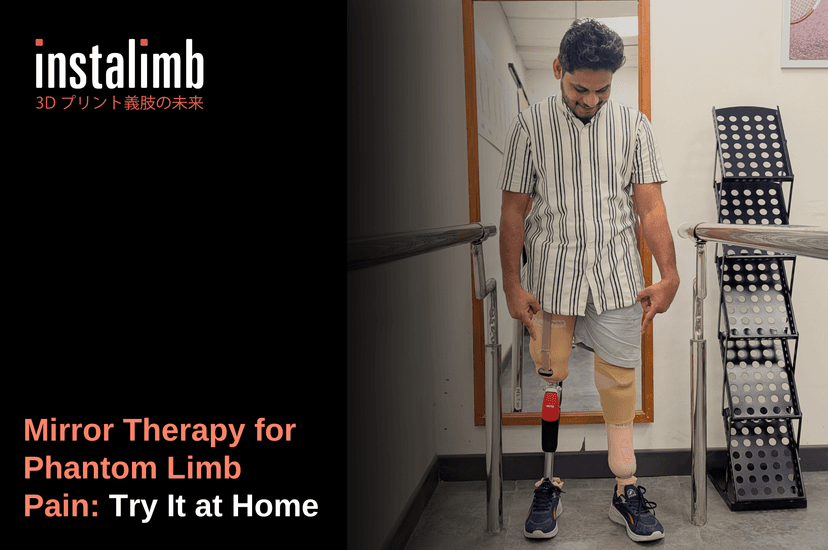
Mirror Therapy for Phantom Limb Pain: Try It at Home
Your foot itches, but there is no foot to scratch. If you have felt this since your amputation, you are dealing with phantom limb pain, and you are far from alone. Mirror therapy for phantom limb pain is a simple, drug-free technique you can start today, using nothing more than a mirror and ten quiet minutes.
What Is Phantom Limb Pain, and Why Does It Happen?
Phantom limb pain is the sensation of pain, cramping, burning, or itching that seems to come from a limb that is no longer there. It happens because your brain keeps a detailed body map, built over decades, and that map does not update the moment a limb is removed. Nerve endings at the residual limb keep firing signals, and the brain, still expecting input from a foot or hand, interprets the confusion as pain. Common triggers include an ill-fitting socket, cold weather, stress, and pressure on a nerve bundle called a neuroma. At Instalimb, our team often sees patients whose phantom pain flares up right alongside socket discomfort, which is one reason a precise, well-fitted socket matters as much for comfort as for walking.
Phantom limb pain is nerve and brain-based pain felt in a limb that has been amputated. It affects a large share of amputees, especially in the first year, and is caused by the brain's body map continuing to expect signals from the missing limb even after surgery. It is treatable, not permanent by default.
Mirror Therapy for Phantom Limb Pain: How the Trick Works
Mirror therapy for phantom limb pain works on a simple idea: sight can override a confused nerve signal. A mirror is placed so the reflection of your intact limb appears exactly where the missing limb would be. When you move the intact limb, your brain sees two limbs moving in sync, even though only one exists. It is a bit like a GPS that trusts a visual landmark over a shaky signal; once the brain sees the moving limb, it recalculates the body map and often eases the pain signal. First described for arm amputees in the 1990s, the technique has since been adapted for legs, with amputees at Instalimb clinics in Delhi, Hyderabad, and Mumbai often trying it as a first, no-cost addition to their care plan.
Try Mirror Therapy at Home: A Step-by-Step Routine
You do not need special equipment, just a plain mirror and a quiet corner. Here is a routine physiotherapists commonly recommend:
-
Sit at a table with a full-length mirror placed perpendicular to your body.
-
Position the mirror so the reflection of your intact limb appears where the missing limb used to be.
-
Look only at the reflection, never at the residual limb itself.
-
Slowly move your intact limb through simple actions: point, flex, circle the ankle or wrist, wiggle the toes or fingers.
-
Practice for 10 to 15 minutes, once or twice daily, for at least two to four weeks before judging results.
-
Keep a one-line pain diary each night, noting intensity from 0 to 10, so you can spot real patterns instead of guessing.
Consistency over four weeks matters more than any single session, so resist the urge to judge the technique after just two or three tries.
When Virtual Reality Takes Mirror Therapy Further
Standard mirror therapy has one limitation: it only works if you still have one matching limb to reflect. For bilateral amputees, or people who find a physical mirror awkward to set up, virtual reality (VR) and augmented reality (AR) versions recreate the same illusion digitally. A headset or screen shows an avatar limb moving in real time, driven by sensors on the residual limb or the sound limb, giving the brain the same visual proof a mirror provides without needing symmetry.
Virtual reality does not replace mirror therapy; it extends it, particularly for above-knee amputees who struggle to angle a physical mirror correctly. Some rehabilitation centres in India have started piloting VR-based pain therapy alongside standard physiotherapy, and Instalimb's own digital design process, built on 3D-CAD scanning and AI-based fit prediction, reflects the same broader shift toward screen-based, precision tools in prosthetic care.
What the Research Actually Shows
The evidence on mirror therapy for phantom limb pain is real but mixed, and it is worth knowing this before you try it. A randomised controlled trial published in PubMed found that mirror therapy significantly reduced pain scores in upper-limb amputees compared to covered-mirror and mental visualisation control groups in earlier work, though the larger multicentre PACT study found no significant difference at four weeks. It did note that mirror therapy shortened the total duration of phantom pain over six months compared to controls.
In India, a study of lower-limb amputees at a tertiary care hospital found phantom limb pain affecting a large majority of patients in the first year, underscoring how common this experience is, not a sign that something has gone wrong.
Mirror therapy carries no real medical risk, so it is worth trying even where evidence is mixed, ideally alongside, not instead of, guidance from your prosthetist or pain specialist.
When a Prosthetist Visit Matters More Than a Mirror
Mirror therapy helps many people, but it is not a fix for every kind of pain. If your phantom pain flares up specifically when you put on your prosthetic, worsens with certain positions, or comes with visible redness or swelling at the residual limb, the cause may be mechanical, not neurological.
Persistent pain despite therapy often points to a socket fit problem, not a mystery. A socket that shifts even slightly can irritate nerve endings and trigger the exact burning or shooting sensations people mistake for untreatable phantom pain. At Instalimb, we have designed over 500 prosthetics across Delhi, Gurugram, Hyderabad, Bangalore, Mumbai, and Vizag, using 1mm-level socket customisation to correct exactly this kind of nerve irritation, and we offer a free test socket fitting so you can check whether your current socket is the real source of the pain before assuming it is permanent.
Frequently Asked Questions
How long does mirror therapy take to reduce phantom limb pain?
Most people need two to four weeks of consistent practice, about 10 to 15 minutes once or twice a day, before noticing a real change. Some studies show pain intensity dropping within the first two weeks, while others find the biggest benefit is a shorter overall duration of pain episodes over several months, not instant relief.
Does mirror therapy work for below-knee and above-knee amputees equally?
Mirror therapy was first studied in arm amputees, but it has since been adapted for both below-knee and above-knee leg amputations. Below-knee amputees often find it easier to angle the mirror correctly, while above-knee amputees may get better results from a seated setup or a virtual reality version instead.
Is virtual reality phantom limb pain therapy available in India?
Yes, a small but growing number of rehabilitation centres and prosthetic clinics in India are piloting VR and augmented reality-based phantom limb pain therapy alongside standard physiotherapy. Availability varies by city, so ask your prosthetist or rehabilitation team whether a VR-based option exists near you.
Can I do mirror therapy without a prosthetist's supervision?
Yes, mirror therapy is safe to try on your own since it uses only visual feedback and simple limb movements. That said, tell your prosthetist or doctor you are trying it, especially if pain is new, worsening, or paired with swelling or redness, since these can point to a fit problem instead.
Does mirror therapy replace pain medication for amputees?
No, mirror therapy is a complementary technique, not a replacement for medication prescribed by your doctor. Many amputees use it alongside standard pain management, and some are able to reduce their reliance on medication over time, but any change in medication should be discussed with your physician first.
The Bottom Line
Phantom limb pain can feel strange and isolating, but it is common, explainable, and often manageable with simple tools you already have at home. Mirror therapy will not work the same way for everyone, and that is normal, not failure. Pair it with an honest check on your socket fit, patience over several weeks, and support from people who understand the journey, and you give yourself the best chance at real relief.
Check out our blog section for more!

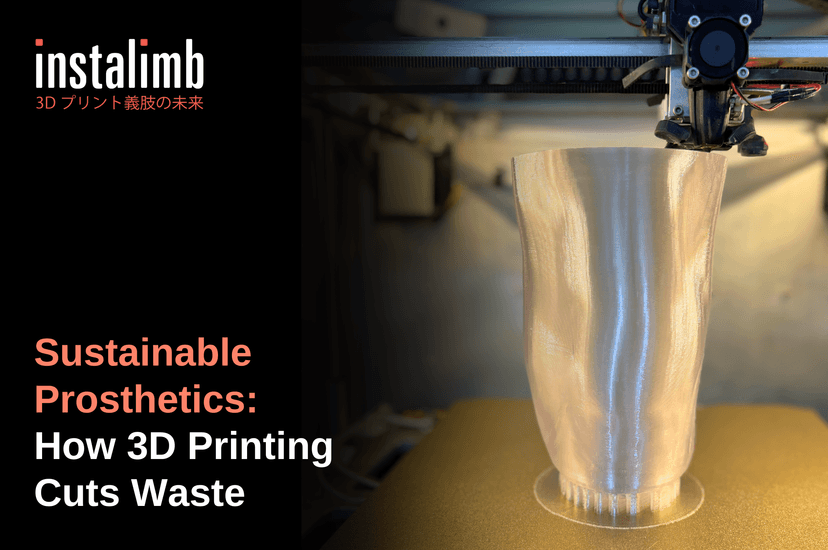
Sustainable Prosthetics: How 3D Printing Cuts Waste
When you picture a new artificial leg, you probably think about comfort, price, and how soon you can walk again. You may not think about the planet, yet the way a limb is made leaves a real environmental footprint. Sustainable prosthetics are quietly becoming one of the biggest shifts in the industry, and at our clinics in Delhi, Bangalore, and Hyderabad, more patients than ever are asking about them.
What Makes Sustainable Prosthetics Different?
Sustainable prosthetics are limbs designed and built to minimise environmental harm, mainly by cutting material waste, energy use, and transport emissions. 3D printing leads the way because it adds material layer by layer instead of carving it away, so a socket uses only what it needs. The result is a cleaner process and, very often, a lower price.
Here is the simple contrast. Traditional prosthetics are made by shaping and cutting, which throws away a lot of raw material along the way. 3D printing works the opposite way, building the exact shape from the ground up. That single difference changes the whole environmental story.
The Hidden Waste in Traditional Prosthetics
The old way of making a limb is surprisingly wasteful. A typical process involves several steps that each leave something behind:
-
Plaster casting: technicians wrap the residual limb in plaster to capture its shape, and those single-use moulds are thrown away after one use.
-
Multiple physical fittings: each remake means more plaster, more raw material, and more discarded trial parts.
-
Warehousing: standard-size components sit in large storage facilities, consuming energy and space.
-
Shipping: heavy devices and parts travel long distances, adding to the carbon footprint before they even reach you.
Add it all up and a single conventional limb can leave a long trail of waste behind it.
How 3D Printing Slashes Material Waste
This is where the numbers get striking. Research on additive manufacturing shows that building objects layer by layer generates roughly 70 to 90 percent less material waste than traditional subtractive methods that cut material away.
A 3D printer lays down only the material the socket actually needs, so the leftover scrap can be as low as around 5%. A better first fit also means fewer remakes, and fewer remakes means far less waste over the life of your device.
At Instalimb, the world's first 3D-printed prosthetic leg and socket provider, a digital scan feeds an AI-guided design that prints with 1mm-level precision. The design lives as a digital file, so there is no plaster mould to throw away and no guesswork to redo.
Beyond Waste: A Smaller Carbon Footprint
Cutting scrap is only the start. Digital, on-demand production shrinks the footprint in other quiet ways:
-
Made to order: limbs are printed when they are needed, so there are no giant warehouses full of unused stock.
-
Local production: a design file can travel instantly, so the limb is made close to you instead of shipped across the world.
-
Greener inputs: the industry is steadily moving toward bio-based and recycled inputs that lower the carbon footprint further.
-
Second life for old limbs: retired prosthetics can often be refurbished or donated rather than dumped.
Together, these steps turn a prosthetic from a high-waste product into a lean, made-to-measure device.
Sustainability You Can Feel in India
For patients in India, sustainable prosthetics are not a distant idea. Because a 3D-printed limb is built from a digital file, it can be produced locally instead of imported, which cuts both shipping emissions and cost.
At Instalimb, we have designed over 500 prosthetics across Delhi, Gurugram, Hyderabad, Bangalore, Mumbai, and Vizag using Japanese 3D printing technology. Our free test socket fitting is, quietly, one of the greenest features we offer, because getting the fit right the first time means we do not waste materials on repeated remakes.
Why This Matters for Everyone
The stakes are bigger than one clinic. The World Health Organization estimates that 35 to 40 million people worldwide need prosthetics and orthotics services, and only about 1 in 10 people who need assistive products can access them.
Meeting that need the old, wasteful way would strain the planet. Meeting it with efficient, low-waste 3D printing is how mobility can scale without a heavy environmental price.
Frequently Asked Questions
Are 3D printed prosthetics really more eco-friendly?
Yes. 3D printed prosthetics are generally more eco-friendly because additive manufacturing builds a limb using only the material required, generating far less scrap than traditional cutting and casting. On-demand, local production also reduces warehousing and shipping emissions, which shrinks the overall carbon footprint of each device.
How much material waste does 3D printing save?
3D printing can cut material waste by roughly 70 to 90 percent compared with traditional subtractive methods, according to research on additive manufacturing. Because a printer adds material layer by layer, leftover scrap can be as low as around 5 percent, which also helps lower the cost of the finished limb.
What happens to old prosthetic legs?
Old prosthetic legs do not have to become landfill. Many components can be refurbished, reused, or donated to patients in need, and parts of the device can often be recycled. Ask your clinic about donation and recycling options when you upgrade to a new limb.
Does a sustainable prosthetic leg cost more?
Usually not. In fact, sustainable 3D-printed prosthetics often cost less, because using only the material you need and skipping repeated remakes saves money as well as resources. At Instalimb, efficient digital design keeps both waste and price down while maintaining a precise, comfortable fit.
Conclusion
Choosing a prosthetic leg is a deeply personal decision, and it is good to know that the smart choice for your comfort and budget can also be the kind choice for the planet. Sustainable, well-fitted mobility is within reach, and you never have to choose between walking well and doing right by the world around you.
Check out our blog section for more!
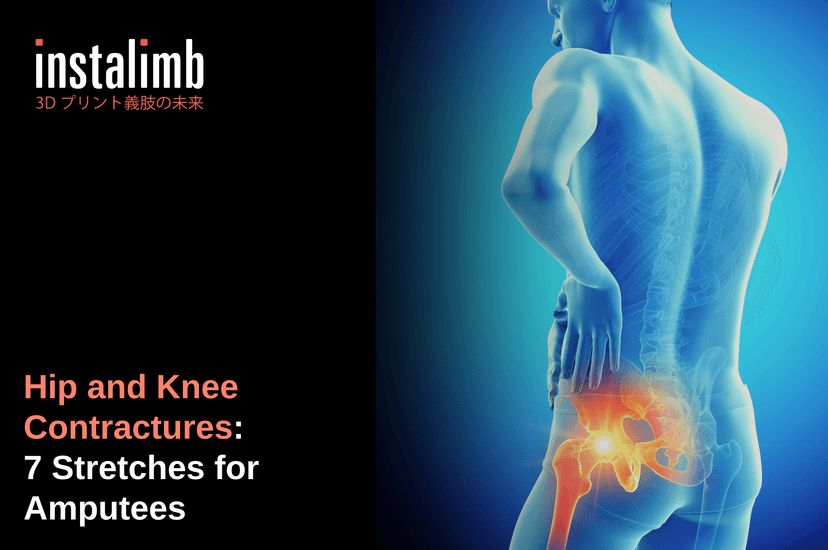
Hip and Knee Contractures: 7 Stretches for Amputees
You've been doing everything right since your amputation: attending physiotherapy, wearing your liner correctly, and practising your walk every day. But if you spend most of your day sitting with your knee bent or your hip curled forward, your joints can quietly stiffen without you even noticing. Hip and knee contractures are one of the most common and most preventable complications after limb loss, and they catch even careful amputees off guard.
What Is a Hip or Knee Contracture?
A contracture happens when the muscles and tendons around a joint tighten permanently, locking it in a bent position. For amputees, this often develops from long hours in a flexed position, such as sitting in a wheelchair or resting with a pillow tucked under the knee.
Research on transtibial amputees shows that knee flexion contractures develop in roughly 13% of patients, with some studies reporting rates as high as 24%, according to a peer-reviewed clinical review (source cited below). Above-knee amputees face a similar risk at the hip: once the joint is flexed beyond 15 degrees, fitting a well-aligned prosthesis becomes significantly harder. Diabetes, prolonged bed rest, and skipping physiotherapy all raise the odds. The tricky part is that contractures build up slowly. You might not notice the stiffness until your prosthetist tells you your socket alignment has shifted, or until you try to stand fully upright and can't.
Why Hip and Knee Contractures Make Prosthetic Fitting Harder
Think of your prosthetic socket like a custom-tailored shoe. It is built around the exact shape and alignment of your residual limb at a specific moment. When a hip or knee contracture sets in, that alignment shifts, and the socket that fit perfectly a few months ago no longer sits flush against your skin.
A hip flexed just 10 to 15 degrees can force your prosthetist to rebuild your entire socket, changing your gait and burning more energy with every step.
A stiff knee can prevent a below-knee socket from seating properly, leading to pressure sores at the areas taking the extra load. At Instalimb, our prosthetists use AI-assisted 3D scanning and 1mm-level socket customisation to catch these small alignment shifts early, before they force a full socket rebuild.
Positioning Habits That Protect Your Joints
Most contractures develop quietly, from daily habits, not accidents. A few small changes in how you sit, sleep, and rest can protect your hip and knee for the long term.
-
Skip the pillow under your knee or thigh. It feels comfortable in the moment, but it trains your joint to stay bent.
-
Avoid long unbroken stretches of sitting. Stand, stretch, or reposition every 30 to 45 minutes.
-
Lie face-down (prone) for 10 to 20 minutes, twice a day, to stretch your hip and knee in the opposite direction of a contracture.
-
Sleep with your leg as flat as possible rather than propped on cushions.
Lying face-down for just 10 to 20 minutes, twice daily, is one of the simplest habits that protects your hip and knee from stiffening.
7 Stretching Exercises to Prevent Hip and Knee Contractures
Stretching works best when it is consistent, not intense. Hold each position for about 30 seconds and repeat several times a day.
-
Prone lying: Rest on your stomach for 10 to 20 minutes to stretch both the hip and knee at once.
-
Standing hip extension: Hold a wall or chair, step your residual limb back, and press the hip gently forward.
-
Adductor stretch: Sit against a wall with your limb positioned out to the side, especially useful for above-knee amputees.
-
Heel prop knee extension: Prop your heel on a rolled towel and let gravity gently straighten the knee.
-
Hamstring stretch: Sit with your leg extended and reach toward your toes without rounding your back.
-
Standing hip flexor stretch: Lunge gently forward, keeping your back leg straight to open the front of the hip.
-
Active knee bends: Slowly bend and straighten the knee through its full range, several times a day, to maintain mobility.
Consistent stretching, even five minutes at a time, does more for your joints than one long session a week.
How 3D-Printed Sockets Help Protect Healthy Alignment
Traditional plaster-cast sockets are hard to adjust once early signs of a contracture appear. Instalimb's approach is different. Our prosthetists combine 3D CAD scanning with AI-assisted design to model your residual limb's exact shape and adjust the socket to 1mm precision, so small changes in your joint position get caught during routine reviews rather than after they have caused a problem.
At Instalimb, we have designed over 500 prosthetics across Delhi, Gurugram, Hyderabad, Bangalore, Mumbai, and Vizag, and our clinicians routinely screen new and returning patients for early signs of hip or knee stiffness before finalising a socket fit. If a contracture is already present, our team can factor it into the design rather than forcing your joint into a position it cannot comfortably hold.
When to Call Your Prosthetist: Red Flags You Shouldn't Ignore
Not every ache means a contracture, but a few signs are worth a same-week call to your clinic:
-
Your knee or hip won't fully straighten even after stretching for several days.
-
Your socket suddenly feels tight on one side or loose on the other.
-
You notice new pressure marks or redness that doesn't fade within 20 minutes.
-
Standing fully upright feels different from it did a month ago.
Catching a developing contracture early usually means a simple adjustment. Waiting means a full socket rebuild.
If you're ever unsure, Instalimb offers a free test socket fitting, so there is no cost barrier to getting checked.
Frequently Asked Questions
Can hip and knee contractures be reversed?
Mild contractures can often improve with consistent stretching, positioning changes, and physiotherapy, especially when caught early. More severe or long-standing contractures may need bracing, serial casting, or, in rare cases, surgical release. The earlier you address stiffness, the more likely gentle stretching alone will work.
How long does it take for a contracture to develop after amputation?
Some amputees develop noticeable stiffness within just a few weeks of prolonged bed rest or inactivity, while others take months. Hip and knee contractures often develop during the early recovery period, which is why physiotherapists recommend starting positioning and stretching routines within days of surgery, not after discharge.
Are contractures more common in above-knee or below-knee amputees?
Both above-knee and below-knee amputees are at risk, though the joint involved differs. Below-knee amputees more often develop knee flexion contractures, affecting roughly 13 to 24 percent of patients in various studies, while above-knee amputees are more prone to hip flexion contractures that complicate prosthetic alignment.
Do stretching exercises really prevent contractures?
Yes, consistent stretching combined with proper positioning is one of the most effective ways to prevent contractures. Holding each stretch for around 30 seconds, several times a day, keeps the muscles and tendons around your hip and knee from shortening, especially when paired with several hours of general daily activity.
Can a 3D-printed socket accommodate an existing contracture?
Yes. Unlike a rigid, one-time-cast socket, a 3D-printed socket built with CAD design can be adjusted to accommodate a mild contracture while still supporting a stable gait. At Instalimb, our prosthetists can factor an existing joint limitation into the socket alignment rather than asking your body to force a position it cannot hold.
Conclusion
A hip or knee contracture is one of those complications that sneaks up quietly, but it responds just as quietly to consistent care. A few minutes of stretching, a little more attention to how you sit and sleep, and a prosthetist who checks your alignment regularly can keep your joints and your mobility exactly where you want them.
Check out our blog section for more!