Squat Toilet Guide: 5 Safety Tips for Prosthetic Leg Users
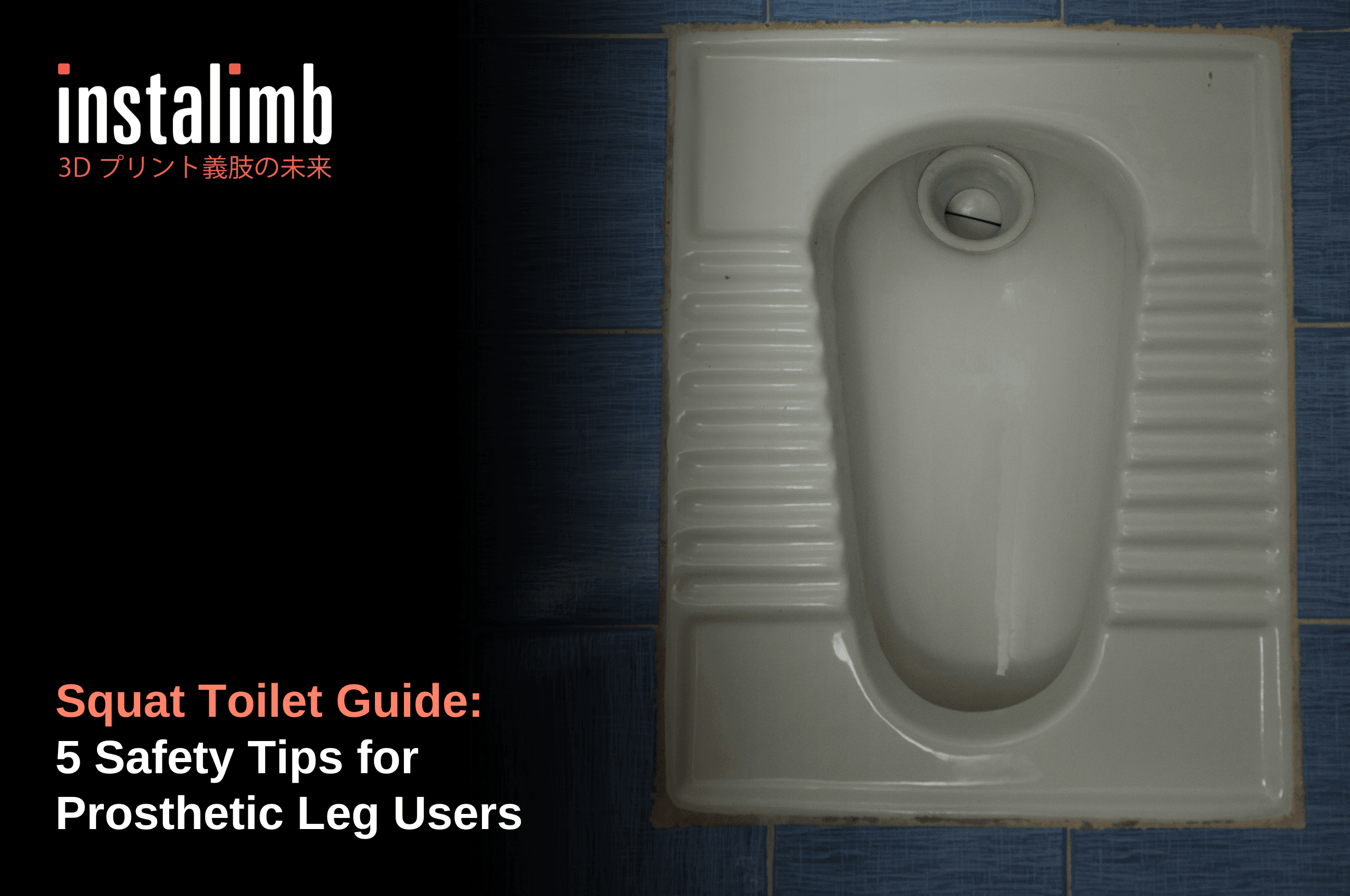
If you're managing life on a prosthetic leg in India, chances are you've paused at the bathroom door more than once, wondering whether it's really safe to use a squat toilet with a prosthetic leg. You're not imagining the risk, and you're not alone in feeling it.
The good news is that with the right technique and the right socket fit, most amputees can use an Indian-style toilet confidently, and this guide shows you exactly how.
Can You Safely Use a Squat Toilet With a Prosthetic Leg?
Yes, most below-knee and many above-knee prosthesis users can squat on an Indian-style toilet safely, but wobbling or falling is usually a socket-fit issue, not a permanent limitation. Check your socket suspension, use your sound leg and a wall or door frame for support, and go slowly through the sit-to-squat and squat-to-stand transitions.
This risk is real: falls among lower-limb amputees are common, not rare exceptions. A 2017 systematic review in PM&R found that more than half of community-dwelling lower-limb amputees fall at least once a year, with 40 to 60% of those falls causing injury.
In India, the National Medical Journal of India (NMJI) reported in 2018 that 46% of people with physical disabilities experience a bathroom fall, and 60% of those falls result in injury.
Squat toilets raise that risk further because they demand a deep, low, unsupported movement that few homes or public spaces are designed to accommodate safely. Understanding this is the first step towards prevention, and it's also where technologies like AI-assisted 3D printing and 1mm-level socket customisation, the kind Instalimb uses to fit every limb, make a measurable difference.
Why Squatting Is Harder on a Prosthetic Leg
Squatting asks a lot of any knee, and even more of a prosthetic one. Understanding why helps you protect yourself rather than blame your own balance.
Below-Knee vs Above-Knee Risk Levels
Deep knee flexion, the kind a squat demands, generates patellofemoral joint reaction forces (the pressure between your kneecap and your thigh bone) of roughly seven to eight times your body weight. A 2017 JPMER case-control study of 450 people documented forces at this level.
If you have a below-knee (transtibial) amputation, you keep your own biological knee, so you retain natural flexion and generally manage squatting with a below-knee prosthesis more safely.
If you have an above-knee (transfemoral) amputation, your prosthetic knee joint has to recreate that flexion mechanically. Most standard knee units aren't engineered to hold a deep squat safely, so it's wiser to keep a more conservative depth and talk with your prosthetist.
It's Often a Socket-Fit Problem, Not a Balance Failure
Here's a distinction worth remembering: squat instability in a prosthetic user is frequently caused by a loose or poorly suspended socket, not a failure of balance. Socket suspension simply means how snugly your socket, the custom shell connecting your limb to the prosthesis, holds onto your residual limb without slipping.
When a socket loosens through volume changes or wear, deep knee bending exposes that looseness immediately, causing the wobble or rotation you feel mid-squat. If a squat feels shaky specifically when you bend, not when you stand or walk, checking whether your socket fit needs attention is worth doing before you assume this is permanent.
Step-by-Step: How to Squat and Stand Up Safely
Once your socket is secure, technique becomes your biggest ally. Here is a safe sequence you can practise at home before you need it in a hurry, building on core squatting techniques that already work for prosthetic users.
Pre-Squat Checks
Before you lower yourself, run through a quick check. Confirm your socket suspension feels tight, with no pistoning (the leg sliding up and down inside the socket), and make sure your liner and pin or suction seal are properly seated. Check that the floor is dry and non-slip.
If your knee or hip feels stiff before you even begin, gentle stretches that improve knee flexion can make the whole movement smoother, since limited flexion forces you to overcompensate through your prosthetic side or your back.
The Sit-to-Squat Sequence
-
Stand facing the toilet with both feet flat and stable.
-
Shift your weight onto your sound leg, your weight-bearing side for this movement.
-
Hold a wall, door frame, or fitted grab bar with one or both hands.
-
Bend your sound knee first, letting your prosthetic side follow slowly.
-
Lower yourself in a controlled, unhurried motion, pausing if you feel any wobble.
The Squat-to-Stand Sequence
-
Reach for your support before you start to rise.
-
Push through your sound leg first to initiate the lift.
-
Bring your prosthetic leg through in a steady, deliberate motion.
-
Straighten gradually rather than snapping upright.
-
Pause standing for a second before you walk away, to confirm your balance.
Using a Wall, Door Frame, or Handheld Support When There's No Grab Bar
Most Indian bathrooms, especially squat-style ones, don't have a grab bar. A solid wall or sturdy door frame works as a grab bar alternative: press your palm flat against it rather than gripping an edge, which gives you a more stable base.
If you travel often, a lightweight folding grab handle or a walking stick you already use can double as support in an unfamiliar bathroom. Never let your prosthetic leg carry your full weight alone during the lowest part of a squat.
Away From Home: Trains, Dhabas, Bus Stands, and Relatives' Houses
Squat toilets remain the default across rural and much of urban India.
Public and Travel Toilets
India's open-defecation prevalence fell dramatically, from 70.3% in 1993 to 17.8% in 2021, according to a 2023 Journal of Global Health analysis, but that shift left the squat-versus-seated question largely unaddressed.
India's Swachh Bharat Mission sanitation campaign has focused heavily on getting a toilet into every home, though which type of toilet, squat or seated, has drawn far less attention. At railway stations, dhabas, and bus stands, you'll still mostly find squat-style toilets.
Scout the facility before you need it if you can, look for a raised or hybrid fixture where available, and never rush because a queue is waiting. A calm, supported squat takes only seconds longer than a risky one.
Older or Joint-Family Homes
Many homes across Delhi, Gurugram, Hyderabad, Bangalore, Mumbai, and Vizag still have an older, ancestral section with a squat toilet, even when newer parts of the house have gone Western-style. Visiting relatives or staying in a joint family home can mean navigating a bathroom you don't control.
Adapting a shared or ancestral home for accessibility covers practical ways to make a shared space safer without a full renovation, respecting a home that isn't fully yours to redesign.
Wet, Slippery Floors in Monsoon Season
Late-monsoon humidity, like the kind India sees through September, keeps bathroom floors damp for longer, raising your slip risk before you even begin to squat. Dry your feet and the immediate floor area where you can, wear grippy rather than smooth-soled footwear, and treat any tiled squat area as slippery until proven otherwise, especially heading into the festival and wedding travel season ahead.
Practical, Retrofit-First Solutions You Can Carry or Install
You don't need to renovate a bathroom to make it safer. A few retrofit-first additions solve most of the risk, whether at home or at a relative's house. Simple home modifications for amputees go deeper on adapting a full bathroom, but these three are worth prioritising first.
A Portable Stool or Folding Grab Handle
A small folding stool beside the squat area gives you a stable, fixed point to lower onto or push up from, turning a squat into something closer to a seated transfer. Portable folding grab handles, sold for elderly and mobility use, suction or clamp onto tiled walls and travel with you.
A Non-Slip Mat
A rubber-backed non-slip mat placed over the wet zone around the squat toilet cuts your slip risk substantially, especially during monsoon months. It's easy to source and easy to carry when visiting relatives, and just as useful for elderly family members, so it rarely feels like a special accommodation.
A Handheld Raised-Seat Converter
A portable, handheld raised-seat converter fits over many Indian-style toilets to create a temporary seated option, reducing how far you need to bend your knee. These fold flat and are light enough to carry for weddings, train journeys, or stays where you can't control the bathroom setup.
When It's More Than Technique: Talk to Your Prosthetist
If you've tried good technique, checked your footing, and your leg still wobbles, rotates, or gives way specifically during a squat, it's time to involve your prosthetist rather than avoid the movement altogether.
As we noted earlier, this kind of squat wobble is far more often about a loose socket than about balance, and that distinction changes what you should do next. Precision-fit approaches, like Instalimb's 3D-printed socket process, use 3D-CAD scanning, AI-assisted design, and 1mm-level customisation to identify exactly where a socket has drifted out of fit and correct it, rather than leaving you to compensate through effort and fear.
At Instalimb, we have designed over 500 prosthetics across Delhi, Gurugram, Hyderabad, Bangalore, Mumbai, and Vizag, and a test socket fitting is one of the fastest ways to find out whether it's your fit, not your effort, holding you back.
The Emotional Side: Avoidance, Embarrassment, and Confidence
Fear of squatting alone, or of visibly struggling in front of others, is a real and common feeling, not a sign of weakness. Some amputees quietly cut back on food or water before a train journey or a wedding just to avoid needing an unfamiliar bathroom, and some skip social events altogether.
That avoidance is understandable, but it often costs more than the risk it's meant to prevent. Caregivers can help most by supporting independence rather than replacing it: standing nearby without hovering, and agreeing on a simple plan, such as a signal or check-in time, for what to do if a fall happens when no one is around.
With the right socket fit and a practised routine, most amputees regain the confidence to stop planning their day around the nearest Western toilet.
Frequently Asked Questions
Is it safe to use an Indian-style squat toilet with a prosthetic leg?
Yes, it can be done safely for many amputees, but it depends on amputation level, prosthetic knee type, and socket fit. Below-knee amputees generally manage squatting more safely than above-knee users because they retain more natural knee flexion. The biggest safety factor is usually not balance but whether the socket fits tightly enough to prevent slippage during deep knee bending. A snug, well-suspended socket matters more than strength or practice alone.
Why do amputees fall more often in Indian bathrooms?
Amputees fall more often in Indian bathrooms because wet, slippery floors combine with the deep knee bend a squat toilet demands. Standard prosthetic knees aren't built to hold that position safely. A 2018 NMJI study found 46% of people with physical disabilities in India reported a bathroom fall. 60% of those falls caused injury, often during the low, unsupported squat rather than while standing or walking.
Can a below-knee amputee squat normally?
Below-knee amputees can usually achieve a closer-to-normal squat than above-knee amputees, because their own anatomical knee provides natural flexion and only the ankle-foot mechanism is prosthetic. Deep squatting still loads the residual limb and socket heavily, though, and a loose or poorly suspended socket can cause the leg to shift or give way partway through the movement. Fit should be checked before assuming a full squat is safe.
What should I do if there's no Western toilet available while travelling with a prosthetic leg?
Look for a raised or hybrid squat-Western fixture, and use any available wall support or sturdy handhold for a controlled descent and rise. Avoid rushing the movement. Above-knee amputees should be especially cautious and consider a partial squat rather than a full one without support nearby. Planning ahead, such as scouting facilities at train stations or dhabas, and staying hydrated rather than restricting food or water out of fear, both reduce risk.
How can I tell if my prosthetic socket is causing balance problems while squatting?
A socket fit problem usually shows up as the leg feeling loose, twisting, or shifting inside the socket during a squat, rather than a general sense of unsteadiness all day. If instability appears specifically when bending the knee deeply, rather than while standing or walking normally, the cause is more likely socket suspension than balance or strength. It is worth getting the fit checked rather than avoiding squat toilets altogether.
Conclusion
A squat toilet doesn't have to be a source of fear or avoidance. With a properly fitted socket, a practised transition, and a few carry-anywhere supports, you can move through your day, at home, on a train, or at a wedding, with real confidence. If a fall or a wobble has been holding you back, that's a fit question worth answering, not a limit you have to accept.
Check out our blog section for more!
So, if you‘re looking for a new artificial leg, interested in a free consultation, confused if your socket is the right fit, or have any other queries, now is the time to reach out to us and try a test socket free of cost. Step it up with Instalimb - Contact us today!
Recent Posts
September 26, 2026
September 22, 2026
September 10, 2026
September 8, 2026
September 3, 2026
September 1, 2026
August 29, 2026
August 25, 2026
August 20, 2026
August 18, 2026