Prosthetic Socket Feels Loose in Winter?
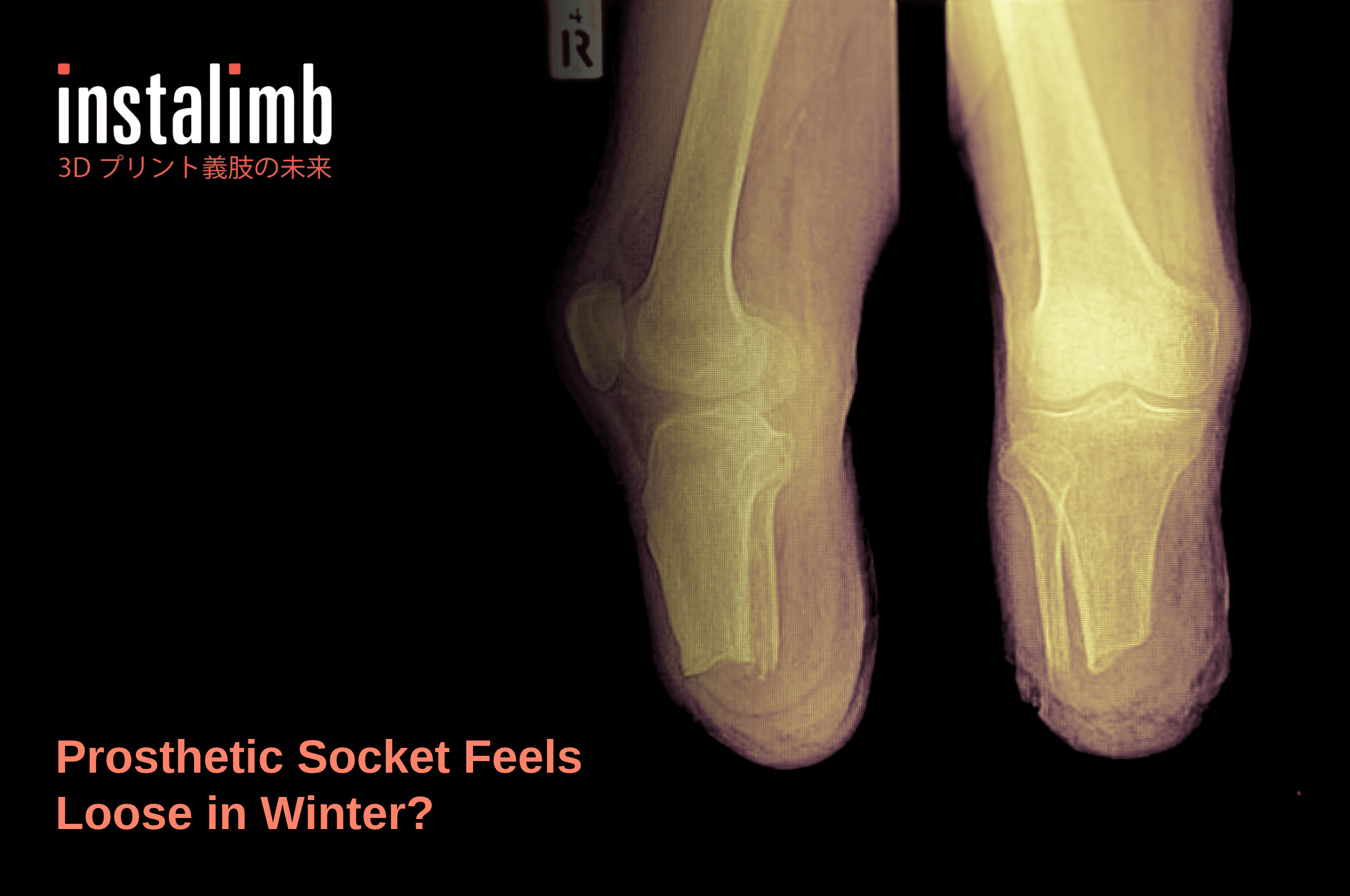
If your prosthetic socket feels loose in winter, you are not imagining it, and nothing about your prosthesis is broken. Amputees across Delhi, Gurugram and other North Indian cities often notice their once-snug socket shifting or slipping once the cold sets in. There is a real, well-documented reason for this, and it is entirely manageable.
Why a Prosthetic Socket Feels Loose in Winter
A prosthetic socket feels loose in winter because cold triggers vasoconstriction, the narrowing of blood vessels in your skin and tissue. Vasoconstriction reduces blood flow to the area, and less blood in the tissue can mean less tissue volume, so a socket that fitted snugly before the cold can start to feel loose.
This is a well-documented physiological response, not a flaw in your prosthesis. Your body narrows blood vessels near the skin to conserve core heat, and your residual limb is no exception. Transfemoral (above-knee) and transtibial (below-knee) amputees both experience this, though the degree varies with individual circulation, climate and how long you stay in the cold.
Research published in the Journal of Physiological Sciences by Yamazaki, Kinoshita and Sone (2009) found that local cooling can reduce skin and soft-tissue blood flow by roughly 60 to 70 per cent compared with a warm baseline. This finding comes from general population research, rather than from studies of amputees or residual limbs specifically.
It is precisely this kind of predictable circulatory variability that shapes how we design 3D-printed sockets at Instalimb from your very first scan.
What Happens Inside Your Residual Limb When It Gets Cold
Think of your residual limb as a sponge whose size is always slightly shifting. Even on an ordinary day, [residual limb volume can fluctuate by several per cent in a single day] from activity, doffing (taking the prosthesis off) and rest.
A 2021 Scientific Reports study by Paternò and colleagues tracked 24 transfemoral amputees. They recorded volume increases of up to 5.92 per cent within 10 to 30 minutes of removing the prosthesis. Day-to-day swings of -4 to +3 per cent also occur from ordinary activity alone.
Cold exposure plausibly stacks on top of this everyday fluctuation, through the same reduced blood flow described above. The researchers themselves flagged temperature as a plausible added factor. They had not directly measured it, so the link is logical rather than directly proven: less blood in the tissue plausibly means less volume, and less volume means a looser socket.
This combination of normal daily swings plus cold-linked shrinkage is why a socket that fitted perfectly in October can feel different by December.
Why India's Climate Makes This Worse, or Milder, Depending on Where You Live?
India's winter is not one season; it is several, and where you live changes how much this affects you. North India's cold-wave season typically hits Haryana, Rajasthan, Delhi and Gujarat hardest, sharpening the cold snap across the region.
Further south, winters are far gentler, but daily temperature swings, especially moving between air-conditioned spaces and warm outdoor air, still matter. For more precautions through the season, see [our general winter safety checklist].
Delhi and Gurugram: Sharp Cold Waves, AC-to-Outdoor Swings and Wedding-Season Evenings
If you live across Delhi-NCR, including Gurugram, you are heading into the sharpest part of this year's cold-wave window. The India Meteorological Department (IMD) issues cold-wave alerts for exactly this region each winter, which is the same window that tends to drive this fit issue. November to January also brings North India's wedding season, with long outdoor evenings as temperatures drop. Standing for hours at an evening function is exactly the kind of sustained cold exposure that can leave your socket feeling loose partway through the night.
Hyderabad, Bangalore, Mumbai and Vizag: A Milder but Real Version
Winters in Hyderabad, Bangalore, Mumbai and Vizag are far gentler, but do not assume you are exempt. A cool morning walk, or stepping from an air-conditioned office or car into warm air and back again, still triggers repeated, smaller rounds of vasoconstriction. Across a full day, these smaller swings can add up to the same loose, slipping feeling that North Indian amputees notice more dramatically.
Diabetic and Vascular Amputees: A Higher-Alert Group
If you live with diabetes or a vascular condition, winter deserves extra vigilance. A University of Washington study found amputees with diabetic or traumatic limb loss had cold-detection thresholds 1.6 to 1.8 degrees Celsius less sensitive than able-bodied people. The same study also found altered blood-flow responses to cold in the residual limb.
It is a small-sample finding, but a consistent warning sign: you may not notice cold-triggered volume loss until your socket already feels loose or skin irritation has begun.
This matters more in India than almost anywhere. A 2026 systematic review of 7,272 Indian amputees, published in the International Journal of Community Medicine and Public Health, found that 26.9 per cent of cases were linked to diabetes or vascular disease. Separately, a global analysis cited by Scroll.in in March 2025 found that India recorded the highest traumatic-amputation burden of 204 countries and territories studied in 2019.
Building [daily diabetic foot care habits] into your winter routine, alongside regular skin checks, helps you catch problems early.
Signs Your Socket Fit Has Changed
A loose socket does not always announce itself loudly. Watch for these changes, especially on cold mornings or after time outdoors:
-
Shifting or rotation: your foot or knee turning slightly out of alignment as you walk
-
Pistoning: a pumping, up-and-down sliding sensation as your limb moves inside the socket with each step, a sign of extra space inside
-
New rubbing or pressure spots: areas that felt fine in warmer weather suddenly feel irritated
-
Fresh blisters or redness: skin marks appearing in new places, often where the socket now sits unevenly
-
A general sense of instability: the socket feeling less secure than usual, especially when standing still
If you notice two or more of these together, pay closer attention rather than assuming it will pass on its own.
Is This Normal, or Should You Be Worried?
In most cases, the answer is reassuring: your prosthesis is not faulty. Cold-induced vasoconstriction is simply a predictable, reversible seasonal change, and it affects transfemoral and transtibial amputees across India and beyond. The looseness typically eases once your limb warms back up.
That said, normal does not mean ignorable. Treat it as a safety flag if you notice new skin breakdown, persistent pain, a socket unstable enough to risk a fall or looseness that does not improve even in warmer parts of the day. If walking feels unsafe, stop and address the fit before continuing, rather than pushing through and risking injury.
What to Do About a Loose Winter Socket
At Instalimb, we have designed over 500 prosthetics across Delhi, Gurugram, Hyderabad, Bangalore, Mumbai and Vizag, and winter fit questions are among the most common we hear from patients this time of year.
For mild looseness, a short-term fix often helps. Adding an extra sock ply, a thin prosthetic sock layer that takes up the space your shrunken limb has left behind, or adjusting your liner, can restore a snug fit within minutes.
If the looseness is significant, recurring or affecting your balance, involve your prosthetist rather than compensating indefinitely with extra socks.
This is where precision design matters. Instalimb builds your 3D-printed socket from your own individual 3D scan, with millimetre-level, AI- and ML-assisted customisation designed around your unique limb shape. Because the starting fit is so exact, normal seasonal changes represent a smaller deviation from your design than with a generically moulded socket.
If winter has already changed how your socket fits, [book a test socket fitting] and let us help you stay steady all season.
Frequently Asked Questions
Why does my prosthetic socket feel loose in winter?
Cold temperatures trigger vasoconstriction, the narrowing of blood vessels in the residual limb's skin and tissue, which reduces blood flow and can lead to a loss of limb volume during cold exposure. This volume loss means less tissue fills the socket, producing a looser fit. The effect is temporary and reverses once the limb warms, but it can affect walking safety and socket comfort during cold mornings, evenings or air-conditioned-to-outdoor transitions.
Is it normal for my prosthesis to fit differently in cold weather?
Yes, it is a normal and widely reported seasonal change, not a sign of a damaged or poorly made socket. Cold-induced vasoconstriction reduces blood flow and limb volume, so the same socket that fits snugly in warm weather can feel loose when temperatures drop, especially in North Indian cities during the cold-wave season or after leaving an air-conditioned space in Hyderabad, Bangalore or Vizag.
Is it safe to walk on a prosthetic leg that feels loose?
Walking on a noticeably loose socket carries real risk: it increases rubbing, blisters, pistoning (the limb sliding inside the socket) and loss of balance, so it should not be ignored. A thin extra sock ply can help temporarily, but persistent looseness or instability should be checked by a prosthetist. Until then, walk cautiously, especially on stairs or uneven ground, and avoid ignoring new rubbing or skin marks.
Will my socket keep loosening every winter?
For most amputees, yes, some winter loosening tends to return every year, since cold-induced vasoconstriction follows the same seasonal pattern each time rather than being a one-off fitting mistake. How much it affects daily life depends on local climate, individual circulation and how closely the socket matches residual limb shape; a precisely customised socket with sufficient volume-management options can reduce how disruptive this seasonal change feels year to year.
Do diabetic or vascular amputees need to worry more about winter socket fit?
Yes, amputees with diabetes or vascular disease can have altered cold sensation and circulation in the residual limb, meaning they may not notice the cold-triggered shrinkage until the socket already feels loose or skin irritation has started. Combined with India's relatively high share of diabetes-related amputations, this makes regular limb and skin checks through winter especially important for this group, alongside routine prosthetist follow-up.
Conclusion
A loose prosthetic socket in winter is not a setback; it is simply your body responding to the season the way bodies do. Understanding the science behind it means you can act early, adjust with confidence and keep walking safely all winter long. Instalimb combines Japanese 3D-printing technology with AI-assisted, millimetre-precise design so your socket is built to handle exactly this kind of change, whatever city you call home.
Check out our blog section for more!
So, if you‘re looking for a new artificial leg, interested in a free consultation, confused if your socket is the right fit, or have any other queries, now is the time to reach out to us and try a test socket free of cost. Step it up with Instalimb - Contact us today!
Recent Posts
November 10, 2026
November 5, 2026
November 5, 2026
October 30, 2026
October 23, 2026
October 22, 2026
October 14, 2026
October 13, 2026
October 8, 2026
