Prosthetic Legs for Military Amputees in India
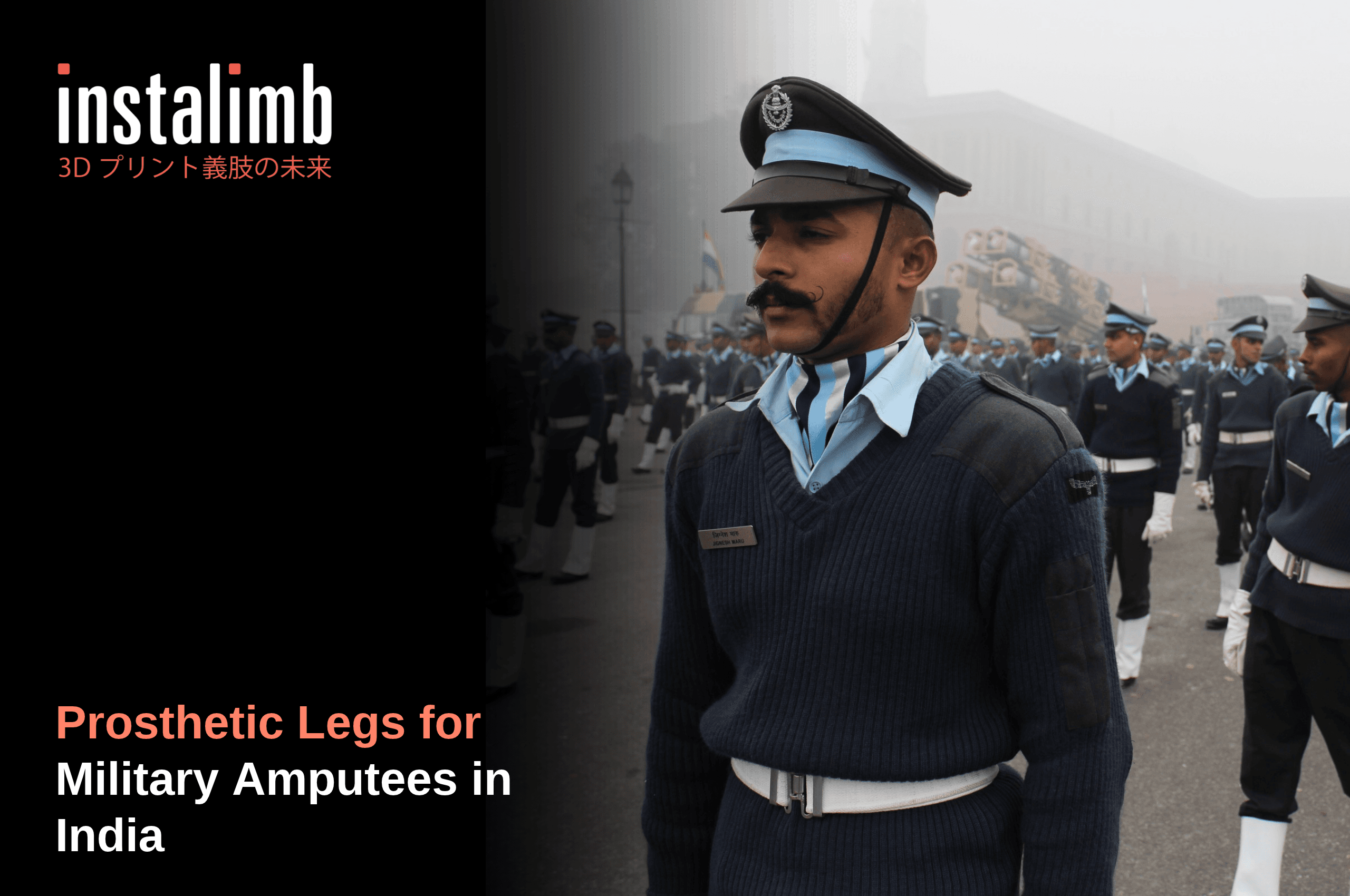
Every year on 27 October, India marks Infantry Day. It honours soldiers who serve the nation on its toughest terrain.
Recovery from a service-related injury often continues well beyond the public eye. Soldiers wounded during Operation Sindoor are still working through rehabilitation at the Artificial Limb Centre in Pune today.
If you or someone you love is adjusting to life after a limb loss in service, this guide is for you. Finding the right prosthetic leg for military amputees in India is a practical step. You do not have to take it alone.
How Common Is Limb Loss Among India's Defence Personnel?
Around 200 Indian armed forces personnel are estimated to become permanently disabled from service-related injury every year, a commonly cited figure from military medical data. In counter-insurgency operations, limb injuries account for 61% of combat casualties. Blast and fragmentation injuries, such as IEDs and landmines, cause roughly two-thirds of these injuries, far more than bullets.
Limb loss among India's defence personnel is more common than most civilians realise. It rarely makes the news once the immediate crisis passes.
Service carries risks beyond combat alone. High-altitude postings, avalanche accidents, and road accidents during operations all contribute to permanent disability.
For every soldier whose story becomes public, many more quietly rebuild their lives away from the spotlight. Whether you are a serving Army officer, a Navy veteran connected to the Eastern Naval Command in Visakhapatnam (Vizag), an Air Force personnel member, or part of the Central Armed Police Forces, your experience fits a well-documented pattern of service-related limb loss across India.
From Battlefield to Operation Theatre: Why Blast Injuries Cause Most Amputations
Most military amputations in India begin far from a hospital, in the moments after an explosion or a fall.
The main causes of combat-related limb injury among Indian soldiers include:
-
Improvised explosive devices (IEDs) and landmines, which cause blast and fragmentation wounds
-
Artillery and shell fragments encountered during active operations
-
High-altitude accidents, including avalanches and falls, are common to postings such as Siachen
-
Road accidents during troop movement and routine operations
A study of counter-insurgency casualties at an Indian Army tertiary hospital, covering 2014 to 2019 and published in the Journal of Marine Medicine, found that limb injuries accounted for 61% of combat casualties. Among these injuries, explosives and fragmentation caused 67.4%, compared with 32.5% from bullets.
Blast waves and shrapnel tend to shatter bone and destroy soft tissue over a wide area. Surgeons are often left with no option but amputation to save the rest of the limb.
Separately, a pooled review of 14 studies, published in the International Journal of Community Medicine and Public Health, found that trauma is responsible for 73.1% of major limb amputations in India, and that lower-limb cases make up 90.8% of the total. This broader national pattern helps explain why lower-limb amputation is the most common outcome for wounded soldiers too.
Prosthetic Leg Options for Military Amputees in India
The right choice depends on where the amputation occurred.
Above-knee amputees have lost the leg above the knee joint. They need a prosthetic system with an artificial knee as well as a foot. This demands more balance and energy to walk naturally.
Below-knee amputees keep their own knee joint. This generally makes walking, running, and climbing stairs easier to relearn.
Both groups depend on one thing above all else: the socket. A socket is the part of the prosthetic that fits over the residual limb (what remains of the leg after amputation). It should fit like a precise, custom-shaped sleeve.
A socket that does not fit well is uncomfortable at best. At worst, it can cause skin damage, however advanced the knee or foot technology attached to it.
This is where above-knee and below-knee prosthetic care increasingly draws on 3D printing and AI-assisted scanning. Rather than shaping a socket by hand over several visits, these tools can capture the shape of a limb to within 1 mm of precision. They translate it into a socket design quickly. This matters for soldiers who may need to travel a long distance for every fitting appointment.
The Government Rehabilitation Journey: Artificial Limb Centre Pune and Beyond
For most Indian soldiers, the road to walking again starts at the Artificial Limb Centre (ALC) in Pune. This is the tri-service facility that has supported defence amputees for decades.
ALC Pune manages the acute phase of recovery, which typically includes:
-
Wound healing and surgical aftercare
-
Initial prosthetic fitting and alignment
-
Physiotherapy and gait (walking pattern) training
-
Guidance on caring for the residual limb day to day
This stage of care is thorough and well-resourced for serving personnel. The Army and Air Force, in particular, maintain structured follow-up systems.
Many veterans find that the real test begins after they leave ALC Pune and return home.
Residual limbs continue to change shape for months or years after amputation. Government-issued components wear down with daily use. Civilian life often demands different things from a prosthetic leg, whether that is standing for long shifts at a new job or keeping up with children.
This is the gap that organisations such as Jaipur Foot (BMVSS) and private clinics are built to fill. They offer ongoing access to socket replacement and refitting, long after formal government rehabilitation has ended.
Bravery Beyond the Battlefield: Stories That Inspire
Some stories of recovery become part of the national conversation, and rightly so.
Major D.P. Singh lost his leg above the knee while serving in the Kargil War in 1999. In the years since, he has become known across India as the “Blade Runner”, running marathons and speaking to audiences about rebuilding life after limb loss.
His journey shows what is possible. From a young officer wounded in one of India's most significant conflicts, he became an endurance athlete and motivational speaker. His story has shown a generation of amputees that disability is a state of mind, not a limitation.
More recently, soldiers wounded during Operation Sindoor in 2025 are still working through their recovery at the Artificial Limb Centre in Pune today, each on their own timeline. Their continued progress deserves the same respect as any story that makes the headlines, whether or not it ever does.
The CAPF Gap: Why Paramilitary Veterans Need More Support
Personnel from the Central Armed Police Forces, including the BSF, CRPF, and ITBP, face many of the same risks as Army soldiers. This is especially true in counter-insurgency operations.
Yet CAPF personnel often have less structured follow-up care once acute treatment ends. Unlike the tri-service rehabilitation system, CAPF pathways can vary by force and location.
Organisations such as the Aditya Mehta Foundation have stepped in to support CAPF veterans. Many are moving towards para-sport and returning to an active, mobile life.
If you served with a paramilitary force and feel your aftercare has been less consistent than you expected, that gap is real and recognised. It is not something you imagined.
Supporting the Family: The Caregiver's Role in Recovery
Recovery after limb loss is rarely a solo journey.
Caregivers, spouses, parents, and children carry their own weight. They adjust routines, learn new ways to help with mobility, and manage their own worry, all while trying to stay strong for the person in front of them.
It is possible, and healthy, to hold pride and grief at the same time. You can be deeply proud of your soldier's service and still grieve the version of daily life you knew before.
Connecting with an amputee community and peer support network can help. Whether through veteran associations or rehabilitation centres, this support can make the dual weight easier to carry for everyone in the family.
Frequently Asked Questions (FAQ)
Q1: How do soldiers in India get prosthetic limbs after a combat injury?
Soldiers who lose a limb in combat are typically first treated and fitted with an initial prosthesis at a government facility such as the Artificial Limb Centre (ALC) in Pune. ALC Pune specialises in defence-related rehabilitation. From there, many continue care through NGO programmes like Jaipur Foot (BMVSS) or move to private clinics for follow-up fittings, socket replacements, and newer technologies as their mobility needs change over time.
Q2: What happens to a soldier's prosthetic care after discharge from government rehab?
Government rehabilitation at centres like ALC Pune typically covers the acute phase. This includes initial amputation care, wound healing, and a first prosthetic fitting. After discharge, veterans and serving personnel often need ongoing care, as residual limbs change shape, as components wear out, or as they want higher-performance sockets for sport or daily life. This is where private clinics and organisations such as Jaipur Foot/BMVSS extend support.
Q3: Which government organisations support prosthetic limb access for Indian defence personnel?
Jaipur Foot (BMVSS) is India's largest limb-fitment organisation. It has rehabilitated more than 1.78 million amputees, including defence and paramilitary personnel referred through military and CAPF channels. The government's Artificial Limb Centre in Pune also provides a structured rehabilitation pathway.
Q4: What type of amputation do most Indian soldiers suffer in combat?
Most combat-related amputations among Indian soldiers are lower-limb. This is consistent with the broader national pattern, in which lower-limb amputations account for 90.8% of all major limb amputation cases in India. Limb injuries make up the majority of combat casualties. Explosive and fragmentation injuries, such as IEDs and landmines, cause roughly two-thirds of these wounds, far more than gunshot wounds.
Q5: Is there private or advanced prosthetic technology available for veterans in India beyond government care?
Yes. Private prosthetic clinics in India now offer advanced options such as precision-fit, 3D-printed sockets for below-knee and above-knee amputees. These can complement government-provided limbs with improved comfort and fit. DRDO is also funding next-generation research, including an AI-based powered prosthesis project at IIT Kharagpur (2025-2028). This reflects growing momentum towards modern prosthetic technology for defence amputees.
Moving Forward With Confidence
Whether you served for one year or twenty, in the Army, Navy, Air Force, or a paramilitary force, your life after limb loss is not a lesser version of what came before.
It is a new chapter. It is built on the same discipline and courage that carried you through your service.
As India marks another Infantry Day, that courage deserves to be met with the right support, the right fit, and the right technology. Walking forward should feel as natural as it always did.
Check out our blog section for more!
So, if you‘re looking for a new artificial leg, interested in a free consultation, confused if your socket is the right fit, or have any other queries, now is the time to reach out to us and try a test socket free of cost. Step it up with Instalimb - Contact us today!
Recent Posts
October 22, 2026
October 14, 2026
October 13, 2026
October 8, 2026
October 6, 2026
October 1, 2026
September 29, 2026
September 26, 2026
September 24, 2026
