Prosthetic Leg Auto Rickshaw Guide: Boarding Tips
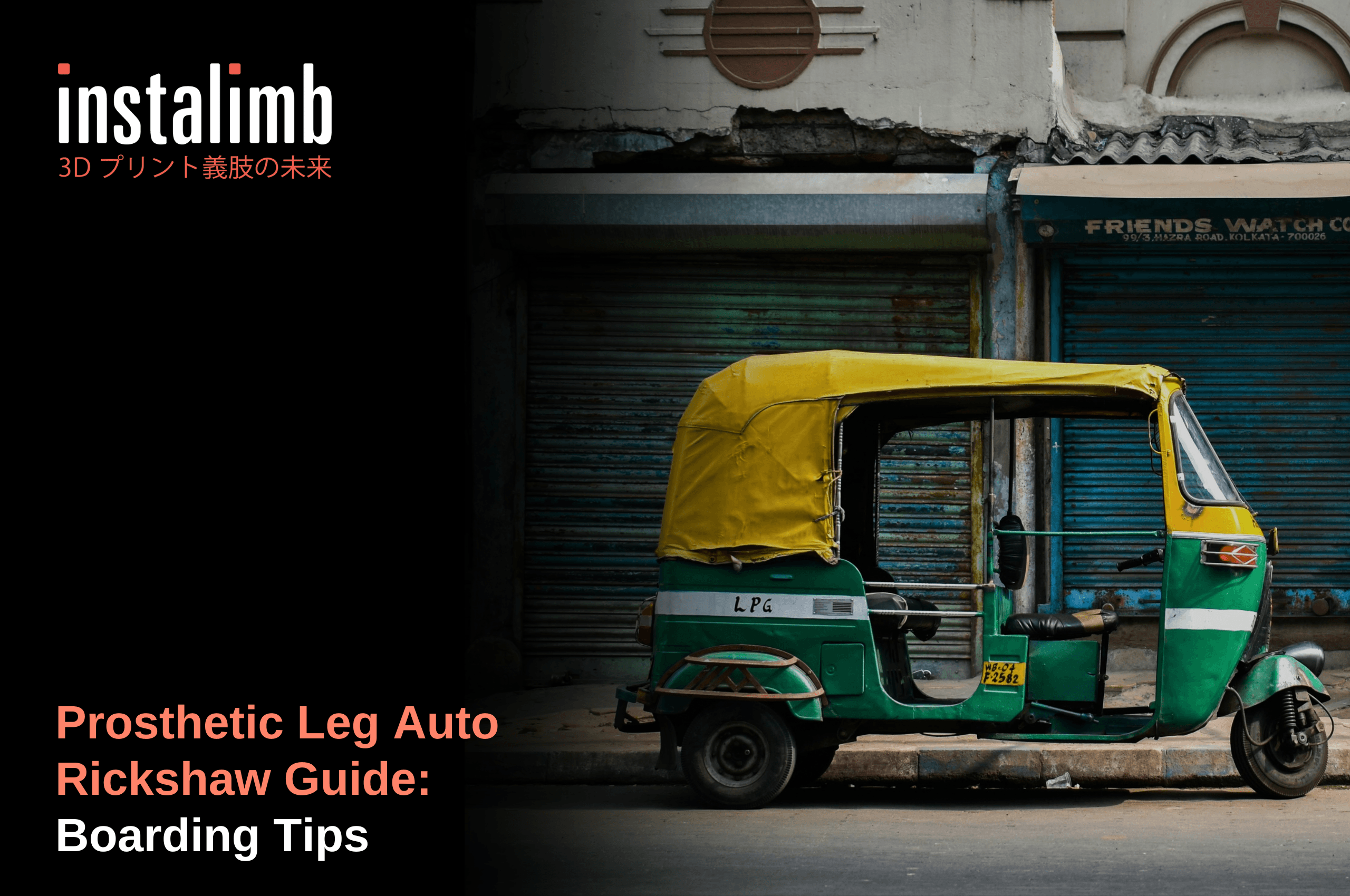
Stepping up into an auto rickshaw with the driver already revving, a queue of passengers behind you and no handrail to speak of, can turn a thirty-second boarding into the most stressful part of your day. If you use a prosthetic leg, that single high step onto the footboard is where confidence and fear meet, and getting it right changes how safe every ride feels.
This prosthetic leg auto rickshaw guide walks you through the exact sequence for autos, jeeps and shared tempos, so you can board and alight with control instead of guesswork. [driving with a prosthetic leg] covers one part of getting around India independently; boarding shared transit safely is the other.
How to Safely Board an Auto, Jeep or Tempo with a Prosthetic Leg
To board an auto, jeep or Tempo safely, grip the handrail or seat frame first, step up leading with your sound leg, then shift your weight onto the prosthetic side only once it feels stable. Below-knee users can usually push off steadily; above-knee users should pause briefly to stabilise the knee before committing their full weight.
This single step matters more than it looks. Autos, jeeps and shared tempos are the backbone of last-mile travel across Indian cities, towns and hill routes, yet most offer only one footboard and no second handhold. Our 3D-printed sockets are engineered for exactly this kind of precise, repeatable fit, because getting the sequence right every time is what keeps a routine boarding from turning into a fall.
Why the High Step Up Feels Different for Below Knee vs. Above Knee Users
Not every prosthetic user faces the same challenge on that step. The biomechanics of an unsupported high step-up, one with no handrail or ramp to lean on, differ sharply depending on where your amputation sits.
A pooled review of major limb amputation in India, covering 7,272 patients across 14 studies, found that lower-limb amputations make up 90.8% of cases. Trauma was responsible for 73.1% of them (International Journal of Community Medicine and Public Health, 2026), so this challenge touches a huge share of Indian prosthesis users.
Walking on uneven terrain demands similar awareness, but a vehicle step compresses it into one fast movement.
More than half of prosthesis users fall at least once a year, according to a 2026 clinical biomechanics study, and an unsupported high step-up is exactly the kind of moment that can contribute to a fall.
Below-Knee Users: Controlling the Push-Off
If you have a below-knee, or transtibial, amputation, meaning the limb was removed below the natural knee joint, your own knee stays intact. You mainly manage the step through ankle motion and how securely your socket, the custom-fitted cup that holds your residual limb, grips your leg. A steady push-off through the sound leg, followed by a confident weight shift, usually carries you up cleanly.
Above-Knee Users: Managing Knee Flexion on the Way Up
An above-knee, or transfemoral, amputation, removed above the knee, means your prosthetic knee joint has to be actively controlled through the entire unsupported motion. The limb can buckle if weight transfers before that joint is stable. A 2026 clinical biomechanics study found that the balance tests predicting falls differ by amputation level, using the Four Square Step Test for below-knee users and the Timed Up and Go Test for above-knee users. This confirms the step-up challenge is a measurable biomechanical difference, not a confidence problem.
Step-by-Step: Getting Into an Auto Rickshaw
-
Approach from the open side and get a firm three-point grip: one hand on the frame or handrail, both feet planted.
-
Lead with your sound leg onto the footboard, keeping your weight back until your hand grip is secure.
-
Pause for a breath. Do not let an impatient driver or a queue behind you rush this moment.
-
Shift your weight onto the prosthetic side only once your sound leg and hand grip feel stable.
-
Bring the prosthetic leg up and settle into the seat, releasing the handhold last.
Indian traffic rarely pauses for anyone, and drivers can be visibly impatient. Rushing the sequence, not the extra two seconds it needs, is what actually causes falls.
Step-by-Step: Getting Into a Jeep or Shared Tempo (Higher Footboards)
Jeeps and shared tempos are standard transit in smaller towns and hill routes, and their footboards usually sit higher than an auto's.
-
Check for a second rail or roof bar; many jeeps and tempos have one, unlike most autos.
-
Use both hands where possible, forming a wider base before you commit to the step.
-
Lead with the sound leg, letting the prosthetic leg follow in a controlled, unhurried motion rather than swinging it up.
-
If the footboard is wet or uneven, ask a co-passenger or the conductor for a hand rather than guessing your grip.
-
Once inside, choose a seat near the door if the route has several short stops.
Getting Out Safely: The Alighting Sequence Matters Too
Boarding gets most of the attention, but alighting carries its own risk, often because the vehicle is still rolling to a stop or other passengers are already pushing past. Reverse the boarding sequence: secure your grip first, step down leading with the sound leg and let the prosthetic leg follow onto solid ground before you let go of the handhold.
Never jump down to save time. A momentary stumble while everyone is watching is far more disruptive than the extra second a controlled step takes.
How Caregivers Can Help Without Taking Over
If you are helping someone board, stand on the prosthetic side, since that is exactly where stability is weakest during the step. Offer a forearm or shoulder as a steady anchor rather than grabbing their arm, hand or the prosthetic leg itself, and always ask before you touch.
Let the person set their own pace, and step in only if they visibly lose balance, rather than lifting or pulling them up. This small shift, offering support instead of taking over, keeps the moment dignified and genuinely safer.
When an Unsteady Step Is Actually a Fit or Alignment Problem
If you find yourself gripping the vehicle frame for dear life every single time, or your prosthetic foot never quite lands the step with confidence, ask whether the issue is your technique or your socket. [socket fit and alignment problems] are a far more common explanation than most people realise, and they are entirely fixable.
A loose or misaligned socket lets your residual limb shift inside it at exactly the moment you need precise control. A loose or misaligned socket is one of the most common and fixable causes of falls during high step-ups, and it has nothing to do with your skill or effort.
At Instalimb, we have designed over 500 prosthetics across Delhi, Gurugram, Hyderabad, Bangalore, Mumbai and Vizag, using 3D-printed socket technology for a precise, repeatable fit. That level of fit is what separates a confident step from a hesitant one. If this sounds familiar, a [test socket fitting] lets you feel the difference before committing to anything.
Festival Season and Monsoon Footboards: Extra Care This October and November
October brings Navratri, Dussehra and Karwa Chauth, rolling into Diwali, Bhai Dooj and Chhath Puja by mid-November, and short-hop auto and tempo travel surges as families move between markets, temples and gatherings. More trips mean more chances to rush a boarding you would normally take slowly, especially with festival crowds adding to the usual press of passengers.
Weather adds another layer depending on where you are. Hyderabad and Vizag are moving through the northeast monsoon, so wet footboards demand a firmer grip and a slower, more deliberate step. Delhi and Gurugram stay largely clear and dry through this period, while Mumbai is only just exiting its monsoon, so puddled footboards are still a real concern there. A well-aligned, 3D-printed socket holds its fit even when footboards turn slippery, which matters most during this wetter stretch of the year.
Wherever you are travelling, from Bangalore's auto stands to a shared tempo on a hill route, the same unhurried sequence protects you. For longer festival journeys, [bus travel tips] cover the different challenges of boarding a bus instead.
Frequently Asked Questions
Q1: How should someone with a prosthetic leg get into an auto rickshaw safely?
Step up leading with your sound leg and use the auto's handrail or seat frame for a firm three-point grip before shifting weight onto the prosthetic side. If you have a below-knee amputation, you can usually manage the single high footboard with a steady push-off; if you have an above-knee amputation, you should pause to stabilise the knee before transferring weight, since autos offer no second handhold and drivers rarely wait for a careful mount.
Q2: Why does stepping into a jeep or tempo feel harder if you have an above-knee amputation than if you have a below-knee amputation?
If you have an above-knee (transfemoral) amputation, you must control an artificial knee joint through the full unsupported step, so the limb can buckle if you shift your weight too early. If you have a below-knee (transtibial) amputation, you keep a natural, pre-stabilised knee and only need to manage ankle and socket stability. Balance research backs this up: the two groups show different predictive thresholds on standard clinical balance tests.
Q3: What should a caregiver do when helping someone with a prosthetic leg into a high-floored vehicle?
Offer a forearm or shoulder for balance rather than grabbing the person's arm or prosthetic leg, and ask before touching, since an unexpected grip can throw off a controlled weight shift. Stand on the prosthetic side so support is available exactly where stability is weakest; let the person set the pace and step in only if they visibly lose balance rather than lifting or pulling them up.
Q4: Can a loose or misaligned prosthetic socket increase your risk of falling while boarding transit?
Yes. When your socket is loose or misaligned, your residual limb can shift inside it at exactly the moment you need precise control, which is a common and fixable reason for a stumble during a high step-up. This can turn a routine auto or tempo boarding into a fall that has nothing to do with your skill or confidence, which is why a properly fitted, well-aligned socket counts as a frontline safety measure for you.
Q5: Are autos, jeeps and tempos in India accessible for people with disabilities?
Not by design. Most autos, jeeps and shared tempos in India have a single high footboard, no second handrail and no ramp or kneeling mechanism, so how accessible your ride feels depends largely on your own technique and any help you get. The Supreme Court of India has affirmed accessible transport rights under the Rights of Persons with Disabilities (RPwD) Act, 2016. On-ground retrofitting remains limited, so your own boarding strategy and prosthetic fit stay the practical safeguards for now.
Conclusion
Getting in and out of an auto, jeep or tempo does not have to be a daily gamble with your balance and your confidence. With the right sequence, a little patience and support that respects your pace, this ordinary moment can feel as steady as any other part of your day. And if the step still feels unsteady no matter how careful you are, that is worth a proper look, not something to push through alone.
Check out our blog section for more!
So, if you‘re looking for a new artificial leg, interested in a free consultation, confused if your socket is the right fit, or have any other queries, now is the time to reach out to us and try a test socket free of cost. Step it up with Instalimb - Contact us today!
Recent Posts
October 1, 2026
September 29, 2026
September 26, 2026
September 24, 2026
September 22, 2026
September 10, 2026
September 8, 2026
September 3, 2026
September 1, 2026