Sensory Feedback Prosthetic Leg: Could You Feel the Ground?
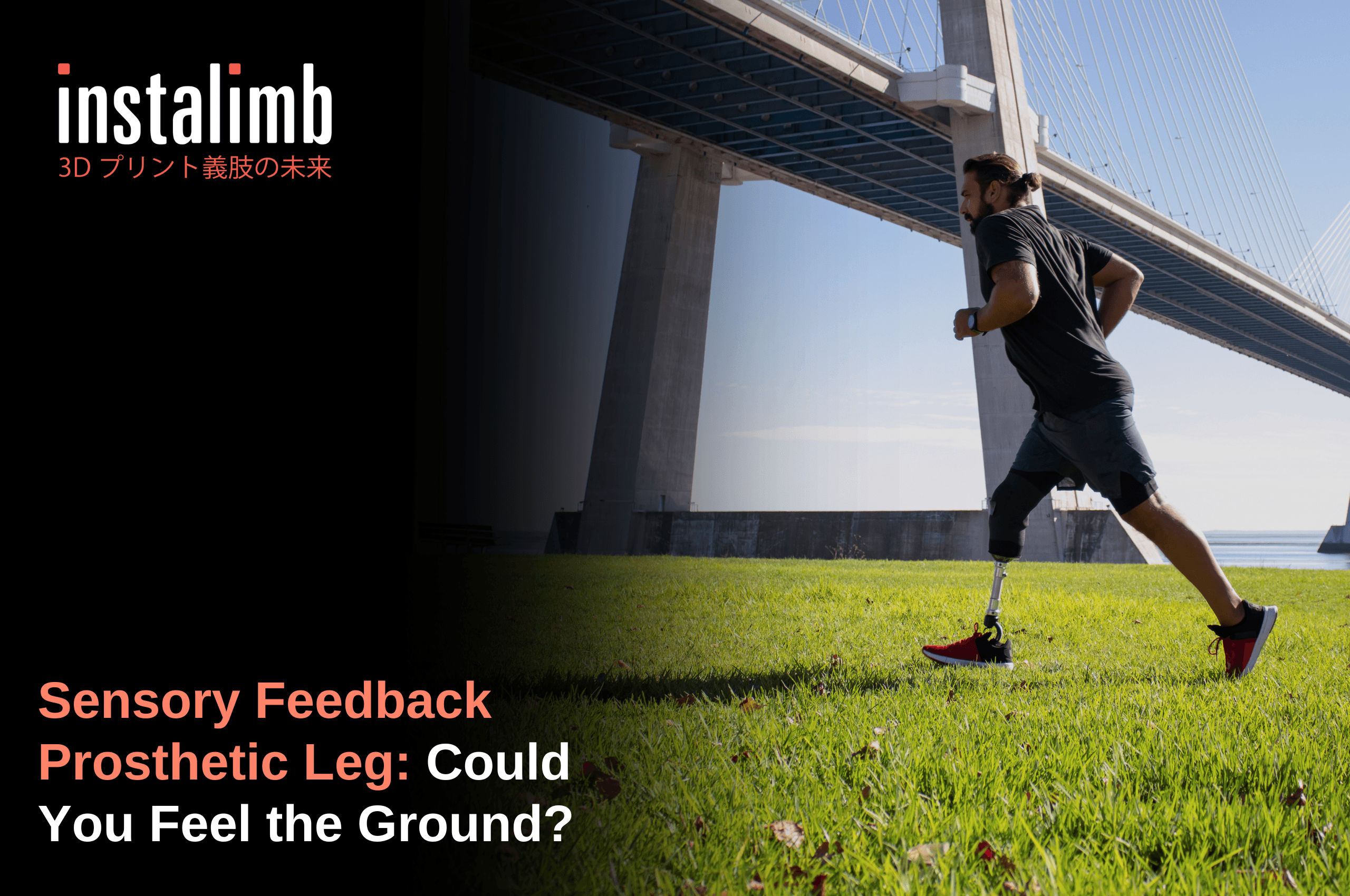
You know the moment: a wet footpath in late September, one loose paving stone and half a second when you cannot be sure your foot has landed flat. If you walk with a prosthetic limb, you have probably wondered whether technology will ever hand back that quiet certainty of feeling the ground beneath you. That question now has a name in research labs around the world, and it is the sensory feedback prosthetic leg.
What Is Sensory Feedback in a Prosthetic Leg?
Sensory feedback in a prosthetic leg means that sensors on an artificial foot or knee connect to your nervous system through a surgically implanted nerve interface, so your brain perceives ground contact, pressure, and movement rather than relying solely on motor control. Today this remains experimental technology, tested only in small international clinical trials.
Think of it like a phone line that was cut during amputation. Your prosthetic leg can already receive instructions from you. The research question is whether it can ring you back.
That two-way conversation is what separates a sensory-feedback system from every prosthesis available in clinics today.
The Global Research: How Close Are We, Really?
The ETH Zurich Nerve-Linked Leg Trial
A 2025 Nature Medicine study led by ETH Zurich researchers found that above-knee amputees using a sensory-feedback bionic leg walked faster with lower oxygen consumption than with a standard prosthetic, and that one participant reported complete elimination of phantom limb pain while a second saw an approximate 80% reduction.
The team, led by Stanisa Raspopovic, connected sensors in the prosthetic foot to nerves in the residual limb. Walking felt less like concentration and more like walking. If phantom limb pain is part of your daily reality, speak to your clinical team about [managing phantom limb pain] rather than waiting on research.
Brain-Computer Interface Breakthroughs in the US
Separately, teams at the University of Pittsburgh and UChicago Medicine have been stimulating the brain directly. In January 2025, they showed that paired electrodes produce clearer, better-localised touch sensations. Carefully orchestrated electrode patterns can even recreate the feeling of an object's edge or something sliding across the skin.
That is remarkable work. It is also, for now, research conducted with a handful of volunteers wired to laboratory equipment.
What the Latest Research Review Actually Says
Here is the honest part. As of 2025, the tactile sensations these neuroprosthetic systems induce are not yet consistently stable. Nor do people perceive them as naturalistic over time or across different subjects.
That assessment comes from a peer-reviewed review in the journal Biomimetics. In practical terms, it means the technology remains confined to research trials rather than routine clinical use.
Sensory-feedback prosthetics are genuine science, but they are not yet a product you can be fitted with anywhere in the world.
Why India's Amputee Reality Is Different
Trauma-Led Amputations and Everyday Terrain
In India, traumatic injury causes an estimated 73.1% of major limb amputations. Around 90.8% affect the lower limb, and 81.3% occur in men. Those figures come from a 2026 systematic review of 7,272 patients across 14 Indian studies, published in the International Journal of Community Medicine and Public Health.
That profile matters. Most Indian amputees are younger, working and moving daily across terrain no laboratory floor resembles: broken kerbs, monsoon-slicked lanes, unlit stairwells, and crowded market gullies. Your need is not a futuristic sensation. It is dependable footing tomorrow morning.
Diabetes, Nerve Damage and Sensation Loss Before Amputation
For many families, sensation was lost long before surgery. Diabetic peripheral neuropathy, nerve damage caused by prolonged high blood sugar, quietly removes protective feeling from the feet. A small wound then goes unnoticed until it becomes serious.
Researchers recently pooled 18 Indian studies covering 55,988 people with diabetes. They found diabetic foot ulcer prevalence at 6.2% nationally, rising to 9.5% in East India. The analysis appeared in the International Journal of Diabetes in Developing Countries in September 2024. If this is your family's story, it helps to understand the link between diabetes and amputation.
Should You Wait for This Technology Before Getting Fitted?
No. And this is worth saying kindly but clearly.
Consider what waiting actually involves:
-
Timeline. Trials of two to a few participants typically need years of larger studies before approval anywhere.
-
Surgery. These systems require an implanted nerve interface, not a device you simply strap on.
-
Access. Even after approval, availability begins in a small number of specialist research centres abroad.
-
Your body, meanwhile. Muscle strength, balance reflexes and confidence all decline during long periods without walking.
Every month spent waiting for tomorrow's technology is a month of walking, working and gait training you do not get back. The strongest position to be in when new technology arrives is already walking well.
The Foundation Any Future Sensory Tech Will Need
Why Fit Precedes Feeling
A prosthetic socket is the load-bearing interface between your residual limb and your artificial leg. Any future sensory-feedback system would have to build on that same structure. Sensors and nerve interfaces under research today simply cannot function on a poorly fitted base.
Feeling Grounded Today, Through Gait Confidence
You will not feel temple marble through your prosthesis this year. You can, however, feel steadier on it. A socket that grips accurately transmits load cleanly through your residual limb, and your body reads that as stability.
Walking with Confidence This Festive Season
Navratri and Dussehra arrive in early October, and with them come garba circles, temple steps, stone courtyards and long evenings on your feet. It is a footwork-heavy season, landing just as the monsoon loosens its grip on North and West India.
A few things help:
-
Practise turning and pivoting before the celebrations, not during them.
-
Choose the outer edge of a garba circle for your first evening.
-
Watch for wet marble near temple entrances, which is far slipperier than dry stone.
-
Build in rest breaks rather than pushing through discomfort.
Our guide covers the rest, including [tips for walking on uneven terrain]. Confidence is not a feeling you wait for; it is one you build, one well-supported step at a time.
Frequently Asked Questions
1. What is sensory feedback in a bionic leg, and how does it work?
Sensory feedback in a bionic leg means sensors built into the artificial foot or knee detect information like ground contact and pressure, then relay it to the wearer's nervous system through a surgically implanted nerve interface. In a 2025 Nature Medicine study led by ETH Zurich researchers, this connection let above-knee amputees walk faster and with lower oxygen consumption than a standard prosthetic leg allowed.
2. Can amputees in India get a prosthetic leg with real sensory feedback today?
Not for routine use. Sensory-feedback bionic legs are still in the research-trial stage, tested on small groups of amputees mainly through university-led studies such as the ETH Zurich trial published in Nature Medicine in 2025. A 2025 review of the field found induced tactile sensations are not yet consistently stable or naturalistic across patients, so no clinic, in India or globally, currently offers this as standard care.
3. Can a sensory-feedback prosthetic help with phantom limb pain?
Early trial results are encouraging but limited. In the ETH Zurich sensory-feedback study, one above-knee amputee using the nerve-connected prosthetic leg reported complete elimination of phantom limb pain, and a second participant saw roughly an 80% reduction. These findings come from a two-person trial, so they point to a promising research direction rather than a proven treatment available to amputees generally.
4. Why do people with diabetes lose feeling in their feet, and how is that related to amputation?
Diabetic peripheral neuropathy is nerve damage from prolonged high blood sugar that gradually destroys protective sensation in the feet, so injuries, pressure sores and infections can go unnoticed until they worsen. This is a leading precursor to diabetic foot ulcers, which affect an estimated 6.2% of people with diabetes in India, and untreated ulcers are a major pathway to non-traumatic lower-limb amputation.
5. If sensory-feedback prosthetics are not available yet, what can help me feel more confident and connected while walking?
A precision-fit prosthetic socket is what is available today. While sensory-feedback prosthetics remain experimental, a socket built to fit the residual limb with millimetre-level accuracy improves stability, balance and gait confidence on uneven ground immediately.
Key Takeaways
-
Sensory-feedback prosthetic legs exist in research trials in Switzerland and the United States, not in clinics.
-
The ETH Zurich results on walking speed, effort and phantom limb pain are genuinely promising, but they come from a very small study.
-
In India, most amputations follow trauma and affect the lower limb, which makes everyday terrain, not laboratory sensation, the immediate challenge.
-
A precision-fit socket is the foundation any future sensory technology will be built upon, so getting fitted well today prepares you for whatever comes next.
You are not behind, and you are not waiting for permission to walk well. The science will keep moving, and when it arrives, it will arrive on top of the same thing that helps you most right now: a socket that fits your body exactly as it is today.
Check out our blog section for more!
So, if you‘re looking for a new artificial leg, interested in a free consultation, confused if your socket is the right fit, or have any other queries, now is the time to reach out to us and try a test socket free of cost. Step it up with Instalimb - Contact us today!
Recent Posts
October 22, 2026
October 14, 2026
October 13, 2026
October 8, 2026
October 6, 2026
October 1, 2026
September 29, 2026
September 26, 2026
September 24, 2026