The Hidden Cost of Overcompensation: Understanding Overuse Syndrome in Amputees
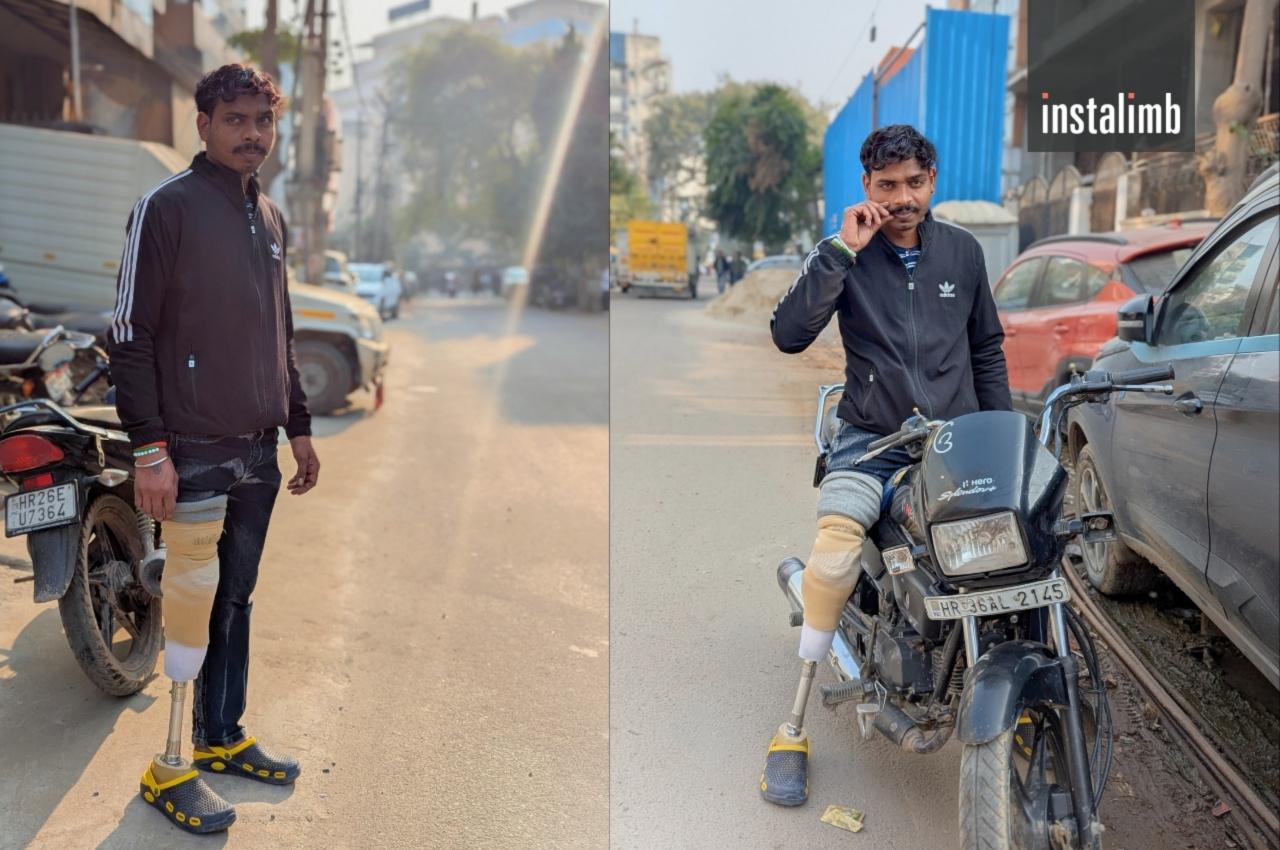
When we think about life after amputation, the focus naturally falls on the limb that was lost. But there is a quieter, slower injury unfolding on the other side of the body, one that doesn't announce itself dramatically but accumulates over months and years until it can no longer be ignored.
It's called Overuse Syndrome, and it affects a significant proportion of amputees worldwide. Understanding it early can make the difference between decades of active, pain-free living and premature joint degeneration that changes your life all over again.
What Is Overuse Syndrome?
Overuse syndrome occurs when a part of the body is asked to carry a disproportionate share of physical load over an extended period. For amputees, particularly lower-limb amputees, this almost always means the intact, or "sound," leg is unconsciously recruited to do the heavy lifting.
It makes intuitive sense. After an amputation, especially in the early weeks and months of recovery and prosthetic fitting, the body compensates. You lean toward your stronger side when standing. You push off harder through your sound foot when walking. You favour the intact knee and hip when climbing stairs or rising from a chair. It feels natural, even protective.
But the human body was engineered for symmetry. Joints are designed to share the load equally. When one side consistently absorbs forces meant to be distributed across two limbs, the accumulated stress triggers inflammation, cartilage breakdown, and eventually structural damage, the hallmarks of osteoarthritis.
Why the "Good" Knee and Hip Are at Risk
The intact knee and hip are particularly vulnerable because they sit at the structural crossroads of every movement you make. Walking, standing, turning, sitting, all of it passes through these joints. When the prosthetic side is not absorbing its fair share of ground reaction force, the sound-side knee and hip compensate with every single step.
Research consistently shows that lower-limb amputees experience a markedly higher prevalence of osteoarthritis in the intact knee compared to the general population, and it tends to arrive earlier. Studies have documented symptomatic knee osteoarthritis appearing in amputees during their 40s and 50s, a decade or more before the typical onset seen in non-amputees.
The hip tells a similar story. Uneven pelvic loading, lateral trunk sway, and altered hip mechanics on the sound side all contribute to accelerated joint wear. What begins as mild stiffness or a dull ache during activity can progress to chronic pain that restricts mobility and independence.
For transfemoral (above-knee) amputees, the lower back also bears elevated risk, as compensatory pelvic tilt and lumbar rotation add cumulative strain to the spine with every stride.
The Role of Gait Asymmetry
At the heart of overuse syndrome lies an asymmetrical gait, a walking pattern in which the prosthetic side and the intact side move differently, absorb force differently, and contribute differently to forward motion.
Some degree of gait asymmetry is normal during early prosthetic use. The brain and body need time to adapt to new biomechanics. The problem arises when asymmetry becomes habitual and goes uncorrected, when it becomes simply "the way I walk," embedded so deeply that the person is no longer aware it is happening.
Common gait deviations that contribute to overuse syndrome include the following:
-
Shortened stance time on the prosthetic side. If you spend less time bearing weight through your prosthesis and more time standing on your sound leg, the cumulative loading on the intact joint multiplies dramatically.
-
Lateral trunk lean. Leaning toward the prosthetic side during the stance phase reduces hip abductor demand, but it also shifts your centre of mass and alters joint loading patterns throughout the intact limb.
-
Reduced step length on the prosthetic side. When the prosthetic stride is shorter, the sound leg is forced into a longer, more effortful stride to compensate, increasing joint stress with every step.
-
Hip hiking. Lifting the pelvis to clear the prosthetic foot during the swing phase adds repetitive strain to the lumbar spine and the intact hip.
None of these deviations are a character flaw or a sign of poor effort. They are the body's ingenious, but ultimately costly, adaptations to an unfamiliar mechanical situation.
Awareness Is the First Intervention
The most powerful tool against overuse syndrome is knowledge. When amputees understand why symmetrical gait matters, not just as an aesthetic goal but as a physiological necessity for long-term joint health, motivation to correct movement patterns shifts from cosmetic to medical.
This is why rehabilitation education should include explicit discussion of overuse syndrome risk from the earliest stages of prosthetic training. Waiting until pain appears is waiting too long. By the time a sound-side knee is aching on the stairs, cartilage changes may already be underway.
The Importance of Prosthetic Fit and Alignment
A prosthesis that fits poorly or is poorly aligned will almost guarantee compensatory gait patterns. Discomfort on the prosthetic side creates a deeply instinctive withdrawal, an unconscious reluctance to load through the side that hurts or feels insecure.
Regular reviews of prosthetic fit, socket comfort, and componentry alignment are not optional extras. They are essential for the health of your entire musculoskeletal system, including the limb you still have. Changes in residual limb volume, activity level, or body weight can all affect how a prosthesis performs biomechanically and should be assessed as part of routine prosthetic care.
Gait Training and Rehabilitation Strategies
Working with an experienced physiotherapist and prosthetist team is the cornerstone of overuse syndrome prevention. Targeted gait retraining can correct ingrained asymmetries even years after amputation, and evidence supports meaningful improvement in loading symmetry with structured intervention.
Strategies that have shown benefit include:
Real-time gait feedback. Instrumented walkways, force plate analysis, and wearable sensors can provide objective data on loading symmetry that neither the amputee nor clinician can reliably assess by eye alone. Seeing the numbers creates powerful motivation to change.
Mirror and video feedback. Simple tools that allow amputees to observe their own gait pattern in real time can accelerate learning of more symmetrical movement.
Targeted strengthening. Residual limb hip musculature, hip abductors, and core stability muscles all play important roles in reducing lateral compensatory movements. Weakness in these areas often perpetuates the very asymmetries that drive joint overload on the intact side.
Step count and pacing awareness. Extended periods of continuous walking beyond current capacity often exacerbate asymmetry as fatigue sets in. Structured progression of walking distance and terrain complexity allows the neuromuscular system to adapt without falling back on compensatory habits.
Aquatic therapy. For those with existing joint pain, water-based exercise reduces loading while allowing gait pattern work and lower-limb strengthening.
What You Can Do Today
You don't need a clinic visit to begin protecting your intact joints. Start with awareness.
Stand in front of a mirror. Are you distributing your weight equally? Press gently into both feet and notice if one side bears more load. Walk toward the mirror slowly. Does your trunk sway to one side? Does one step look noticeably different from the other?
Ask someone to watch you walk from behind. Lateral trunk lean and hip hiking are often far more visible to an observer than to the person experiencing them.
If you're noticing the early signs of side-to-side joint discomfort, stiffness in the morning, an ache after walking, or sensitivity around the knee or hip, don't dismiss it as normal aging. Raise it with your prosthetic and rehabilitation team. Early intervention changes outcomes dramatically.
A Long View of Prosthetic Health
At Instalimb, we believe that a prosthesis is not just a tool for today's mobility, it is an investment in decades of future health. That means looking beyond the prosthetic limb itself to the whole-body biomechanical picture.
Overuse syndrome is largely preventable. The steps required are not heroic: they involve education, regular review of prosthetic fit and gait, targeted exercise, and the willingness to treat subtle asymmetries as the clinical issues they are, rather than minor inconveniences to be endured.
Your intact limb has carried you through the hardest chapter of your life. It deserves the same attention and care you give to your prosthesis.
Walk symmetrically. Protect both sides. Stay active for life.
We are currently operating in Delhi, Gurugram, Hyderabad, Bangalore, Mumbai and Vizag. Contact us at +918447740697 to know more.
So, if you‘re looking for a new artificial leg, interested in a free consultation, confused if your socket is the right fit, or have any other queries, now is the time to reach out to us and try a test socket free of cost. Step it up with Instalimb - Contact us today!
Recent Posts
June 30, 2026
June 18, 2026
June 15, 2026
June 11, 2026
June 3, 2026