Our Blog
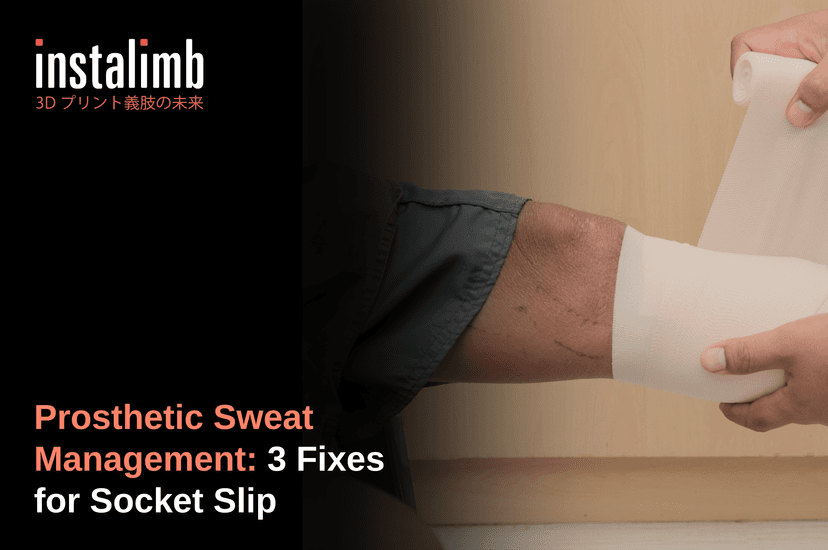
Prosthetic Sweat Management: 3 Fixes for Socket Slip
If you live somewhere as humid as Mumbai or Vizag, you already know your prosthetic liner turns into a personal sauna by mid-afternoon. Prosthetic sweat management is not a minor comfort issue; it is the difference between a socket that stays put all day and one that slips, slides, and puts your skin at real risk.
Prosthetic Sweat Management: Why Your Liner Turns Into a Sauna
A prosthetic liner is essentially a rubber sleeve worn tight against your skin, so heat and moisture have nowhere to go. In hot or humid weather, that trapped sweat turns the liner into a greenhouse for bacteria and softens the seal between your limb and the socket, which is exactly what causes the slipping known as pistoning.
Once you understand that your liner is trapping heat rather than causing it, the fix stops feeling like a mystery and starts feeling like basic maintenance, the same way you would manage sweat in any other tight-fitting gear.
The Real Problem: Pistoning, Odor, and Skin Breakdown
Pistoning is the up-and-down slipping motion that happens when sweat builds up faster than it can escape, reducing suction and stability inside the socket. Left unmanaged, this trapped moisture does more than cause odour.
-
It softens and weakens skin, making it more prone to rashes and breakdown
-
It can lead to fungal infection or irritation that keeps recurring in the same spot
-
It changes your gait as the socket shifts slightly with every step
Managing sweat properly protects your skin just as much as it protects your comfort.
Perforated and Vented Sockets: Letting the Heat Escape
One of the more promising fixes researchers have studied is the perforated or vented liner and socket system, essentially small, engineered holes that let built-up moisture and heat escape instead of pooling against your skin. A study published in Scientific Reports found that vented liner-socket systems reduced humidity buildup during periods of heavy sweating compared to standard, non-vented designs.
Separate research on perforated liners found they were genuinely effective for residual limb skin health, particularly for patients already dealing with wounds or recurring irritation, especially when combined with proper suction.
This is the kind of design detail that benefits from precise digital fitting. Instalimb's 3D CAD modelling and AI-assisted socket design allow venting to be planned around your specific pressure zones rather than added as an afterthought, while still holding the 1 mm level of customisation the socket needs to stay secure.
Medical-Grade Antiperspirants: A Simple Daily Habit
Beyond socket design, a medical-grade antiperspirant applied to the residual limb at night can meaningfully cut down on daytime sweating. This is a genuinely simple habit, not a device upgrade, and it works the same way antiperspirant works anywhere else on the body, by temporarily reducing how much a gland releases.
Clinicians studying residual limb hyperhidrosis, the medical term for excessive sweating in this area, note that options range from these topical antiperspirants all the way to prescribed treatments for more severe cases. Starting with the antiperspirant is the easiest first step for most patients.
Why a Spare Liner in Your Bag Is a Game-Changer
If you commute through Delhi's summer heat or spend a humid afternoon outdoors in Hyderabad, carrying a spare liner and a couple of extra prosthetic socks in your bag is one of the most underrated habits an amputee can build.
-
Swap a soaked liner for a dry one on a long day instead of pushing through discomfort
-
Adjust sock ply as your limb volume shifts with heat and activity
-
Avoid the embarrassment of a slipping, squelching sock in the middle of a meeting or commute
Carrying a backup liner is a small habit that prevents a genuinely disruptive afternoon.
Frequently Asked Questions
Why does my prosthetic leg make a farting sound?
That sound happens when trapped air and sweat get pushed out from between your liner and socket as you walk; it's usually a sign your socket has too much moisture buildup or the seal has loosened. It is extremely common and not something to be embarrassed about, but it is worth mentioning to your prosthetist.
How can I stop my prosthetic liner from slipping in hot weather?
Managing sweat is the main fix: use a medical-grade antiperspirant at night, consider a perforated or vented liner if you sweat heavily, and carry a spare liner and socks so you can swap out a soaked one during the day instead of tolerating slippage.
Are vented or perforated prosthetic sockets actually effective?
Yes, research has shown vented liner-socket systems reduce humidity buildup compared to standard designs, and perforated liners have been linked to better residual limb skin health, especially for patients managing existing wounds or irritation.
Is excessive sweating in a residual limb a medical condition?
It can be. Residual limb hyperhidrosis is the clinical term for excessive sweating in this area, and while many patients manage it with antiperspirants and better socket design, more severe cases can be discussed with a clinician for additional treatment options.
How often should I clean my liner to manage sweat and odour?
Clean your liner nightly with a pH-balanced, fragrance-free soap and let it fully air dry before wearing it again. A damp liner reused the next morning traps bacteria and moisture from the day before, undoing most of your sweat management efforts.
Sweat is one of those unglamorous, rarely discussed parts of living with a prosthetic, but it is also one of the most manageable. With the right socket design, a simple nightly habit, and a spare liner tucked away for hot days, you can stay comfortable, confident, and dry no matter how the weather behaves.
Check out our blog section for more!

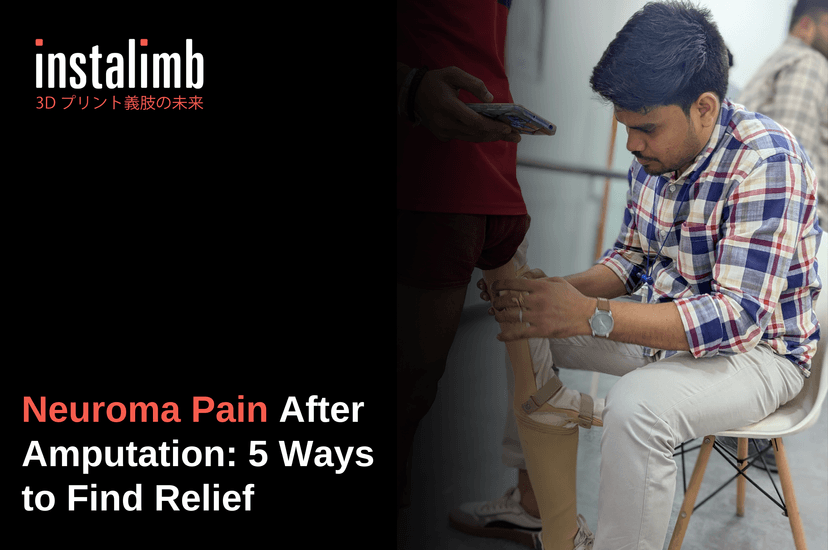
Neuroma Pain After Amputation: 5 Ways to Find Relief
You have healed from surgery, your socket fits, and yet there is a spot on your residual limb that shoots with a sharp, electric jolt every time it is touched or pressed. That is not phantom pain, and it is not in your head. Neuroma pain after amputation is one of the most common, and most under-discussed physical pain points amputees face, and the good news is that most cases can be managed without surgery once you know what you are dealing with.
What Causes Neuroma Pain After Amputation?
A neuroma is a small, tender bundle of nerve endings that forms when a nerve is cut during amputation surgery and tries, unsuccessfully, to regrow. It causes sharp, burning, or electric-shock-like pain at a specific spot on your residual limb, often triggered by socket pressure, touch, or certain movements.
A 2013 study published in PubMed found that roughly 10% of amputees develop a symptomatic neuroma severe enough to need ongoing treatment, and neuromas typically become noticeable between one and twelve months after surgery. The tell-tale sign is a firm, pea-sized lump under the skin that reproduces the shooting pain when your prosthetist presses on it, a test doctors call Tinel's sign.
A painful lump that reproduces sharp, shooting pain when pressed is the clearest sign of a neuroma, not a socket-fit problem alone.
Neuroma Pain vs Phantom Limb Pain: Know the Difference
These two get confused constantly, and treating one like the other wastes months. Phantom limb pain is a sensation that feels like it is coming from the missing part of your leg, a nerve signalling issue rooted in the brain and spinal cord. Neuroma pain, by contrast, comes from a specific, physical, touchable point on your actual residual limb.
You can usually tell the difference with one simple test: press directly on the painful spot. If pressing it reproduces or worsens a sharp, localised pain, you are likely dealing with a neuroma. If the pain feels like it is in a leg that is no longer there regardless of where you touch, that points toward phantom limb pain instead. Many amputees experience both, which is exactly why a proper diagnosis matters before starting treatment.
Non-Surgical Ways to Manage Neuroma Pain
Most neuromas respond well to conservative care before anyone talks about surgery. Options your prosthetist or doctor may suggest include the following:
-
Desensitisation massage: gentle, repeated touch and pressure on the area trains the nerve to stop overreacting
-
Socket offloading: relieving pressure over the exact neuroma site through a modified or redesigned socket
-
Medication: nerve-pain drugs such as gabapentin or pregabalin, prescribed and monitored by your doctor
-
TENS or electrical stimulation and, in some cases ultrasound-guided steroid or alcohol injections directly into the neuroma
Give any single approach several weeks before deciding it has failed. Neuromas respond slowly, and switching treatments too quickly often means abandoning something that was starting to work.
When Surgery Makes Sense: TMR and Beyond
If conservative care does not bring enough relief after a few months, surgery is not a failure, it is simply the next step. Older techniques involve excising the neuroma or burying the nerve ending deeper into muscle, though pain can sometimes recur.
Targeted Muscle Reinnervation (TMR) has become the more modern option: surgeons reroute the cut nerve into a nearby muscle, giving it a productive place to send its signals instead of forming a painful tangle. A systematic review of trauma-related amputees found that 86.2 percent experienced resolution of their neuroma pain after TMR, with over 90 percent reporting overall pain reduction. Regenerative Peripheral Nerve Interface (RPNI) is a newer, related technique showing similar promise.
How a Precision Socket Can Reduce Neuroma Pain
Socket fit will not cure an existing neuroma, but a poorly distributed socket can turn a mild one into a daily source of pain. At Instalimb, our AI-assisted CAD design and 3D printing achieve 1mm-level socket precision, which means we can map exactly where pressure falls on your residual limb and redesign the socket to offload a known sensitive spot rather than pressing directly on it.
At Instalimb, we have designed over 500 prosthetics across Delhi, Gurugram, Hyderabad, Bangalore, Mumbai, and Vizag, and our prosthetists routinely adjust socket geometry around a known neuroma site before a patient even considers further treatment. Our free Test Socket Fitting lets you feel that difference before committing to a final device.
When to See a Doctor About Residual Limb Pain
Do not wait out pain that is getting worse instead of better. Book an appointment if you notice a growing lump that reproduces sharp pain when pressed, pain that keeps you from wearing your prosthetic for a full day, or pain that spreads beyond one specific point on your limb.
A pain that is confined to one touchable point, rather than spread across your whole residual limb, almost always points toward a neuroma and a treatable one at that.
Frequently Asked Questions
1. What does neuroma pain feel like after amputation?
Neuroma pain typically feels sharp, burning, or like an electric shock, centred on one specific spot on your residual limb. It usually worsens when that spot is touched, pressed, or bumped against your socket, unlike phantom limb pain, which feels like it is coming from the missing part of the leg itself.
2. How common are neuromas in amputees?
Research published on PubMed estimates that around 10 percent of amputees develop a symptomatic neuroma severe enough to require treatment, usually appearing between one and twelve months after surgery. Many more amputees develop a neuroma that never becomes painful and needs no treatment at all.
3. Can a prosthetic socket cause neuroma pain?
A socket does not cause a neuroma to form, but a socket that presses directly on an existing neuroma can make the pain far worse day to day. A precisely designed socket that offloads pressure from that exact spot often brings meaningful relief without any medical procedure.
4. Is neuroma pain the same as phantom limb pain?
No, though the two are often confused and can occur together. Phantom limb pain originates in the brain and feels like it is coming from the amputated part of the leg. Neuroma pain comes from a specific physical point on your existing residual limb and gets worse when that point is pressed.
5. Can neuroma pain be treated without surgery?
Yes, in most cases. Desensitisation massage, socket modifications that offload the sensitive spot, nerve-pain medication, and treatments like TENS or guided injections resolve many symptomatic neuromas. Surgery, including newer options like Targeted Muscle Reinnervation, is generally reserved for cases that do not improve after a few months of conservative care.
A sharp, localised pain on your residual limb is not something to simply live with, and it is not a sign that your prosthetic journey has failed. Get it properly diagnosed, ask specifically about neuroma versus phantom pain, and know that between socket redesign, conservative care, and modern surgical options, real relief is almost always available.
Check out our blog section for more!
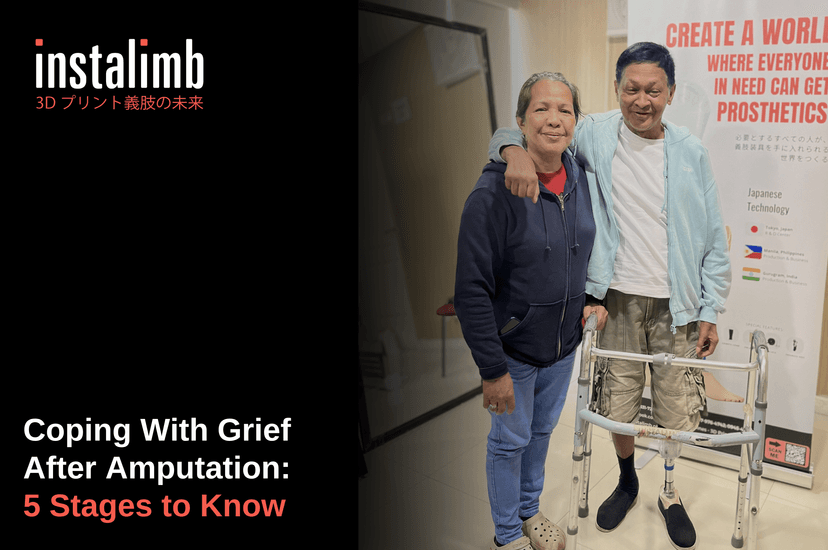
Coping With Grief After Amputation: 5 Stages to Know
Coping With Grief After Amputation: 5 Stages to Know
Losing a limb is not just a physical change, it is an emotional earthquake that can shake your sense of self overnight. If you are searching for ways to understand the grief after amputation you are feeling right now, know that what you are going through has a name, a pattern, and an end point. You are not weak, you are not broken, and you are not alone in this.
Understanding Grief After Amputation: Why It Feels Like Losing a Part of Yourself
Grief after amputation is a natural emotional response to losing a limb, similar to grieving the loss of a loved one. It typically moves through five recognisable stages, denial, anger, bargaining, depression, and acceptance, though not always in order. Understanding these stages helps you recognise your feelings as normal and find your way toward acceptance faster.
Think of it like this: your brain built years of habits, balance, and identity around your original limb. When that changes, your mind needs time to rebuild its map of you, much like updating an old GPS system that still shows a road that no longer exists. This confusion is normal, not a personal failing.
At Instalimb, we have designed over 500 prosthetics across Delhi, Gurugram, Hyderabad, Bangalore, Mumbai, and Vizag, and we see this emotional journey in nearly every patient before they find their footing again, literally and figuratively.
The 5 Stages of Grief and How They Show Up After Limb Loss
The five-stage grief framework, first described by psychiatrist Elisabeth Kubler-Ross, applies closely to limb loss. A peer-reviewed study published in Frontiers in Psychology found that psychological adjustment after amputation unfolds through overlapping emotional phases before people reach stable acceptance (Frontiers in Psychology, 2021).
-
Denial: You might catch yourself expecting to feel your old limb, or avoid looking at your residual limb altogether.
-
Anger: Frustration surfaces, aimed at doctors, family, or even yourself, for the accident or diagnosis that led here.
-
Bargaining: You replay ifs and shoulds, wondering what could have prevented this.
-
Depression: A heavier sadness settles in as the permanence of the change becomes real.
-
Acceptance: You start rebuilding routines, trying a prosthetic, and picturing a future again.
Grief does not always move in this order, and that is completely normal. Some days you might feel accepting, and the next day angry again. Both are part of healing.
Why Grief After Amputation Doesn't Move in a Straight Line
Healing is rarely a neat staircase from denial to acceptance. Research on psychological adjustment after amputation describes it as a dynamic, non-linear process, some people adapt quickly, others take months or years, and many move between stages depending on triggers like pain, a socket that does not fit right, or a hard day.
A sore residual limb or an ill-fitting socket can trigger a fresh wave of anger or sadness even after you thought you had reached acceptance. This is why comfort and precision, the kind that comes from a 3D-printed, custom-fit socket, matter for more than just walking, they matter for your mental state too.
Your emotional recovery and your physical recovery are deeply connected. When your socket fits well, you spend less energy fighting your equipment and more energy healing your mind.
Practical Ways to Cope With Each Stage
You do not have to wait passively for grief to pass. Small, consistent actions can move you through each stage faster.
-
Name the stage you're in out loud or in a journal, this reduces its power over you.
-
Talk to another amputee through a support group or community, hearing “I have felt that too” is often more healing than advice.
-
Move your body gently each day, even simple stretches release stored tension.
-
Ask your prosthetist questions instead of suffering in silence about socket discomfort.
-
Give yourself permission to have a bad day without judging it as failure.
Small daily wins, like standing a little longer or walking to the next room, rebuild confidence faster than trying to “get over it” all at once.
How the Right Prosthetic Fit Supports Emotional Recovery
A prosthetic that pinches, slips, or rubs keeps reopening old wounds, both physical and emotional. This is where technology genuinely changes the emotional experience of limb loss, not just the physical one.
Instalimb uses 3D-CAD scanning and 3D printing to achieve 1mm-level socket customisation, which means your socket is built around the exact shape of your residual limb rather than a generic mould. Fewer painful adjustment visits mean fewer reminders of what you have lost and more focus on what you can still do.
AI-assisted design also helps predict how your limb volume will change over the following weeks, so your socket keeps fitting well instead of becoming loose or tight without warning.
A well-fitted socket is one less thing your mind has to grieve.
When to Seek Professional Support
Grief becomes a concern when it stops moving, when sadness, anger, or withdrawal from life lasts for months without any lighter days. According to the World Health Organization, depression and anxiety are common but treatable conditions, and seeking help early leads to better outcomes.
Reach out to a counsellor, psychologist, or psychiatrist if you notice ongoing sleep problems, loss of interest in things you used to enjoy, or thoughts of hopelessness. Many rehabilitation centres in India now include mental health support alongside physical therapy, recognising that a whole recovery includes the mind.
Asking for help is not weakness, it is one of the strongest steps in your recovery.
Frequently Asked Questions
1. How long does grief after amputation usually last?
There is no fixed timeline for grief after amputation, it can last weeks for some people and over a year for others. Most people move toward stable acceptance within the first year, especially with prosthetic fitting, physiotherapy, and emotional support in place. If sadness or anger persists without any improvement after several months, speaking with a mental health professional is recommended.
2. Is it normal to feel angry after losing a leg?
Yes, anger is one of the most common and normal reactions to limb loss. It often surfaces as frustration toward doctors, family members, or even yourself, and it usually signals that you are actively processing the loss rather than avoiding it. Channel this energy into physiotherapy, journaling, or talking with a counsellor instead of suppressing it.
3. Can a better-fitting prosthetic actually help with emotional recovery?
Yes, a well-fitted prosthetic genuinely supports emotional recovery because physical discomfort often reopens emotional wounds. Sockets built with 3D printing and 1mm-level precision, like those at Instalimb, reduce painful rubbing and repeated adjustments. Fewer physical setbacks mean you can focus your energy on rebuilding confidence and daily routines instead of managing constant discomfort.
4. What are the five stages of grief after amputation?
The five stages are denial, anger, bargaining, depression, and acceptance, based on the well-known Kubler-Ross grief model. After amputation, these stages often overlap or repeat rather than following a straight line. Recognising which stage you are in can help you respond to your emotions with more patience and less self-judgment.
5. Should I join a support group after amputation?
Yes, joining a support group can significantly ease the emotional journey after amputation. Hearing from other amputees who have faced similar grief stages reduces isolation and offers practical coping strategies that professionals alone may not provide. Many Indian cities including Delhi, Mumbai, and Bangalore now have active amputee communities and online groups you can join today.
Moving Forward
Grief after amputation is not a detour from your life, it is part of the road toward your new normal. Every stage you move through, even the hard ones, is proof that you are healing, adapting, and moving forward. With the right support system, the right mindset, and a prosthetic that truly fits, you can rebuild not just your mobility, but your confidence and sense of self too.
Check out our blog section for more!