How to Talk to Children About a Parent’s Amputation
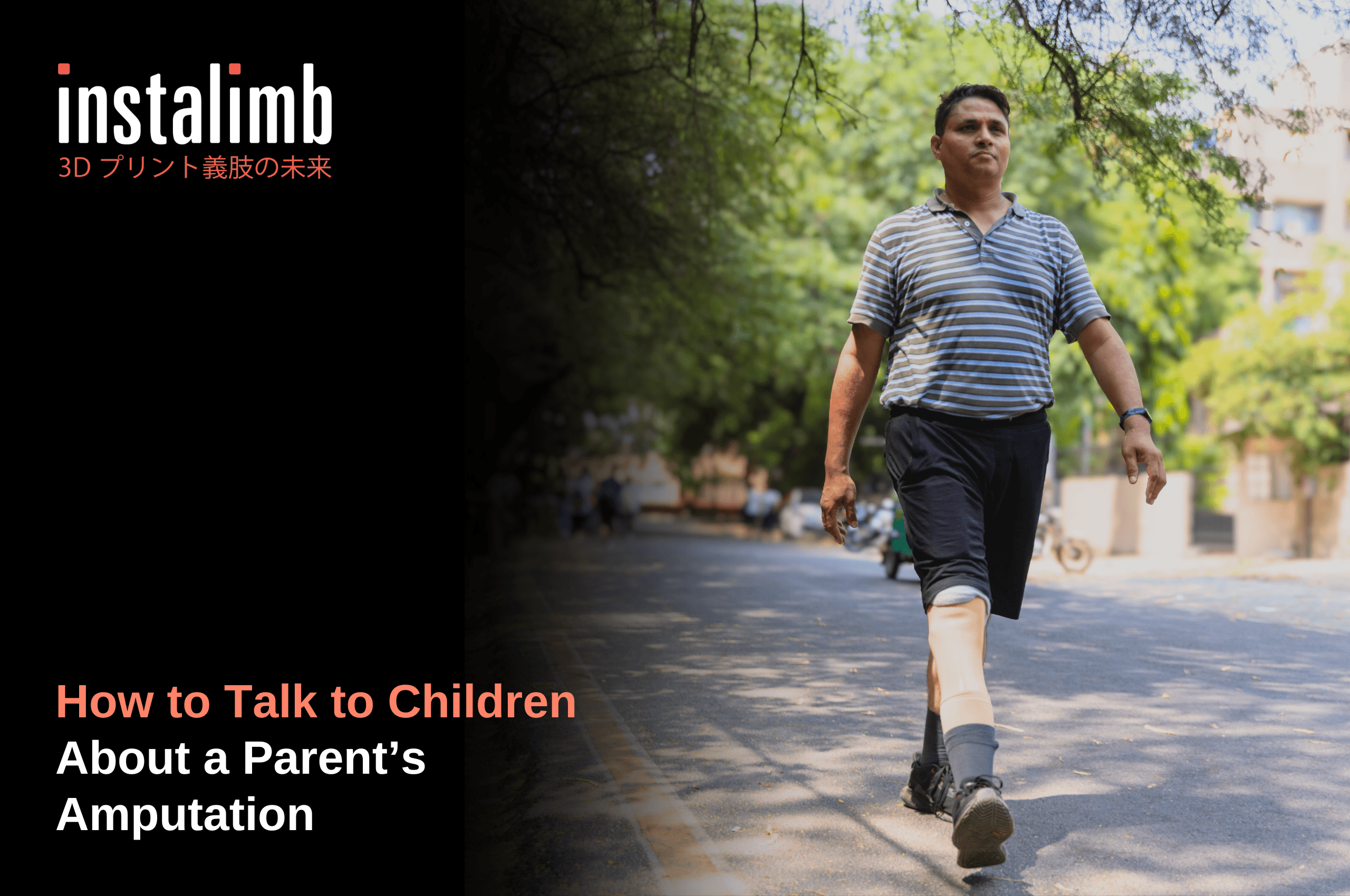
A child may notice a parent’s amputation before they know how to ask about it. They might stare, ask a blunt question, worry that it hurts, or wonder whether it could happen to them. Some children ask many questions; others say very little.
There is no single conversation that works for every family. A calm, honest explanation—suited to the child’s age and questions can help them understand what has changed and what has not: you are still their parent, and you are still there for them.
Start With Simple, Honest Words
Use clear language your child can understand. You could say: “I had an illness or injury, and the doctors had to remove my leg. I’m learning new ways to move, and my prosthetic leg helps me do many things.”
Adapt the explanation to what your child already knows. Young children usually need short answers and reassurance. Older children may ask for more detail. You do not need to explain everything at once.
Avoid promising that nothing will change. Daily routines may change while you recover or adjust to a prosthesis. Instead, explain what you know: “I may need more time to get ready in the morning, but we’ll work out our routine together.”
Let Their Questions Guide the Conversation
Children may ask questions that sound unexpected or direct:
-
“Does it hurt?”
-
“Will it grow back?”
-
“Can I touch your prosthetic leg?”
-
“Can you still pick me up?”
-
“Will it happen to me?”
Answer the question they asked in plain language. If you do not know the answer, it is okay to say so and find out together. You can also ask, “What made you wonder about that?” This gives you a better sense of what they are worried about.
Children may return to the same question more than once. Repeating a question can be their way of checking that the answer still holds.
Reassure Them Without Dismissing Their Feelings
A child might feel worried, sad, confused, or even angry about changes in family life. Listen before trying to solve the feeling. You might say, “It makes sense that you miss how we used to do things,” or, “You can ask me anything, even if you’re not sure how to say it.”
If they worry that your amputation happened because of something they did, reassure them directly: “This was not your fault.” If they worry the same thing will happen to them, answer according to the actual medical circumstances, and ask your care team for help if you need a clear explanation.
Explain the Prosthesis Through Everyday Life
Children often understand new things better when they can see how they fit into daily routines. If you are comfortable, show them the prosthesis and explain what it helps you do. Let them know whether touching it is okay and how to handle it safely.
You might say, “This is the part that fits around my limb. I put it on when I’m ready to walk, and I take it off when I’m resting.” Keep the explanation practical and age-appropriate. A prosthesis can be useful without being described as a replacement for your body or as something that makes every activity easy.
Keep Routines Predictable Where You Can
Familiar routines can help children feel secure while the family adjusts. Keep regular mealtimes, school routines, bedtime rituals, and one-on-one time where possible. If something has to change, explain the change ahead of time and tell them what to expect.
You can involve children in ordinary, age-appropriate ways—such as choosing a book to read together or helping bring a light item to the table. They should not feel responsible for your care. Make it clear that adults and healthcare professionals are supporting you.
Make Room for Changes in Their Feelings
A child may seem fine one day and upset the next. They may also react differently at home, school, or with friends. This does not necessarily mean the conversation went badly; adjusting to a family change can take time.
Check in gently: “How has it felt seeing me use my prosthesis?” or, “Is there anything you’ve been wondering about?” Give them the option to talk later if they are not ready.
When to Ask for Extra Support
Consider speaking with your child’s doctor, school counsellor, or a child mental-health professional if your child’s distress persists or starts to interfere with sleep, school, friendships, or everyday activities. You can also ask your own rehabilitation team for suggestions on how to talk about amputation at home.
Frequently Asked Questions
Should I tell my child about the amputation even if they haven’t asked?
A simple explanation can help prevent a child from filling in gaps with frightening guesses. Choose a calm moment and share only what they are ready to understand.
What if my child is frightened by my prosthesis?
Give them time. Explain what it is and what it does, and let them look from a comfortable distance. Avoid pressuring them to touch it.
Should I hide my pain or frustration from my child?
You do not need to pretend everything is easy. You can say, “I’m having a difficult day, and I’m getting help.” Reassure them that adults are handling your care and that they are not responsible for fixing the problem.
What if I don’t know how to answer a question?
Say so honestly. You can respond, “I’m not sure. Let’s ask my doctor,” or “I’ll think about that and we can talk again.”
A Conversation That Can Continue
Talking with your child about amputation does not have to happen all at once. Answer the questions they bring, explain changes as they come up, and keep showing them what remains steady in your relationship. Your family is learning a new routine together, one conversation at a time.
Check out our blog section for more!
So, if you‘re looking for a new artificial leg, interested in a free consultation, confused if your socket is the right fit, or have any other queries, now is the time to reach out to us and try a test socket free of cost. Step it up with Instalimb - Contact us today!
Recent Posts
September 29, 2026
September 26, 2026
September 24, 2026
September 22, 2026
September 10, 2026
September 8, 2026
September 3, 2026
September 1, 2026
August 29, 2026