Our Blog
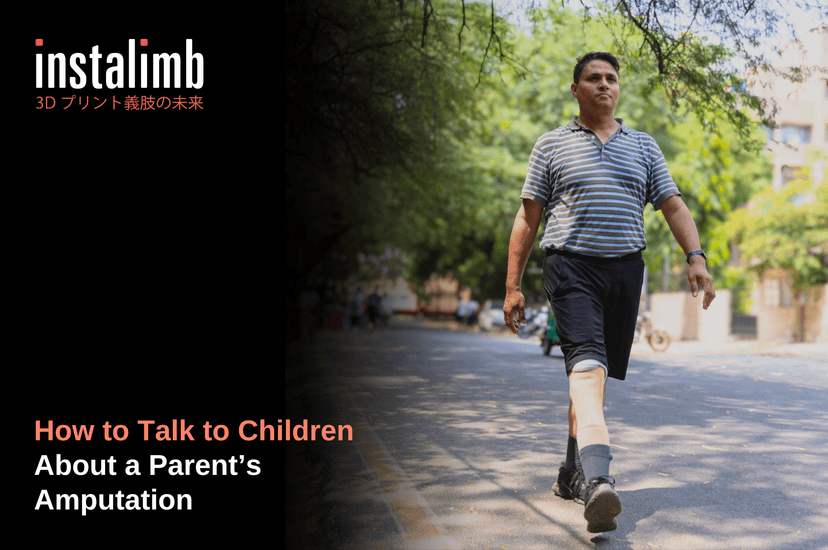
How to Talk to Children About a Parent’s Amputation
A child may notice a parent’s amputation before they know how to ask about it. They might stare, ask a blunt question, worry that it hurts, or wonder whether it could happen to them. Some children ask many questions; others say very little.
There is no single conversation that works for every family. A calm, honest explanation—suited to the child’s age and questions can help them understand what has changed and what has not: you are still their parent, and you are still there for them.
Start With Simple, Honest Words
Use clear language your child can understand. You could say: “I had an illness or injury, and the doctors had to remove my leg. I’m learning new ways to move, and my prosthetic leg helps me do many things.”
Adapt the explanation to what your child already knows. Young children usually need short answers and reassurance. Older children may ask for more detail. You do not need to explain everything at once.
Avoid promising that nothing will change. Daily routines may change while you recover or adjust to a prosthesis. Instead, explain what you know: “I may need more time to get ready in the morning, but we’ll work out our routine together.”
Let Their Questions Guide the Conversation
Children may ask questions that sound unexpected or direct:
-
“Does it hurt?”
-
“Will it grow back?”
-
“Can I touch your prosthetic leg?”
-
“Can you still pick me up?”
-
“Will it happen to me?”
Answer the question they asked in plain language. If you do not know the answer, it is okay to say so and find out together. You can also ask, “What made you wonder about that?” This gives you a better sense of what they are worried about.
Children may return to the same question more than once. Repeating a question can be their way of checking that the answer still holds.
Reassure Them Without Dismissing Their Feelings
A child might feel worried, sad, confused, or even angry about changes in family life. Listen before trying to solve the feeling. You might say, “It makes sense that you miss how we used to do things,” or, “You can ask me anything, even if you’re not sure how to say it.”
If they worry that your amputation happened because of something they did, reassure them directly: “This was not your fault.” If they worry the same thing will happen to them, answer according to the actual medical circumstances, and ask your care team for help if you need a clear explanation.
Explain the Prosthesis Through Everyday Life
Children often understand new things better when they can see how they fit into daily routines. If you are comfortable, show them the prosthesis and explain what it helps you do. Let them know whether touching it is okay and how to handle it safely.
You might say, “This is the part that fits around my limb. I put it on when I’m ready to walk, and I take it off when I’m resting.” Keep the explanation practical and age-appropriate. A prosthesis can be useful without being described as a replacement for your body or as something that makes every activity easy.
Keep Routines Predictable Where You Can
Familiar routines can help children feel secure while the family adjusts. Keep regular mealtimes, school routines, bedtime rituals, and one-on-one time where possible. If something has to change, explain the change ahead of time and tell them what to expect.
You can involve children in ordinary, age-appropriate ways—such as choosing a book to read together or helping bring a light item to the table. They should not feel responsible for your care. Make it clear that adults and healthcare professionals are supporting you.
Make Room for Changes in Their Feelings
A child may seem fine one day and upset the next. They may also react differently at home, school, or with friends. This does not necessarily mean the conversation went badly; adjusting to a family change can take time.
Check in gently: “How has it felt seeing me use my prosthesis?” or, “Is there anything you’ve been wondering about?” Give them the option to talk later if they are not ready.
When to Ask for Extra Support
Consider speaking with your child’s doctor, school counsellor, or a child mental-health professional if your child’s distress persists or starts to interfere with sleep, school, friendships, or everyday activities. You can also ask your own rehabilitation team for suggestions on how to talk about amputation at home.
Frequently Asked Questions
Should I tell my child about the amputation even if they haven’t asked?
A simple explanation can help prevent a child from filling in gaps with frightening guesses. Choose a calm moment and share only what they are ready to understand.
What if my child is frightened by my prosthesis?
Give them time. Explain what it is and what it does, and let them look from a comfortable distance. Avoid pressuring them to touch it.
Should I hide my pain or frustration from my child?
You do not need to pretend everything is easy. You can say, “I’m having a difficult day, and I’m getting help.” Reassure them that adults are handling your care and that they are not responsible for fixing the problem.
What if I don’t know how to answer a question?
Say so honestly. You can respond, “I’m not sure. Let’s ask my doctor,” or “I’ll think about that and we can talk again.”
A Conversation That Can Continue
Talking with your child about amputation does not have to happen all at once. Answer the questions they bring, explain changes as they come up, and keep showing them what remains steady in your relationship. Your family is learning a new routine together, one conversation at a time.
Check out our blog section for more!

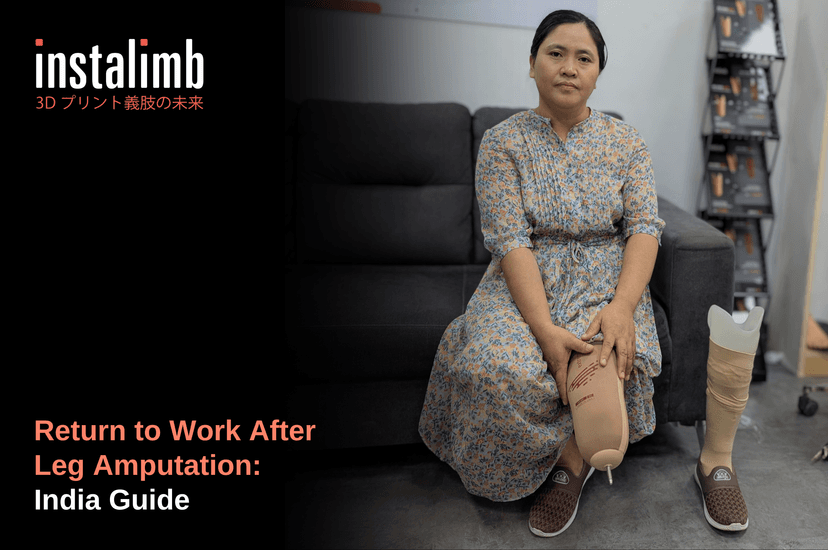
Return to Work After Leg Amputation: India Guide
Losing a leg raises an immediate, practical question that outlasts the hospital stay: what happens to your job? If you are searching for how to plan your return to work after a leg amputation, you are not alone, and the honest answer is that with the right timeline, legal knowledge, and prosthetic fit, going back to earning is realistic for most people.
Is It Possible to Return to Work After Leg Amputation?
Yes, most people can return to work after leg amputation, though the path looks different for each person. Research reports a return-to-work rate of around 30% among lower-limb amputees, according to a 2024 study in Prosthetics and Orthotics International. Prior job tenure and mobility after fitting are the strongest predictors of success, while poor rehabilitation access is the biggest barrier.
That 30% figure is not a ceiling; it is a snapshot of a system where poor access to rehabilitation, not willpower, is the biggest gap.
In India, trauma from road, rail, agricultural, or industrial accidents causes roughly 70% of lower-limb amputations. Most people affected are working-age men who are often the primary earners for their households, according to a 2023 review in the World Journal of Clinical Cases.
Whether you work from an office in Gurugram, run a shop in a smaller town, or return to fieldwork elsewhere, a well-fitted prosthesis and clear information change the odds considerably.
How Long Does It Take to Return to Work After Amputation?
There is no single countdown clock for returning to work, and anyone who tells you otherwise is oversimplifying. Recovery timelines depend on your amputation level, how your wound heals, and how quickly your residual limb, the remaining part of your leg after surgery, settles enough for a prosthetic socket.
Physical Recovery and Prosthetic Fitting Timeline
In the first months, your residual limb changes shape as swelling reduces, a process worth understanding fully in Managing Residual Limb Swelling After Amputation.
Once swelling stabilises, prosthetic fitting begins through several trial sockets before a final socket is confirmed. At clinics like Instalimb, this trial-fitting process uses 3D-printed sockets that are AI-refined to within 1mm of accuracy, catching fit issues early rather than after they cause problems.
Desk-based roles may be feasible within a few months; physically demanding jobs often need six months to a year. Rehabilitation access and mobility recovery, not elapsed time alone, are what actually determine readiness.
Mental and Emotional Readiness
Physical recovery isn't the whole story. Depression affects an estimated 10–63% of lower-limb amputees, according to the same 2023 review. Psychiatric disorder prevalence across studies runs as high as 32–84%, underscoring how much psychological readiness matters alongside physical recovery.
Grief and anxiety about identity and income are normal, and working through them, covered in Coping With Grief After Amputation: 5 Stages to Know, is part of being ready, not a delay to it.
Your Legal Rights at Work in India After Amputation
India has one of the clearest legal frameworks in the region for disability employment rights, and knowing it changes the conversation with your employer from a favour into an entitlement.
The RPwD Act 2016 and Benchmark Disability
The Rights of Persons with Disabilities (RPwD) Act, 2016, recognises a “benchmark disability” for anyone certified at 40% or more disability. This certification, not the amputation itself, unlocks most formal protections and benefits, so getting assessed early is a practical first step, not a bureaucratic afterthought.
UDID Certificate and the 4% Government Job Reservation
Your Unique Disability ID (UDID), a single certified disability card recognised across India, is what proves your benchmark disability status. It qualifies you for a 4% reservation in government jobs, alongside other benefits detailed in Government Schemes for Free Prosthetic Legs India , so apply for it as soon as you are medically eligible.
Section 20: Protection Against Dismissal or Demotion
Section 20 of the RPwD Act protects any employee who acquires a disability during service from being dismissed or demoted because of it. Your employer must either accommodate you in your existing post or offer a suitable alternative, whichever genuinely fits your capability.
A Work-Readiness Checklist Before You Return
Before committing to a full working day, run through a simple checklist. It catches problems while they are still small and fixable, not after they have cost you a job or your confidence.
Physical and Mobility Signals
Check whether you can stand or walk for extended periods without sharp pain, and whether your balance feels dependable on stairs, uneven ground, or crowded spaces, all common features of Indian workplaces and commutes.
Prosthetic Fit and Comfort Check
A socket that fits well should never cause soreness, blistering, or skin breakdown across a full day of wear. This is exactly why trial socket fitting matters as a practical first step: at Instalimb, trial sockets are checked and refined using AI-assisted precision fitting, precise enough to catch soreness, instability, or an uneven gait days before you commit to a full workday, not after. If something feels off, read Signs Your Socket Isn't the One! and get it reviewed early.
Confidence Before You Return
Notice whether you feel ready to navigate a workplace, answer colleagues' questions, and manage a full day away from home. Confidence carries just as much weight as mobility here, since how you feel walking back in shapes how that first week actually goes.
At Instalimb, we have designed over 500 prosthetics across Delhi, Gurugram, Hyderabad, Bengaluru, Mumbai, and Visakhapatnam, working with patients returning to everything from desk jobs to manual trades. We build endoskeletal designs, prosthetic legs with an adjustable internal support pylon rather than a solid outer shell, in both below-knee and above-knee versions matched to your amputation level, and configure them around what each person's actual working day demands.
That's really the point: the right prosthetic configuration changes what feels comfortable for different job types, so a proper fitting review is often a more useful first step than assuming a role change is necessary.
Returning to Different Kinds of Jobs: Formal, Informal, and Field-Based Work
India's workforce is overwhelmingly informal, and a genuinely useful guide has to speak to shop floors and family businesses, not only offices.
Office and Desk-Based Roles
Desk-based and computer-based jobs are usually the fastest to return to, since they demand less standing and walking. Many people resume these roles, often part-time at first, within a few months of a stable prosthetic fit.
Retail, Field, and Driving Roles
Retail counters, field sales, and driving all involve long hours on your feet or specific pedal control. If driving is part of your job, Driving with a Prosthetic Leg: Tips and Legal Guide covers adapted controls and licensing steps worth knowing before you get back behind the wheel.
Family Business and Informal-Sector Work
For the many amputees running or working in a family shop, farm, or trade, there is no HR department to negotiate with, only family and a business that needs you. Here, a comfortable, durable prosthetic and a realistic sense of your own stamina matter more than paperwork.
How to Talk to Your Employer About Your Return
When and How to Disclose
Tell your employer as soon as your recovery timeline is clear enough to discuss, and lead with function: what you can do, what you will need, and roughly when you expect to be back. This framing keeps the conversation practical rather than emotional, for both sides.
Requesting Reasonable Workplace Accommodations
Reasonable accommodations might include a modified workstation, flexible hours around physiotherapy or prosthetic reviews, or temporarily adjusted duties. Requesting these accommodations is a legal right under India's disability law, not a favour you need to apologise for.
Where to Find Disability-Inclusive Jobs in India
If your existing employer cannot accommodate you, or you are looking for a fresh start, several India-specific platforms focus on disability-inclusive hiring:
-
Naukri's dedicated disability hiring listings, connecting candidates directly with employers open to inclusive recruitment
-
Atypical Advantage, a platform built specifically around disability-inclusive employment and livelihoods
-
Career channels run by the Department of Empowerment of Persons with Disabilities (DEPwD)
-
State-run disability employment exchanges, which list openings city by city for candidates with disabilities
These are worth bookmarking even before you start actively job hunting, so you already know where to look the moment you are ready.
Frequently Asked Questions
Can I return to my old job after a leg amputation?
Many amputees do return to their previous role, but current data shows a return-to-work rate of only around 30% among lower-limb amputees overall. Job tenure before the amputation and functional mobility afterwards are the strongest predictors of success. Physical readiness with a well-fitted prosthesis, workplace accessibility, and employer attitude all shape whether the original role, or a modified one, becomes possible.
How do I tell my employer I've had a leg amputation and need accommodations?
Raise it with your employer as early as your recovery allows, framing the conversation around function and timelines rather than the amputation itself. Under Section 20 of the RPwD Act, 2016, an employee who acquires a disability during service cannot be dismissed or demoted for it. This gives Indian employees legal footing to request modified duties, flexible hours, or workstation adjustments while completing rehabilitation.
How long after leg amputation can I go back to work?
There's no single fixed timeline; it depends on amputation level, wound healing, prosthetic fitting progress, and job type, and can range from a few months for desk-based roles to a year or more for physically demanding work. Return-to-work research identifies rehabilitation access and mobility recovery, not elapsed time alone, as the strongest predictors of readiness.
What legal rights do amputees have at work in India?
Under the Rights of Persons with Disabilities Act, 2016, employees who acquire a disability during service are protected from dismissal or demotion under Section 20. Those certified with a benchmark disability of 40% or more, via UDID, qualify for a 4% reservation in government jobs, and the Act more broadly expects employers, including private ones, to provide reasonable workplace accommodation.
How do I know if I'm physically and mentally ready to return to work after amputation?
Readiness combines three things. First, a comfortably fitting, validated prosthetic socket that allows full workday wear without pain or skin breakdown. Second, restored balance and walking endurance matched to the job's physical demands. Third, psychological readiness, since low mood and anxiety are common after limb loss and can themselves slow a return to work if left unaddressed. A physiatrist (a rehabilitation medicine doctor), prosthetist, and counsellor, where needed, should jointly assess this before a full-time return.
Taking the First Step Back to Work
Returning to work after a leg amputation is not about proving you are the same person you were before; it is about building a working life that fits who you are now, on your own timeline. With the right legal knowledge, a prosthetic that truly fits, and support from people who have walked this path before you, a full working life, not a diminished one, is well within reach.
Check out our blog section for more!
Prosthetic Leg Bus Travel Tips: Full India Guide
With Navratri, Dussehra, Diwali, and Chhath Puja all falling between October and November 2026, millions of commuters across India are booking bus tickets and preparing for long-distance highway journeys.
If you wear a prosthetic leg, travelling by bus brings unique challenges: how do you manage sudden braking, narrow aisles, prolonged sitting, and crowded bus stands without your socket fit or balance slipping? These prosthetic leg bus travel tips provide a complete guide for state buses, private Volvo coaches, and intercity transit across India.
Prosthetic Leg Bus Travel Tips: Where to Start
Travelling long distances by bus with a prosthetic leg is manageable with three core habits: select aisle seats or front reserved seating early, adjust sock ply every few hours to manage swelling, and practice safe standing and bracing techniques when buses are moving.
India's amputee population is overwhelmingly lower-limb, with 90.8% of amputations affecting the leg rather than the arm (International Journal of Community Medicine and Public Health, July 2026).
Whether you use a transtibial (below-knee) or transfemoral (above-knee) prosthesis, long bus journeys place continuous pressure on your residual limb. Prolonged sitting without leg movement triggers residual limb oedema (swelling) due to reduced circulation.
A socket built with 1mm-level precision using 3D-CAD design and AI-assisted fitting helps maintain stability on bumpy roads and prevents painful socket pressure shifts.
Boarding, Bus Stops, and Seating: What State and Private Buses Offer
Navigating bus terminals and boarding long-distance coaches requires planning, especially during peak festival rushes between October and November.
Boarding and Navigating Bus Terminal Rushes
State bus terminals and intercity pick-up points often feature steep bus steps, high curbs, and rapid crowds. Arrive at least 30 minutes before departure so you can board calmly without being rushed by crowds. Ask the conductor or driver for assistance if the first step onto the bus is high.
Selecting the Right Seat for Prosthetic Fit
Whenever possible, book or request an aisle seat near the front of the bus. Front seats reserved for senior or disabled citizens offer easier entry and exit. An aisle seat allows you to extend your legs slightly and shift your posture during long stretches on the highway.
Standing and Balance on Crowded State Buses
On crowded state bus routes where seating is not always guaranteed, safety relies on stance, support, and assertive communication.
Asking for a Reserved Seat Assertively
Standing for long durations in a moving bus carries a high fall risk, especially when the vehicle maneuvers through traffic. Requesting a seat reserved for passengers with physical disabilities is a standard right. Ask conductors or fellow passengers clearly and calmly for a seat.
Bracing for Sudden Braking and Sharp Turns
Buses frequently brake sharply or swerve. Hold a handrail or support pole with both hands, keep your feet in a staggered stance rather than side-by-side, and brace your weight on your sound leg when you feel the bus slowing down. Standing near vertical support poles provides immediate support.
Managing Swelling and Socket Fit on Long Bus Journeys
Residual limb swelling during multi-hour bus journeys is common due to sedentary positioning.
Why Long Bus Sitting Triggers Limb Swelling
A February 2021 study in Physical Therapy (Oxford Academic) highlighted that amputees spend 77% of waking hours sitting. On long-distance bus trips, sitting still stops the natural muscle-pump mechanism that drains fluid from the leg, increasing swelling.
Sock-Ply Adjustments and Skin Checks
When your socket feels tight or uncomfortable during a journey:
-
Remove a sock ply during highway rest stops to relieve tightness.
-
Inspect skin and socket contact during rest breaks.
-
Use precision-fitted 3D-CAD sockets to minimise pistoning (up-and-down slipping) caused by bus vibrations.
AC Luxury Sleeper Coaches vs Local State Buses: Key Differences
Bus travel experiences vary widely depending on the vehicle type:
-
AC Luxury Sleeper Coaches: Feature recliner seats or lower sleeper berths, smooth suspension, and fewer sudden stops. Ideal for long overnight interstate journeys.
-
Local State Buses: Feature rigid seating, high step-ups, higher vibration levels, and frequent stops. Require proactive bracing and arriving early for seating.
Festival Season Bus Travel Alert (Oct-Nov 2026)
Festival travel peak season (11 October to 16 November 2026) brings heavy road traffic and packed bus terminals. Book advance seats online for sleeper/AC buses, confirm front/aisle seating, and plan extra buffer time for rest stops.
Pre-Journey Checklist for Bus Travel with a Prosthetic Leg
Before boarding your bus, check off these essential items:
-
Reserve front or aisle seating in advance
-
Pack spare sock plies and a compression wrap in your hand luggage
-
Bring basic adjustment tools (Allen keys) and skin wipes
-
Wear loose trousers and flexible, non-slip footwear
-
Plan hydration and rest-stop movement
-
Verify socket fit before major travel dates
At Instalimb, our 3D-CAD and AI-fitted prosthetics help amputees travel with confidence across India.
Frequently Asked Questions
Can a person with a prosthetic leg travel by long-distance bus in India?
Yes, amputees can travel safely on long-distance state and private buses in India. Reserving front/aisle seats, using rest stops to stretch, and carrying spare sock plies ensure a comfortable trip.
How do I maintain balance while standing in a moving state bus?
Hold vertical support poles with both hands, adopt a staggered stance with feet apart, and keep the majority of your weight centered on your sound leg when anticipating stops.
How do I prevent residual limb swelling on long bus rides?
Shift your position regularly, flex your calf/thigh muscles if possible, elevate your leg slightly during stops, and adjust sock plies if your socket feels overly tight.
Are there reserved seats for amputees on Indian state buses?
Yes, state bus services designate specific seats for passengers with physical disabilities, usually located near the front door for easy access.
What essential items should an amputee pack in a bus carry-on bag?
Carry spare sock plies, skin cleaning wipes, a small mirror for skin checks, a compression wrap, and basic repair/adjustment tools like an Allen key.
Conclusion
Bus travel across India with a prosthetic leg is safe and straightforward when prepared with the right seating, swelling management, and balance techniques. Enjoy your journey this festival season with confidence.
Check out our blog section for more!