Managing Residual Limb Swelling After Amputation
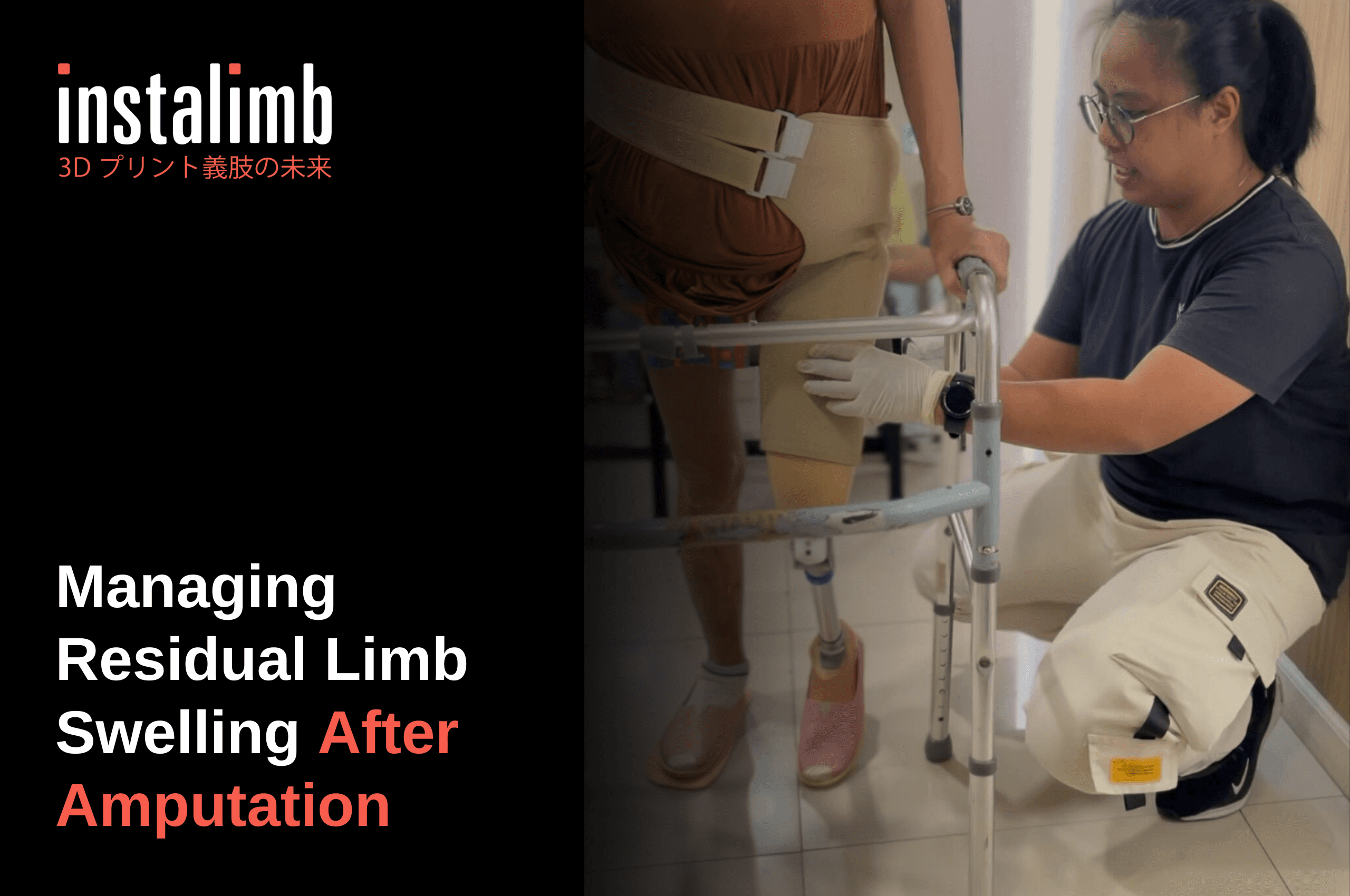
If you have had an amputation, you have likely noticed your residual limb changes shape throughout the day, sometimes feeling tight in the socket by evening and loose by morning. This is residual limb swelling (edema), and it affects nearly every amputee at some stage of their journey. Understanding why it happens, and what you can do about it, can dramatically improve your comfort, your gait, and the lifespan of your prosthetic.
What Is Residual Limb Swelling (Edema)?
Residual limb swelling, also called post-amputation edema, is the build-up of fluid in the tissue at the end of your amputated limb. It is completely normal, especially in the weeks and months after surgery. But it does not always resolve on its own, and if left unmanaged, it can make getting a well-fitting socket nearly impossible.
Residual limb swelling occurs when fluid accumulates in the soft tissue of the stump after amputation. It typically peaks in the first few weeks post-surgery and gradually reduces over 12 to 18 months as the limb matures. Managing edema early leads to a faster, more comfortable transition to a prosthetic leg.
Why Does Swelling Happen After Amputation?
Several factors drive post-amputation edema:
-
Surgery disrupts the lymphatic vessels that normally drain fluid from your limb. Until these pathways heal and reroute, fluid collects in the tissue.
-
Without the natural muscle pump action that walking on two legs provides, circulation slows considerably.
-
Inactivity during early recovery compounds the problem.
-
India's monsoon season (June to September) brings high heat and humidity, which cause blood vessels to dilate and increase fluid retention throughout the body, including the residual limb. Patients at our Delhi and Hyderabad clinics frequently report worsened socket fit during the rainy season.
How Swelling Affects Your Prosthetic Fit
A well-fitting socket is everything in prosthetics. Think of it like a shoe: too tight and it is painful, too loose and it is unstable. Swelling makes this a moving target.
When your residual limb is swollen, the socket feels too tight and can cause pain, skin breakdown, or pressure sores. When the swelling reduces (often overnight), the same socket can feel too loose, leading to pistoning (the limb sliding in and out of the socket), poor gait, and an increased risk of falls.
At Instalimb, we have designed over 500 prosthetics across Delhi, Gurugram, Hyderabad, Bangalore, Mumbai, and Vizag. One of the most consistent things we hear from new patients is that their previous sockets never fit the same way two days in a row. With our 1 mm-level 3D-CAD design and AI-assisted socket customisation, we can account for typical volume fluctuation when engineering your socket, reducing that frustrating loose-tight cycle.
7 Proven Ways to Manage Residual Limb Swelling
-
Use compression shrinker socks: Worn whenever you are not in your prosthetic, they apply graduated pressure to reduce fluid build-up. Start with a lighter compression and increase gradually as your limb tolerates it.
-
Elevate your residual limb: When resting or sleeping, keep it above the level of your heart. Gravity becomes a powerful, free tool for draining excess fluid.
-
Gentle proximal massage: Massaging toward the body (never just at the tip) stimulates lymphatic drainage. Ask your prosthetist or physiotherapist to demonstrate the correct technique before trying it at home.
-
Stay active: Even chair-based exercises and upper-body movement improve overall circulation and reduce fluid pooling in the residual limb.
-
Reduce sodium intake: High-salt diets cause water retention across the body. Research published in the Journal of Rehabilitation Research and Development found that dietary sodium management significantly improved residual limb volume stability in transtibial amputees.
-
Stay well hydrated: It feels counterintuitive, but drinking enough water helps your kidneys flush excess fluid more efficiently.
-
Adjust your sock ply: If your socket uses a sock system, adding or removing ply socks lets you compensate for daily volume changes between full professional refits.
When Swelling Is a Warning Sign
Not all swelling is routine. Contact your prosthetist or doctor promptly if you notice:
-
Sudden, rapid swelling that appears within hours
-
Redness, warmth, or skin that looks shiny and stretched (possible infection)
-
An open wound or skin breakdown at the end of the limb
-
Swelling that does not reduce at all after a full night of elevation and compression
-
New, sharp, or worsening pain
These can indicate deep vein thrombosis (DVT), infection, or socket-related tissue damage that needs prompt professional attention.
How 3D-Printed Sockets Help You Manage Volume Changes
Traditional plaster-cast sockets are made at a single point in time. If your limb volume changes meaningfully, you often need an entirely new socket, which is expensive and time-consuming.
Instalimb's 3D-printed socket approach changes this equation. Using 3D scanning and CAD software, your prosthetist creates a precise digital model of your residual limb. When volume changes, we can modify the digital file and print an adjusted socket far faster than the traditional method, cutting downtime and cost for patients across our network.
During monsoon season especially, our Hyderabad and Bangalore patients benefit from digital records that allow quick socket adjustments when humidity-related swelling fluctuates. This is the kind of responsive, precision care that traditional prosthetics simply cannot offer.
Building a Long-Term Swelling Management Routine
Managing edema is not a one-time fix. It is a daily habit that becomes second nature over time. Here is a simple framework to follow:
-
Every morning: Check your residual limb for redness, skin changes, or unusual tenderness before putting on your prosthetic.
-
Every evening: Wear your shrinker sock and elevate your limb while relaxing.
-
Every week: Note whether your socket feels consistently tighter or looser and report changes to your prosthetist.
-
Every season: Book a socket check at the start of each season, especially before monsoon and summer, when India's climate is most likely to affect limb volume.
Think of your residual limb like a high-performance athlete's foot: you check it, care for it, and adapt your equipment as it changes. That mindset is what separates amputees who thrive from those who struggle.
Take Control of Your Comfort
Residual limb swelling is one of the most common challenges in prosthetic care, but it is one of the most manageable. With the right daily habits, the right nutritional choices, and the right prosthetic partner, you can stay comfortable, active, and confident regardless of what the weather or your recovery stage throws at you. Your journey does not have to be defined by discomfort. It can be defined by how well you adapt and move forward.
Check out our blog section for more!
Frequently Asked Questions
How long does residual limb swelling last after amputation?
Swelling is most intense in the first 6 to 12 weeks after surgery. Most limbs stabilise in shape between 12 and 18 months post-amputation. However, day-to-day volume changes due to heat, activity level, and diet are lifelong and completely normal. That is why regular socket check-ins remain an important part of ongoing prosthetic care, even years after amputation.
Can I wear my prosthetic if my residual limb is swollen?
You can wear your prosthetic with mild swelling by adding extra sock ply to compensate for the added volume. However, if swelling makes the socket painfully tight, causes skin breakdown, or if you notice redness or heat in the limb, remove the prosthetic and consult your prosthetist before wearing it again.
Does the monsoon season make residual limb swelling worse in India?
Yes. The high heat and humidity of India's June-to-September monsoon season causes vasodilation and increased fluid retention throughout the body, including the residual limb. Amputees in cities like Mumbai, Hyderabad, and Bangalore commonly report worsened socket fit during this period. Staying hydrated, wearing breathable liners, and scheduling a mid-season socket check are your best defences.
What foods help reduce swelling after amputation?
Foods rich in potassium, such as bananas, sweet potatoes, and spinach, help counterbalance sodium and reduce water retention. Anti-inflammatory foods like turmeric, ginger, and omega-3-rich fish can support tissue recovery. Reducing processed and high-sodium foods, including pickles, packaged snacks, and fast food, is the single most impactful dietary change for most patients.
When should I get a new socket if swelling has changed my limb shape significantly?
If your socket no longer fits well even after adjusting sock ply, or if you are experiencing pain, skin sores, or instability while walking, it is time for a professional socket evaluation. At Instalimb, we offer a free test socket fitting so you can try a new fit before committing. Contact us to book your appointment in Delhi, Hyderabad, Bangalore, Mumbai, Gurugram, or Vizag.
So, if you‘re looking for a new artificial leg, interested in a free consultation, confused if your socket is the right fit, or have any other queries, now is the time to reach out to us and try a test socket free of cost. Step it up with Instalimb - Contact us today!
Recent Posts
October 1, 2026
September 29, 2026
September 26, 2026
September 24, 2026
September 22, 2026
September 10, 2026
September 8, 2026
September 3, 2026
September 1, 2026