Yoga for Amputees: 8 Poses for Balance and Strength
With International Yoga Day on June 21 just around the corner, millions across India are rolling out their mats. But if you are an amputee, you might be wondering whether yoga is actually safe for you, whether it can help with balance, and whether your body is ready for it. The short answer is yes, and the benefits go far deeper than you might expect.
Whether you are a below-knee or above-knee amputee, yoga offers a gentle yet powerful way to rebuild strength, improve your posture, and ease some of the physical strain that comes with adapting to a prosthetic limb. You do not need to be flexible, fit, or experienced. You just need a mat and a willingness to start.
Why Yoga Works Well After Amputation
Yoga for amputees is an adapted practice of standing, seated, and supine poses designed to rebuild balance, core strength, and proprioception after limb loss. With prosthetist guidance and props like walls or chairs, amputees can safely practice 8 foundational poses that improve gait, reduce phantom limb pain, and increase prosthetic wear time.
After an amputation, your body has to relearn how to balance and move. Muscles on the non-amputated side often work overtime, which can lead to hip, back, and knee pain over time. A 2023 randomised controlled trial published in the International Journal of Yoga (PubMed ID: 38204772) found that an 8-week yoga intervention significantly improved static and dynamic balance in lower-limb amputees, with participants reporting reduced fall incidence and greater confidence during prosthetic use.
Prosthetic user yoga differs from a standard yoga class in one key respect: the session must account for asymmetric loading, residual limb sensitivity, and the interface between skin and socket when moving between poses. Once you understand that distinction, the practice becomes far more sustainable. You stop chasing the shape of a pose and start listening to what your body is telling you, breath by breath.
Key Benefits of Yoga for Amputees
Here is what a consistent yoga practice can do for you:
-
Strengthen your core, which is the foundation of stable prosthetic walking
-
Improve proprioception, your brain's sense of where your body is in space
-
Reduce stump swelling through gentle lymphatic movement
-
Ease phantom limb pain via focused breathing and grounding techniques
-
Improve hip and back alignment, reducing overuse strain on your sound limb
-
Build mental resilience and reduce anxiety related to mobility
Yoga for Amputees in India: AYUSH, IDY 2026, and the Adaptive Movement
In India, yoga is no longer just a personal wellness habit; it has become a recognised pillar of rehabilitation. The Ministry of AYUSH has formally acknowledged yoga's therapeutic role in physical and mental recovery, and it now sits alongside physiotherapy in many integrative rehab programmes across the country. For amputees, this recognition matters, because it means more clinicians are open to recommending yoga as part of a structured recovery plan.
International Yoga Day 2026, observed on June 21, is expected to draw over 100 million participants across India and the world, making it the largest single yoga event of the decade. It is also a powerful moment for amputees to step onto the mat, often for the first time.
The relevance is not symbolic alone. India has one of the highest rates of diabetes-related lower-limb amputation in Asia, with thousands of new amputees adapting to prosthetics every year. For this growing community, adaptive yoga India is becoming a genuine support system, with rehab centres, NGOs, and independent instructors building inclusive classes in Delhi, Mumbai, Bangalore, and Hyderabad. The movement is small but expanding quickly, and your practice can be part of it.
Before You Begin: Safety Tips
A few things to keep in mind before your first session:
-
Always consult your prosthetist or physiotherapist before starting a new exercise routine.
-
Decide whether to practice with or without your prosthetic. Below-knee amputees often find it easier to wear their limb for standing poses. Above-knee amputees may prefer seated or floor-based sequences.
-
Use props freely. Blocks, bolsters, and a chair are not cheating. They are smart tools.
-
Start with 15 to 20 minutes, two to three times a week, and build gradually.
-
If a pose causes stump pain or skin irritation, stop immediately and check your socket fit.
8 Yoga Poses That Build Balance and Strength for Amputees
These amputee yoga poses are chosen specifically because they can be adapted for both below-knee and above-knee amputees, and most can be done seated, kneeling, or standing.
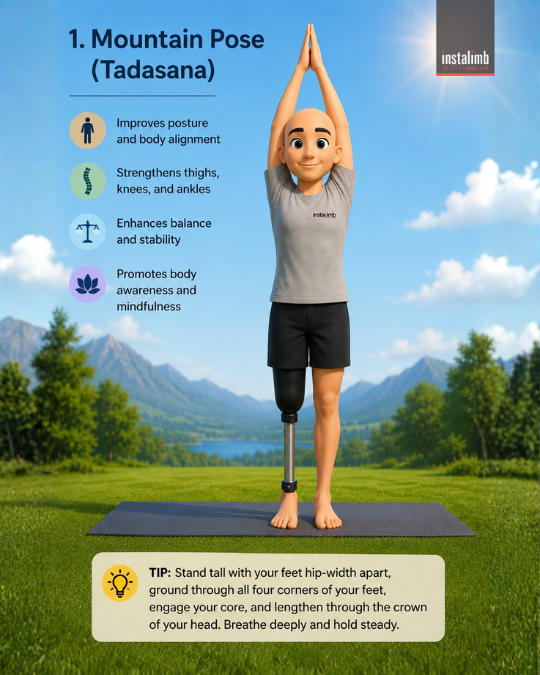
1. Mountain Pose (Tadasana)
Stand tall at the top of your mat, with your sound foot planted firmly. If balance is a challenge, place one hand lightly on a wall or chair. Focus on lengthening your spine and pressing through the floor. This simple standing pose retrains your nervous system to find a stable centre of gravity, which changes with limb loss.
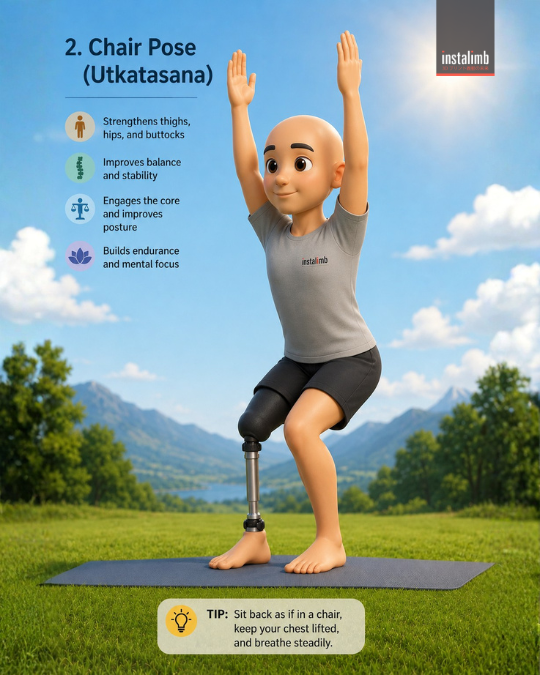
2. Chair Pose (Utkatasana)
From Mountain Pose, bend your knee as if sitting back into a chair. Hold for 5 breaths. This strengthens the quadriceps and glutes of the sound leg, reducing the load placed on your hip. Prosthetic users can perform this pose while wearing their limb for added stability.
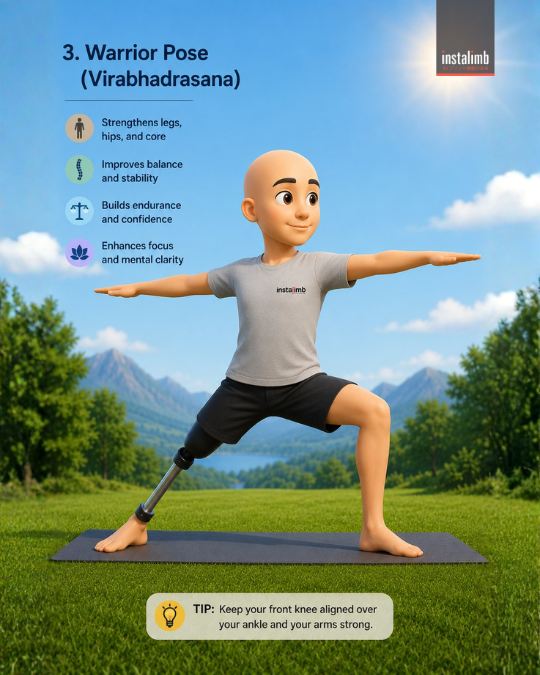
3. Warrior I (Virabhadrasana I) at a Wall
Step one foot back and bend your front knee to 90 degrees. Keep one hand on the wall for balance. Warrior I builds hip flexor strength and opens the chest, both of which support confident prosthetic walking. Modify by shortening your stance width if you feel unsteady.
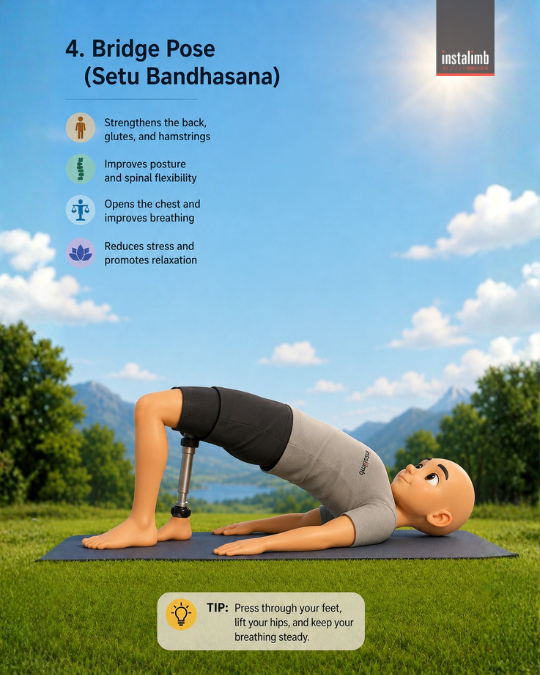
4. Bridge Pose (Setu Bandhasana)
Lie on your back with knees bent. Press your foot and stump into the mat and lift your hips. Bridge Pose is one of the most effective poses for strengthening the glutes and lower back without stressing the socket. At Instalimb, we have seen many patients report improved socket comfort after adding bridge pose to their physiotherapy routine, as it stabilises the pelvis.
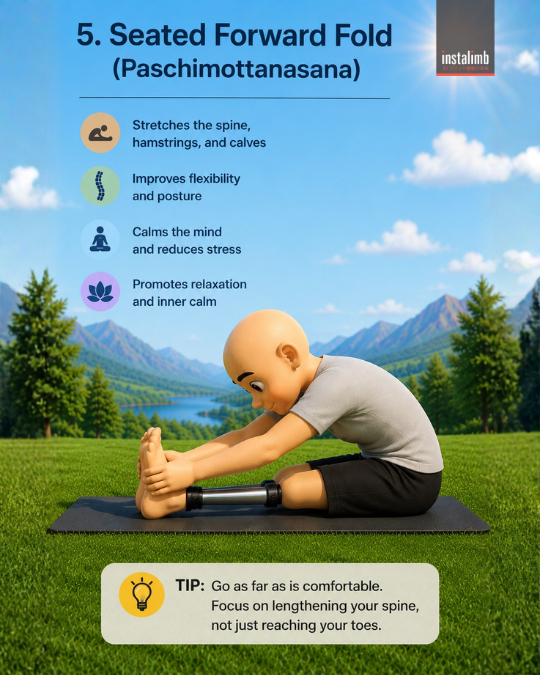
5. Seated Forward Fold (Paschimottanasana)
Sit with your legs extended and slowly fold forward from the hips. This stretches the hamstrings and calves of the sound limb, which are often chronically tight in amputees who walk with a compensatory gait. Hold for 30 to 60 seconds.
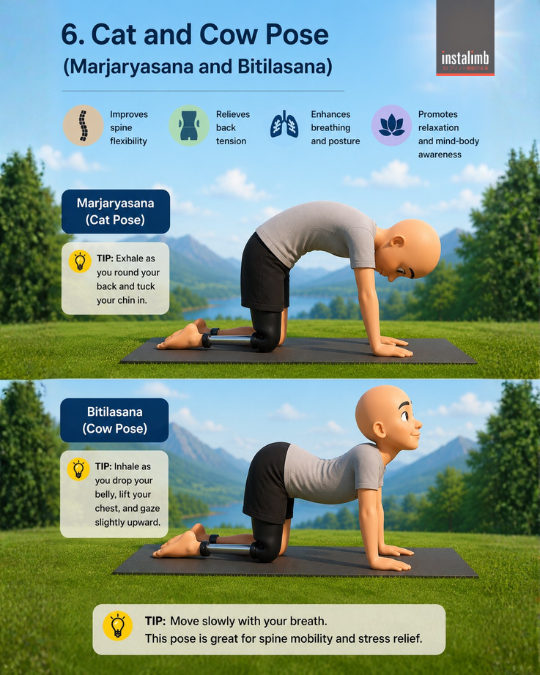
6. Cat and Cow Pose (Marjaryasana and Bitilasana)
On hands and knees, alternate between arching and rounding your spine on each breath. This gentle flow warms up the spine, relieves lower back tension, and is particularly helpful for above-knee amputees who carry extra load through their lumbar region.
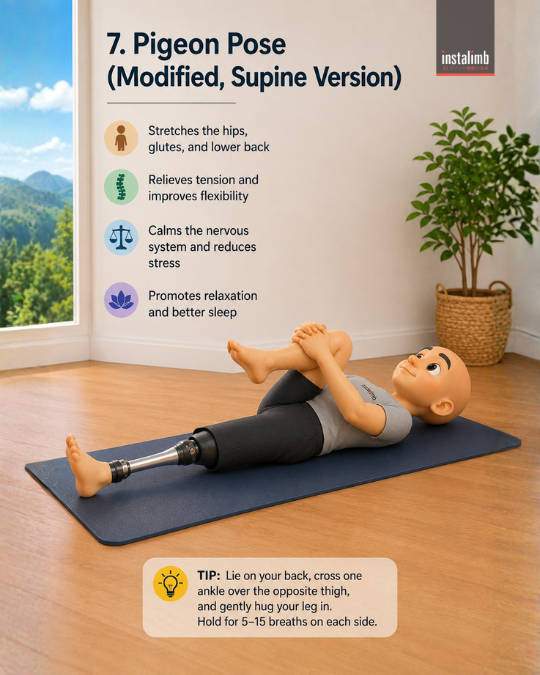
7. Pigeon Pose (Modified, Supine Version)
Lie on your back and cross one ankle over the opposite knee, gently pressing the knee away. This releases the hip rotators, a group of muscles that work extra hard when you walk with a prosthetic. Hold for 60 to 90 seconds per side.
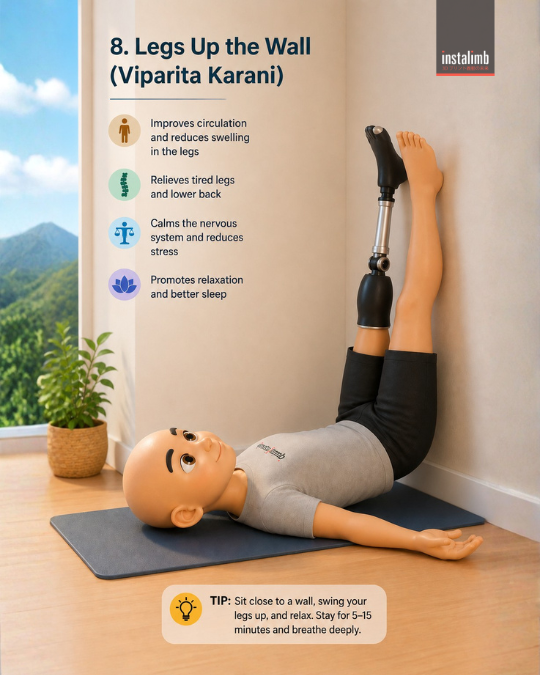
8. Legs Up the Wall (Viparita Karani)
Sit sideways against a wall, then swing your legs up and lie back. Hold for 5 to 10 minutes. This restorative pose reduces stump swelling, calms the nervous system, and is ideal to do after a long day of prosthetic use. It costs nothing and works every time.
Adapting Poses for Above-Knee vs Below-Knee Amputees
If you are a below-knee amputee, most standing poses are accessible with your prosthetic on. For floor work, you may find it more comfortable to remove the limb and use a folded blanket under the stump for cushioning.
If you are an above-knee amputee, focus primarily on seated and floor-based poses. Warrior sequences can be adapted from a kneeling position. A chair beside you at all times turns any standing pose into a safe one. The key is that yoga is about awareness, not athleticism.
How Your Prosthetic Socket Affects Your Yoga Practice
A well-fitted socket makes all the difference. If your socket is loose, ill-fitting, or causes skin breakdown, no amount of yoga will help, because you will be compensating for pain instead of building strength. This is one reason why socket precision matters so much.
Once you start practicing regularly, the relationship between socket fit and yoga becomes immediately obvious: a precise fit lets you focus on the pose, while a loose or ill-fitting socket pulls your attention toward discomfort.
At Instalimb, we design every socket using 3D-CAD and AI-assisted measurement tools that deliver 1mm-level precision. Our Japanese-origin technology ensures that the socket fits your residual limb like a custom glove, not a general approximation. Across our clinics in Delhi, Gurugram, Hyderabad, Bangalore, Mumbai, and Vizag, we have designed over 500 prosthetics for people who want to do more than just walk. They want to live fully.
If you are noticing that yoga poses feel unsteady or that your stump is uncomfortable, it may be time for a socket review. Our team offers a free test socket fitting so you can feel the difference before committing.
How Often Should You Practice Yoga as an Amputee?
Start with two sessions per week of 20 to 30 minutes each. Focus on the floor-based and seated poses first, building confidence before adding standing sequences. Within four to six weeks, most people find a noticeable improvement in balance, stump resilience, and overall energy. Yoga is a long game, and every session counts, even the short ones.
Your Journey on the Mat Starts Now
Yoga does not ask you to be perfect or pain-free. It asks you to show up, breathe, and move a little more than you did yesterday. For amputees, that philosophy is a perfect match, because recovery is never a straight line; it is a practice. With the right socket, the right support, and eight simple poses, you might just discover that the mat is one of the most empowering places you can be this summer.
Check out our blog section for more interesting information!
Frequently Asked Questions
Yes. Above-knee amputees can safely practice yoga by focusing on seated, kneeling, and floor-based poses. A chair or wall nearby provides extra support for any standing work. Always check with your physiotherapist before starting, and choose an instructor who has experience working with people with disabilities or limb differences.
Evidence suggests it can. Slow, focused breathing used in yoga activates the parasympathetic nervous system, which can reduce the intensity of phantom sensations. Grounding poses, where you press a part of your body firmly into the floor, also help the brain recalibrate its body map. Many amputees report reduced phantom pain with consistent practice over four to eight weeks.
It depends on the pose and your comfort level. Below-knee amputees often find that wearing their prosthetic helps with standing balance poses. For floor work, many prefer to remove it. Above-knee amputees typically do more of their practice without the prosthetic. Try both and see what feels more stable and natural for you.
Dedicated amputee yoga classes are still rare in India, but adaptive yoga is a growing movement. Look for instructors with experience in yoga for disability or physical rehabilitation in cities like Delhi, Bangalore, Hyderabad, and Mumbai. Online adaptive yoga communities are also a great starting point, where you can follow along from home before joining a group class. The good news is that adaptive yoga India is seeing real growth, especially in Delhi, Hyderabad, and Bangalore, where rehab-focused yoga instructors are increasingly available.
Most people notice improved balance and reduced stump fatigue within three to four weeks of consistent twice-weekly practice. Core strength gains typically appear after six to eight weeks. The mental benefits, such as reduced anxiety and better sleep, often show up even faster, sometimes within the first few sessions.
So, if you‘re looking for a new artificial leg, interested in a free consultation, confused if your socket is the right fit, or have any other queries, now is the time to reach out to us and try a test socket free of cost. Step it up with Instalimb - Contact us today!
Recent Posts
October 23, 2026
October 22, 2026
October 14, 2026
October 13, 2026
October 8, 2026
October 6, 2026
October 1, 2026
September 29, 2026
September 26, 2026