Return to Work After Leg Amputation: India Guide
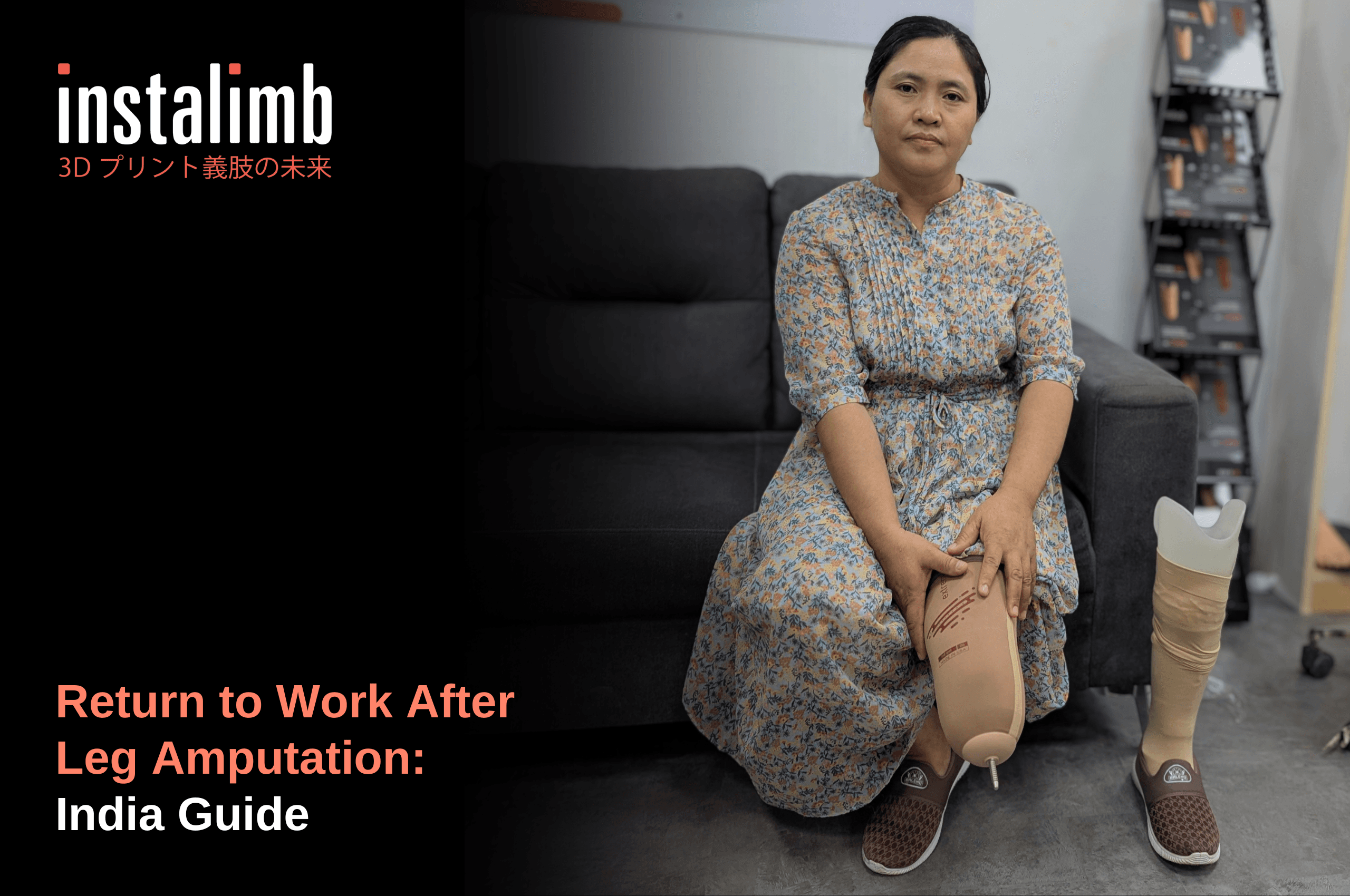
Losing a leg raises an immediate, practical question that outlasts the hospital stay: what happens to your job? If you are searching for how to plan your return to work after a leg amputation, you are not alone, and the honest answer is that with the right timeline, legal knowledge, and prosthetic fit, going back to earning is realistic for most people.
Is It Possible to Return to Work After Leg Amputation?
Yes, most people can return to work after leg amputation, though the path looks different for each person. Research reports a return-to-work rate of around 30% among lower-limb amputees, according to a 2024 study in Prosthetics and Orthotics International. Prior job tenure and mobility after fitting are the strongest predictors of success, while poor rehabilitation access is the biggest barrier.
That 30% figure is not a ceiling; it is a snapshot of a system where poor access to rehabilitation, not willpower, is the biggest gap.
In India, trauma from road, rail, agricultural, or industrial accidents causes roughly 70% of lower-limb amputations. Most people affected are working-age men who are often the primary earners for their households, according to a 2023 review in the World Journal of Clinical Cases.
Whether you work from an office in Gurugram, run a shop in a smaller town, or return to fieldwork elsewhere, a well-fitted prosthesis and clear information change the odds considerably.
How Long Does It Take to Return to Work After Amputation?
There is no single countdown clock for returning to work, and anyone who tells you otherwise is oversimplifying. Recovery timelines depend on your amputation level, how your wound heals, and how quickly your residual limb, the remaining part of your leg after surgery, settles enough for a prosthetic socket.
Physical Recovery and Prosthetic Fitting Timeline
In the first months, your residual limb changes shape as swelling reduces, a process worth understanding fully in Managing Residual Limb Swelling After Amputation.
Once swelling stabilises, prosthetic fitting begins through several trial sockets before a final socket is confirmed. At clinics like Instalimb, this trial-fitting process uses 3D-printed sockets that are AI-refined to within 1mm of accuracy, catching fit issues early rather than after they cause problems.
Desk-based roles may be feasible within a few months; physically demanding jobs often need six months to a year. Rehabilitation access and mobility recovery, not elapsed time alone, are what actually determine readiness.
Mental and Emotional Readiness
Physical recovery isn't the whole story. Depression affects an estimated 10–63% of lower-limb amputees, according to the same 2023 review. Psychiatric disorder prevalence across studies runs as high as 32–84%, underscoring how much psychological readiness matters alongside physical recovery.
Grief and anxiety about identity and income are normal, and working through them, covered in Coping With Grief After Amputation: 5 Stages to Know, is part of being ready, not a delay to it.
Your Legal Rights at Work in India After Amputation
India has one of the clearest legal frameworks in the region for disability employment rights, and knowing it changes the conversation with your employer from a favour into an entitlement.
The RPwD Act 2016 and Benchmark Disability
The Rights of Persons with Disabilities (RPwD) Act, 2016, recognises a “benchmark disability” for anyone certified at 40% or more disability. This certification, not the amputation itself, unlocks most formal protections and benefits, so getting assessed early is a practical first step, not a bureaucratic afterthought.
UDID Certificate and the 4% Government Job Reservation
Your Unique Disability ID (UDID), a single certified disability card recognised across India, is what proves your benchmark disability status. It qualifies you for a 4% reservation in government jobs, alongside other benefits detailed in Government Schemes for Free Prosthetic Legs India , so apply for it as soon as you are medically eligible.
Section 20: Protection Against Dismissal or Demotion
Section 20 of the RPwD Act protects any employee who acquires a disability during service from being dismissed or demoted because of it. Your employer must either accommodate you in your existing post or offer a suitable alternative, whichever genuinely fits your capability.
A Work-Readiness Checklist Before You Return
Before committing to a full working day, run through a simple checklist. It catches problems while they are still small and fixable, not after they have cost you a job or your confidence.
Physical and Mobility Signals
Check whether you can stand or walk for extended periods without sharp pain, and whether your balance feels dependable on stairs, uneven ground, or crowded spaces, all common features of Indian workplaces and commutes.
Prosthetic Fit and Comfort Check
A socket that fits well should never cause soreness, blistering, or skin breakdown across a full day of wear. This is exactly why trial socket fitting matters as a practical first step: at Instalimb, trial sockets are checked and refined using AI-assisted precision fitting, precise enough to catch soreness, instability, or an uneven gait days before you commit to a full workday, not after. If something feels off, read Signs Your Socket Isn't the One! and get it reviewed early.
Confidence Before You Return
Notice whether you feel ready to navigate a workplace, answer colleagues' questions, and manage a full day away from home. Confidence carries just as much weight as mobility here, since how you feel walking back in shapes how that first week actually goes.
At Instalimb, we have designed over 500 prosthetics across Delhi, Gurugram, Hyderabad, Bengaluru, Mumbai, and Visakhapatnam, working with patients returning to everything from desk jobs to manual trades. We build endoskeletal designs, prosthetic legs with an adjustable internal support pylon rather than a solid outer shell, in both below-knee and above-knee versions matched to your amputation level, and configure them around what each person's actual working day demands.
That's really the point: the right prosthetic configuration changes what feels comfortable for different job types, so a proper fitting review is often a more useful first step than assuming a role change is necessary.
Returning to Different Kinds of Jobs: Formal, Informal, and Field-Based Work
India's workforce is overwhelmingly informal, and a genuinely useful guide has to speak to shop floors and family businesses, not only offices.
Office and Desk-Based Roles
Desk-based and computer-based jobs are usually the fastest to return to, since they demand less standing and walking. Many people resume these roles, often part-time at first, within a few months of a stable prosthetic fit.
Retail, Field, and Driving Roles
Retail counters, field sales, and driving all involve long hours on your feet or specific pedal control. If driving is part of your job, Driving with a Prosthetic Leg: Tips and Legal Guide covers adapted controls and licensing steps worth knowing before you get back behind the wheel.
Family Business and Informal-Sector Work
For the many amputees running or working in a family shop, farm, or trade, there is no HR department to negotiate with, only family and a business that needs you. Here, a comfortable, durable prosthetic and a realistic sense of your own stamina matter more than paperwork.
How to Talk to Your Employer About Your Return
When and How to Disclose
Tell your employer as soon as your recovery timeline is clear enough to discuss, and lead with function: what you can do, what you will need, and roughly when you expect to be back. This framing keeps the conversation practical rather than emotional, for both sides.
Requesting Reasonable Workplace Accommodations
Reasonable accommodations might include a modified workstation, flexible hours around physiotherapy or prosthetic reviews, or temporarily adjusted duties. Requesting these accommodations is a legal right under India's disability law, not a favour you need to apologise for.
Where to Find Disability-Inclusive Jobs in India
If your existing employer cannot accommodate you, or you are looking for a fresh start, several India-specific platforms focus on disability-inclusive hiring:
-
Naukri's dedicated disability hiring listings, connecting candidates directly with employers open to inclusive recruitment
-
Atypical Advantage, a platform built specifically around disability-inclusive employment and livelihoods
-
Career channels run by the Department of Empowerment of Persons with Disabilities (DEPwD)
-
State-run disability employment exchanges, which list openings city by city for candidates with disabilities
These are worth bookmarking even before you start actively job hunting, so you already know where to look the moment you are ready.
Frequently Asked Questions
Can I return to my old job after a leg amputation?
Many amputees do return to their previous role, but current data shows a return-to-work rate of only around 30% among lower-limb amputees overall. Job tenure before the amputation and functional mobility afterwards are the strongest predictors of success. Physical readiness with a well-fitted prosthesis, workplace accessibility, and employer attitude all shape whether the original role, or a modified one, becomes possible.
How do I tell my employer I've had a leg amputation and need accommodations?
Raise it with your employer as early as your recovery allows, framing the conversation around function and timelines rather than the amputation itself. Under Section 20 of the RPwD Act, 2016, an employee who acquires a disability during service cannot be dismissed or demoted for it. This gives Indian employees legal footing to request modified duties, flexible hours, or workstation adjustments while completing rehabilitation.
How long after leg amputation can I go back to work?
There's no single fixed timeline; it depends on amputation level, wound healing, prosthetic fitting progress, and job type, and can range from a few months for desk-based roles to a year or more for physically demanding work. Return-to-work research identifies rehabilitation access and mobility recovery, not elapsed time alone, as the strongest predictors of readiness.
What legal rights do amputees have at work in India?
Under the Rights of Persons with Disabilities Act, 2016, employees who acquire a disability during service are protected from dismissal or demotion under Section 20. Those certified with a benchmark disability of 40% or more, via UDID, qualify for a 4% reservation in government jobs, and the Act more broadly expects employers, including private ones, to provide reasonable workplace accommodation.
How do I know if I'm physically and mentally ready to return to work after amputation?
Readiness combines three things. First, a comfortably fitting, validated prosthetic socket that allows full workday wear without pain or skin breakdown. Second, restored balance and walking endurance matched to the job's physical demands. Third, psychological readiness, since low mood and anxiety are common after limb loss and can themselves slow a return to work if left unaddressed. A physiatrist (a rehabilitation medicine doctor), prosthetist, and counsellor, where needed, should jointly assess this before a full-time return.
Taking the First Step Back to Work
Returning to work after a leg amputation is not about proving you are the same person you were before; it is about building a working life that fits who you are now, on your own timeline. With the right legal knowledge, a prosthetic that truly fits, and support from people who have walked this path before you, a full working life, not a diminished one, is well within reach.
Check out our blog section for more!
So, if you‘re looking for a new artificial leg, interested in a free consultation, confused if your socket is the right fit, or have any other queries, now is the time to reach out to us and try a test socket free of cost. Step it up with Instalimb - Contact us today!
Recent Posts
October 1, 2026
September 26, 2026
September 24, 2026
September 22, 2026
September 10, 2026
September 8, 2026
September 3, 2026
September 1, 2026
August 29, 2026