Diabetic Foot Care After Amputation: 5 Daily Habits
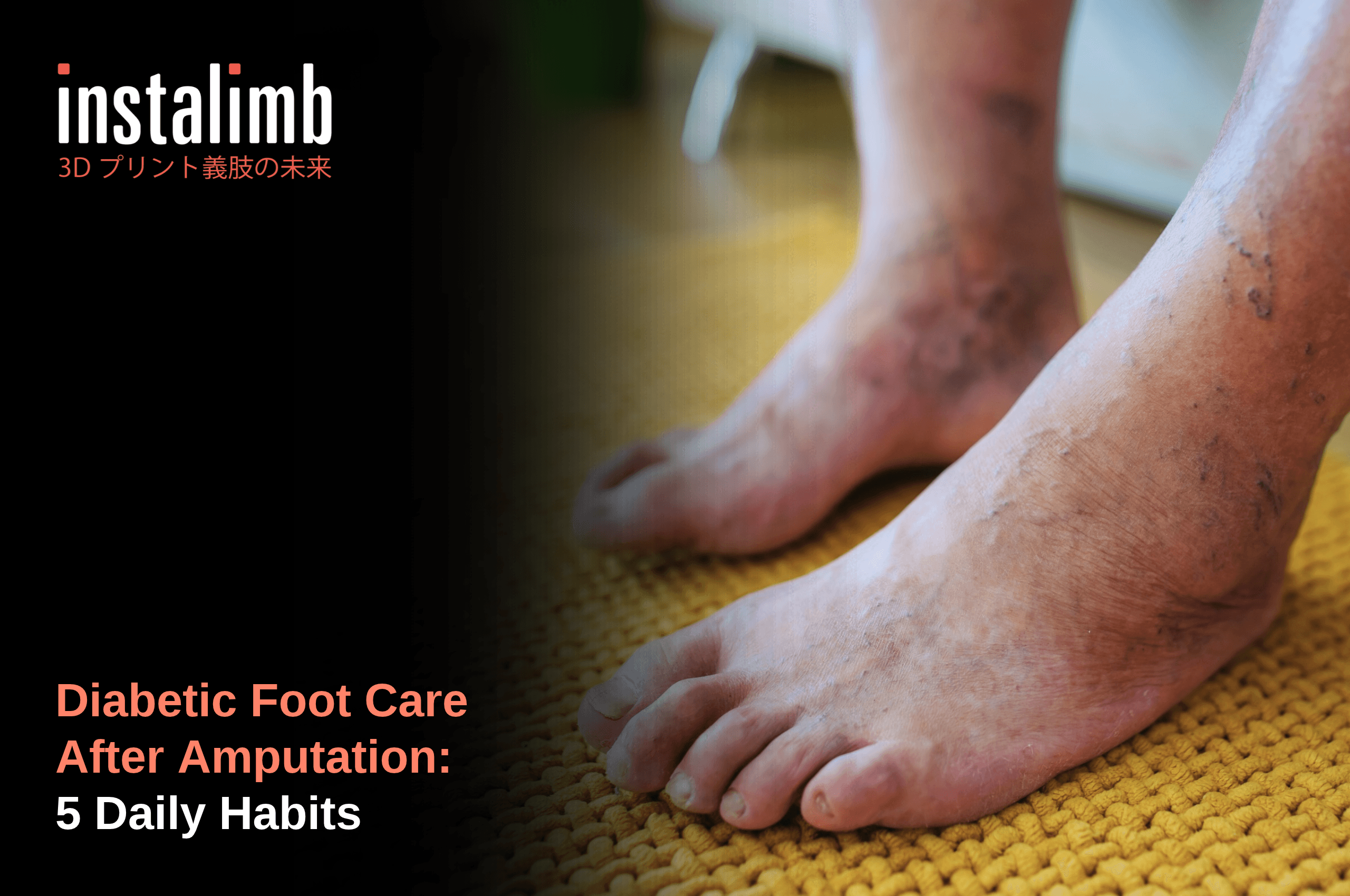
You already know what it took to get through your first amputation, and the quiet fear that follows is real: could the other leg be next? The honest answer is that diabetic foot care after amputation is something you can act on starting today, with simple habits that genuinely lower your risk. This guide walks you and your caregivers through exactly what to check, when to worry, and how the fit of your prosthetic limb plays into the whole picture.
Why Your Remaining Leg Is at Higher Risk After a Diabetic Amputation?
After an amputation, your remaining leg suddenly carries a job it never had before: bearing your entire body weight, step after step, every day. Combined with diabetes, that extra load changes the stakes for your sound foot considerably, since healing is slower and small injuries can turn into ulcers or infections far more easily than before.
Your remaining foot now carries your full body weight, which sharply raises its risk of developing a diabetic foot ulcer (DFU). Diabetic amputees face roughly a 19.9% chance of losing the other leg too, compared with 7.1% in non-diabetic amputees, and about 1 in 10 faces a major second amputation within five years.
This isn't only about weight. Diabetic peripheral neuropathy, nerve damage caused by prolonged high blood sugar, often means you cannot feel a blister, a stone in your shoe, or a cracked heel forming until it is already a wound. Poor circulation then slows healing once skin does break.
Contralateral amputation is the medical term for losing the second, remaining leg after an earlier amputation. It happens to diabetic amputees at roughly double the rate seen in non-diabetic amputees.
According to the Indian Journal of Endocrinology and Metabolism (November 2024), around 25% of people with diabetes in India develop a DFU at some point, and about 20% of those cases need some level of amputation.
A prior ulcer is the single strongest predictor of another one, which is exactly why daily vigilance matters more now than ever. In a separate finding, research from CMC Vellore (Christian Medical College, Vellore) found that the risk of a repeat amputation roughly triples after the first procedure.
The World Health Organization's South-East Asia Region estimates around 77 million adults living with diabetes across the region, many undiagnosed until complications like these appear.
Diabetic Foot Care After Amputation: 5 Daily Habits That Protect Your Sound Foot
Protecting your other leg does not require anything complicated, just consistency. These five habits, practised daily, target the exact failure points that lead to ulcers and further amputation in people living with diabetes.
1. Check your feet every day, even when they feel fine. Neuropathy makes pain an unreliable warning system, so look, or have someone look, at the top, sole, heel, and between every toe, regardless of how your foot feels that day.
2. Wash and dry properly, especially between the toes. Use lukewarm water, never hot, since reduced sensation makes it easy to scald yourself without realising, and dry thoroughly between each toe to prevent the damp conditions fungal infections thrive in. These everyday stump care habits apply just as much to your remaining foot as they do to your residual limb.
3. Moisturise the skin, but never between the toes. Dry, cracked skin on the heel or sole is an open door for infection, so moisturise daily while keeping the webbing between your toes dry to avoid fungal growth.
4. Trim nails safely, or get help from a professional. Cut straight across, never into the corners, and if your eyesight or dexterity makes this risky, ask a podiatrist or a trained caregiver to do it instead.
5. Choose footwear that protects, and never walk barefoot. Even indoors, an unfelt step onto something sharp or hot can go unnoticed for hours and turn into a serious wound before you realise it happened.
How Caregivers Can Check a Foot They Can't Fully See?
If you're living with diabetes, you may also have diabetic retinopathy, eye damage from diabetes that blurs or dims vision. This can make visually inspecting your own sole, heel, and the spaces between your toes genuinely difficult, and limited mobility after an amputation can make bending down to check even harder.
A small mirror propped on the floor lets you see the sole without bending. A phone camera works even better: take a photo daily and zoom in to compare it with yesterday's. The most reliable tool, though, is a second pair of eyes. Ask a caregiver or family member to do a quick visual check once a day as a shared routine, not a hovering inspection. Keep a simple limb-care checklist for caregivers on hand so checks stay quick and purposeful.
Caregivers should never ignore new redness, swelling, warmth, odour, or any wetness staining a sock, even if the person reports feeling no pain at all.
Is Your Walk Hurting Your Good Leg? Gait, Socket Fit and Pressure Points
A loose or poorly aligned prosthetic socket can quietly put your sound foot at risk, even though the problem technically starts on the other side. When a socket is too loose, your residual limb moves slightly inside it with every step, a motion called pistoning, much like a foot sliding inside an oversized shoe.
To compensate, you may unconsciously shorten your stride on the prosthetic side and shift more weight onto your sound leg for longer during each step. Over months, that uneven loading concentrates pressure and shear on specific spots of your sound foot, and it can turn a minor callus into a serious wound wherever neuropathy has already dulled your sense of pain.
Fit should never be treated as a one-time event. At Instalimb, we've designed over 500 prosthetics across Delhi, Gurugram, Hyderabad, Bangalore, Mumbai, and Vizag. We adjust sockets with 1mm precision using 3D-CAD design, 3D printing, and AI-powered scanning, so even subtle shifts in your gait or weight get caught and corrected before they turn into pressure damage. That experience has taught us to treat fit as an ongoing variable, not something you sort out once and forget.
Watch for signs your socket isn't fitting right, and remember how fit and skin health are connected. If your activity level, weight, or walking pattern has changed recently, get your socket reassessed rather than waiting for pain to tell you something is wrong.
Seasonal Risks for Indian Amputees: Diwali, Winter and Monsoon Aftermath
With World Diabetes Day falling on 14 November and Diwali just before it this year, this season deserves extra care. Diwali brings its own risks: barefoot rituals on cold marble or stone floors, and diyas, candles, and firecrackers near a foot that can't feel heat or sharp objects. Closed, protective footwear is essential even during the celebrations.
Festive sweets can also spike blood sugar, which slows wound healing exactly when a minor nick or burn needs your body's best healing response.
Geography matters too. In Delhi and Gurugram, dry winter air is setting in, raising the risk of cracked heels and fissures that can become entry points for infection. In Hyderabad, Bangalore, Mumbai, and Vizag, the still-humid post-monsoon stretch keeps fungal infection risk high between the toes.
Wherever you are in India, adjust your routine to the season rather than assuming last month's care habits still cover you.
When to See a Doctor Immediately?
Do not wait and watch if you notice any break in the skin that weeps fluid, a red or darkening patch that does not fade, swelling or warmth in one area, an unusual odour, or a fever alongside any foot change. Because diabetic peripheral neuropathy can hide pain, these signs matter more than discomfort does. Contact your doctor the same day, not after a few days of waiting, since early treatment is what keeps a small problem from becoming a second amputation.
Frequently Asked Questions (FAQ)
Q1: Will I lose my other leg too if I already had a diabetic amputation?
A1: Not necessarily, but the risk is real: diabetic amputees face roughly double the risk of losing their remaining leg compared with non-diabetic amputees, with contralateral amputation rates around 19.9% versus 7.1%. Globally, about 1 in 10 diabetic amputees loses the remaining limb within five years of the first amputation, making daily foot checks, proper prosthetic fit, and prompt wound care essential to lowering that risk.
Q2: How do I check my remaining foot for problems if I can't see it well?
A2: Use touch, smell, and a mirror or a caregiver's eyes instead of relying on your own eyesight alone, since diabetic retinopathy (the eye damage diabetes can cause) and limited mobility after amputation make visual self-checks unreliable. Run your hands over the entire foot daily, feeling for heat, swelling, or wetness, check between toes for fungal infection, and ask a caregiver or family member to visually inspect the sole and heel at least once a day.
Q3: Can my prosthetic leg cause ulcers on my other foot?
A3: Yes, indirectly: a poorly fitted or loose prosthetic socket causes abnormal gait patterns like pistoning and compensatory limping, which shift extra pressure and shear onto the sound foot over weeks and months. In someone with diabetic neuropathy who cannot feel this building pressure, that compensation can lead to calluses, blisters, and eventually ulcers on the remaining foot, which is why periodic socket refitting matters as much as foot care itself.
Q4: What are the first signs of a diabetic foot ulcer on the remaining leg?
A4: Early signs include a red or discoloured patch, a callus that feels harder or looks darker than usual, warmth or swelling in one area, and any break in the skin that weeps fluid, even painlessly. Because neuropathy can mask pain, amputees and caregivers should treat any skin colour change, odour, or wetness in a sock as reason to inspect the foot immediately and contact a doctor if it doesn't resolve within a day.
Q5: What can a caregiver do to help an amputee protect their other foot without being overbearing?
A5: Caregivers can set a daily foot-check routine together, rather than inspecting the foot without asking, so it becomes a shared habit instead of supervision. They should learn the specific warning signs (new redness, swelling, warmth, odour, or wetness in a sock or shoe) ahead of time so checks are quick and purposeful, and agree in advance on when a change is serious enough to call the doctor, which reduces both hovering and missed ulcers.
Protecting Your Other Leg Starts Today
You have already shown enormous strength in rebuilding your life after one amputation, and that same strength is exactly what protecting your other leg takes: daily attention, not perfection. Every foot check, every properly dried toe, and every socket adjustment you book is a small act that adds up to real protection.
If it has been a while since you last had your socket fit checked, getting your socket fit checked is a simple, no-pressure way to find out whether your walk could be doing your sound foot any favours. Your other leg deserves the same care and commitment you've already shown.
Check out our blog section or more!
So, if you‘re looking for a new artificial leg, interested in a free consultation, confused if your socket is the right fit, or have any other queries, now is the time to reach out to us and try a test socket free of cost. Step it up with Instalimb - Contact us today!
Recent Posts
November 5, 2026
October 30, 2026
October 23, 2026
October 22, 2026
October 14, 2026
October 13, 2026
October 8, 2026
October 6, 2026
