Squatting With a Prosthetic Leg: What Works
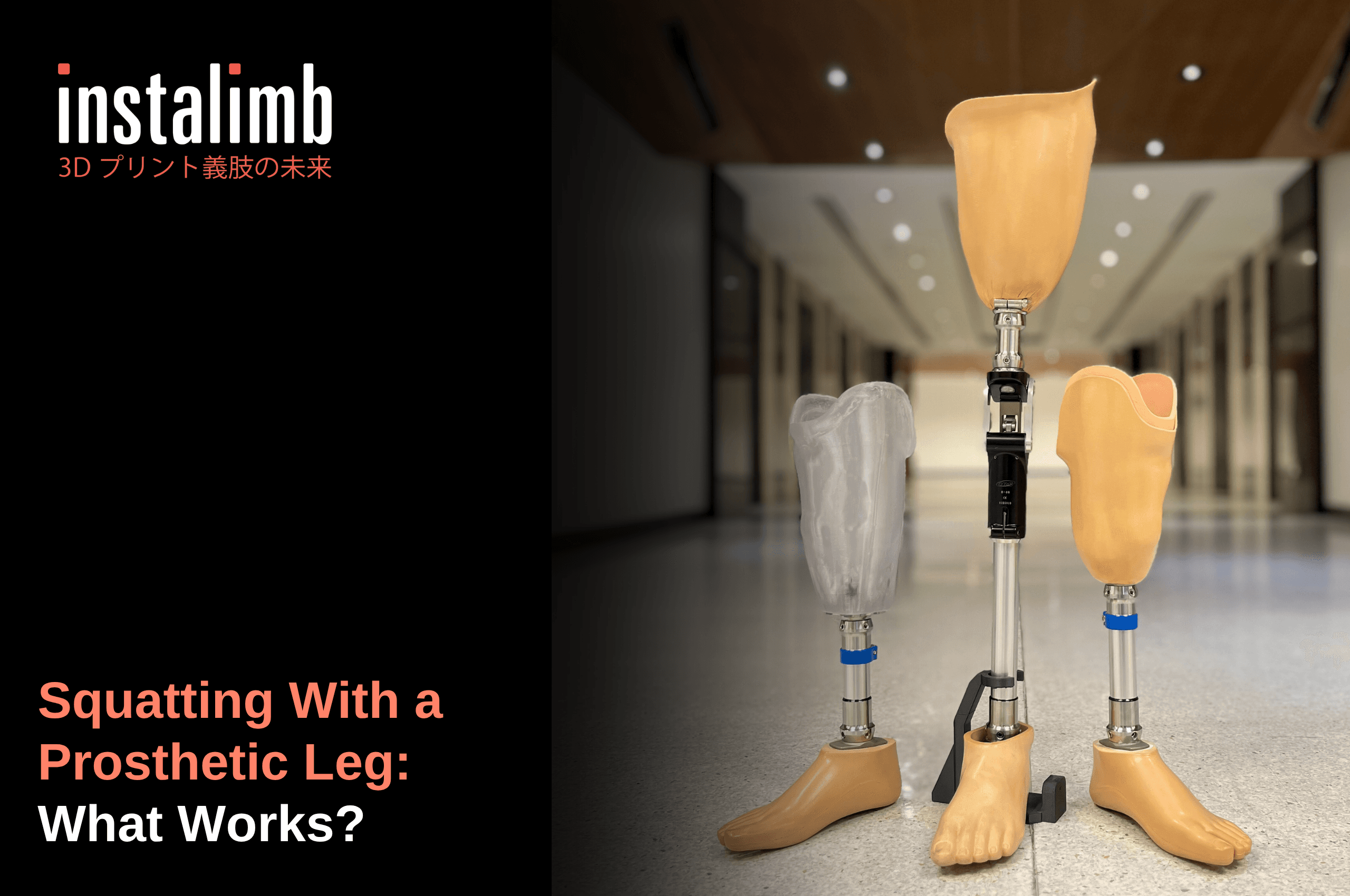
If you've ever hesitated before a squat-style toilet, a temple visit, or sitting down for a meal on the floor with family, you already know how ordinary moments can turn into obstacles after amputation. Squatting with a prosthetic leg is one of the most common concerns Indian amputees raise with their prosthetist, and it deserves a straight answer instead of vague reassurance. With the right knee, foot, and socket combination, deep squatting and sitting cross-legged are realistic goals for many users, not rare exceptions.
Squatting With a Prosthetic Leg: Why It Is Harder Than Walking
Squatting with a prosthetic leg is harder than walking because deep squatting needs roughly 135 degrees of knee flexion, while many standard prosthetic knees are built mainly for a smooth, stable walking gait rather than extreme bending. A healthy knee bends up to roughly 160 degrees, so most everyday prosthetic knees fall short unless they are specifically chosen or adjusted for flexion.
Below-knee amputees generally have an easier time, since their own knee joint is intact. Their challenge is usually the foot: not every prosthetic foot flexes upward enough to keep the heel down in a deep squat, so people often end up rising onto their toes or losing balance.
The Role of 3D-Printed Design in Squat-Friendly Fit
A traditional prosthetic socket is shaped from a single plaster cast taken in one position, usually standing, which makes it a compromise for every other posture your limb takes, including a deep squat. 3D-printed prosthetic design changes that starting point by letting a socket be built, and rebuilt, around how your limb actually bears weight and shifts pressure through a full range of movement, not just its resting shape.
Research combining AI with 3D printing has mapped pressure and force across the residual limb during standing, walking, and leaning, then used that data to generate a custom internal lattice structure inside the socket itself (Amputee Store; MedicalXpress, 2026). Early lattice-based 3D-printed sockets have shown dramatic gains in how well they absorb and redistribute load compared to solid, traditionally cast sockets, exactly the kind of stress a deep squat places on a socket wall.
For Instalimb, this is the same principle behind our 1mm-level socket customisation. 3D-CAD design and AI-assisted fitting let a prosthetist model your socket around your specific movement goals, including squatting, rather than asking you to adapt to a shape built only for standing still.
What Actually Determines Whether You Can Squat Comfortably
Four things decide it: knee flexion range, foot dorsiflexion, your amputation level, and how precisely your socket is fitted. Specialised transfemoral mechanisms have been engineered to reach over 140 degrees of flexion for squatting, well past what a standard walking-focused knee offers, so component choice matters as much as effort or practice.
-
Knee flexion range: look for a knee rated for high flexion, not just a standard walking knee.
-
Foot dorsiflexion: a foot that flexes upward lets the heel stay grounded through the squat instead of forcing you onto your toes.
-
Amputation level: above-knee users depend on the prosthetic knee itself for flexion; below-knee users mainly need the right foot.
-
Socket precision: a socket that is even slightly off will pinch or slip exactly at the deepest, most flexed point of a squat, which is precisely why fit matters more here than during normal walking.
Getting There Safely: What to Ask Your Prosthetist
Squatting capability is not something to discover by accident on your first attempt. Raise it directly during your fitting so your prosthetist can factor it into component selection from day one.
-
Ask the exact flexion range of the knee being recommended, and whether it changes if you swap the foot.
-
Ask whether your current foot allows meaningful dorsiflexion, or whether a different foot would serve you better for floor-based living.
-
If deep squatting matters to you, say so before the socket is finalised. It shapes both the socket design and the component recommendation.
-
Never force a deep squat in an old or worn component. Loose knee bushings or a degraded foot can fail unpredictably under that load.
Building the Habit: Practising Squats Safely at Home
Confidence in a deep squat is built gradually, the same way you learned to trust your first steps on the prosthesis.
-
Practise near a grab bar, sturdy railing, or wall so you always have something to hold if balance shifts.
-
Work on hip and ankle flexibility with your physiotherapist; a stiff sound-side hip often limits a squat as much as the prosthetic knee does.
-
Avoid practising late in the day when residual limb volume has dropped and the socket fits more loosely than usual.
-
Use a floor cushion or low stool as an intermediate step before attempting a full squat unsupported.
How Instalimb Approaches Squat-Friendly Fittings
At Instalimb, we have designed over 500 prosthetics across Delhi, Gurugram, Hyderabad, Bangalore, Mumbai, and Vizag, and squatting comfortably is one of the most common goals patients raise before their first fitting even begins. Our 1mm-level socket customisation, built using 3D-CAD design and AI-assisted fitting, is aimed at exactly the pressure points that a deep squat exposes: the parts of the socket that only feel tight once your knee is fully bent.
We will not pretend every knee and foot combination supports a full deep squat equally, that depends on your amputation level, activity level, and the specific components chosen. What we can do is have that conversation honestly during your fitting, so your goals shape the recommendation instead of being an afterthought.
Frequently Asked Questions
Can a prosthetic leg allow full squatting like an Indian-style toilet requires?
For many users, yes, but it depends on the knee and foot chosen and on your amputation level. Functional squatting generally needs about 135 degrees of knee flexion, and not every everyday prosthetic knee is built for that. Discuss your goal specifically with your prosthetist so the right components are selected from the start.
Which prosthetic foot is best for squatting in India?
There is no single best foot for everyone. What matters is dorsiflexion, how far the foot flexes upward, and increasingly, whether it was 3D printed and tuned around your own pressure and movement data rather than a generic mould. A digitally designed foot can be adjusted for more dorsiflexion during your fitting itself, instead of forcing you to accept a fixed off-the-shelf range. Ask your prosthetist to assess your gait and test squat depth directly with the options available.
Is squatting harder for above-knee or below-knee amputees?
It is generally harder for above-knee amputees, since the prosthetic knee itself must provide the flexion a squat requires. Below-knee amputees keep their own knee joint, so their main requirement is a foot that allows enough upward flexion to keep the heel grounded through the movement.
Can I train my body to squat better with a prosthetic leg?
Yes, hip and ankle flexibility work with a physiotherapist often improves squat depth as much as the prosthetic components do. Practising near a support rail, using a cushion as an intermediate step, and building up gradually all help you squat more confidently over time.
Will a poorly fitted socket affect squatting?
Yes, a socket that fits even slightly off tends to pinch or slip exactly at the deepest point of a squat, since that is where pressure concentrates most. A precisely fitted socket reduces this risk and makes a deep squat far more comfortable to hold.
Conclusion
Squatting comfortably is not a luxury request, it is a daily reality for anyone living in India, and it deserves to be treated as a real fitting goal rather than an afterthought. With the right knee, foot, and a socket built around your specific movement, getting back to the floor, the toilet, and the family meal is within reach for most users.
Check out our blog section for more!
So, if you‘re looking for a new artificial leg, interested in a free consultation, confused if your socket is the right fit, or have any other queries, now is the time to reach out to us and try a test socket free of cost. Step it up with Instalimb - Contact us today!
Recent Posts
October 13, 2026
October 8, 2026
October 6, 2026
October 1, 2026
September 29, 2026
September 26, 2026
September 24, 2026
September 22, 2026
September 10, 2026