Physiotherapy for Prosthetic Leg Recovery: Your First Steps
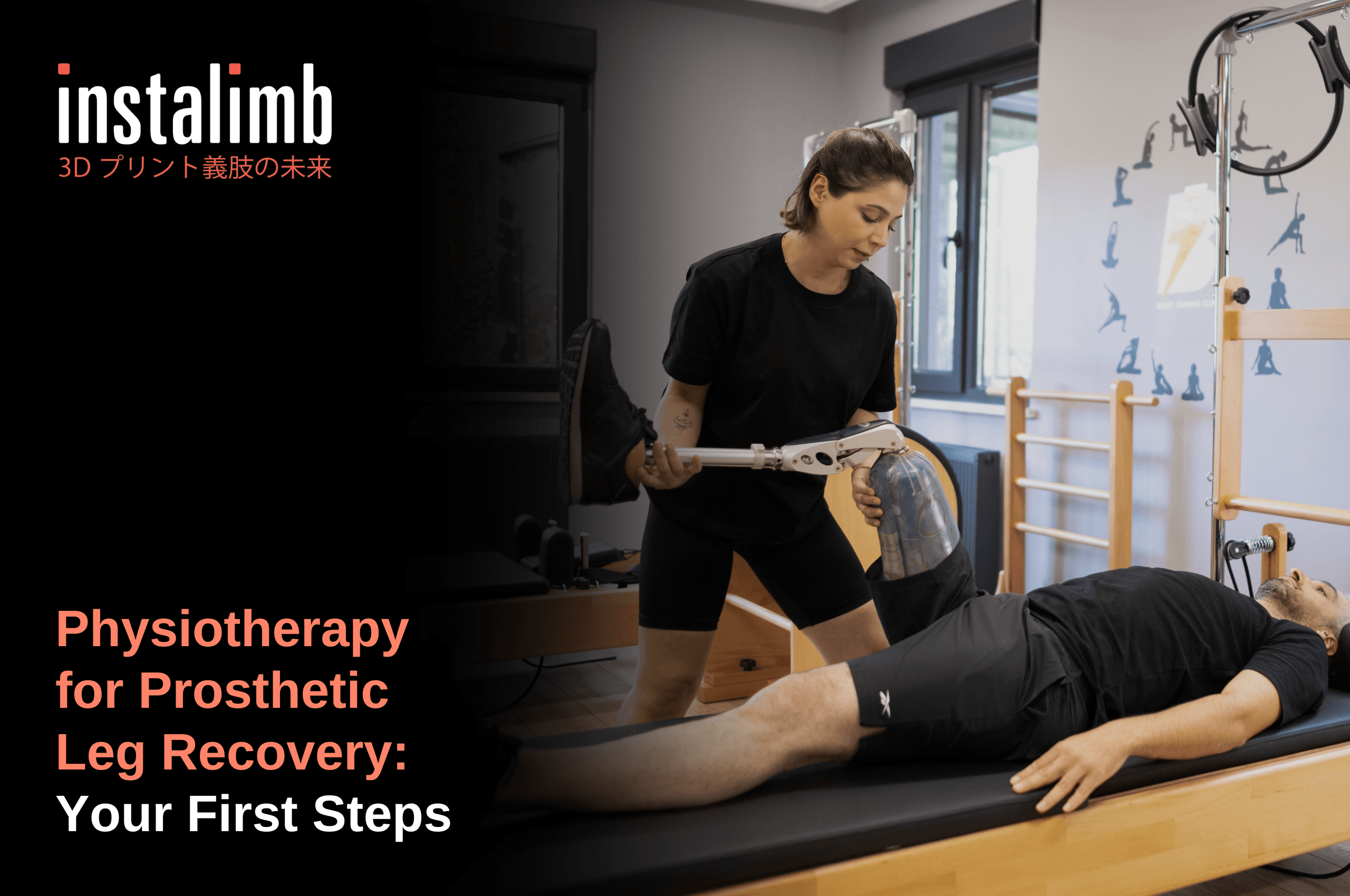
8 September is World Physiotherapy Day, a global day that celebrates the physiotherapy profession worldwide. This year's international theme focuses on cardiovascular disease and stroke, not amputee rehabilitation, but the date is still a fitting moment to talk about a corner of physiotherapy that changes lives every single day: helping you walk again after limb loss.
Waking up after amputation surgery, you probably ask yourself the same question everyone does: will I walk normally again? The honest answer is that physiotherapy for prosthetic leg recovery, not the prosthetic limb alone, is what gets you there. Whether you are recovering near Delhi, travelling to our Gurugram clinic, or preparing for a first fitting in Hyderabad, this guide walks you through exactly what your early weeks involve.
What Physiotherapy for Prosthetic Leg Recovery Actually Involves
Physiotherapy for prosthetic leg recovery is a supervised process that rebuilds strength, balance, and walking patterns so a new limb feels natural rather than forced. It typically starts with parallel-bar practice, then gradually adds balance drills, gait correction, and real-world terrain training over several weeks, guided closely by how well the socket fits.
Sessions usually happen two to three times a week at first, tapering as you gain independence. Your physiotherapist and prosthetist work closely together throughout, because a well-built limb still needs a trained body to use it well.
The First Weeks: What to Expect in Early Prosthetic Recovery
Physiotherapy actually starts before your prosthetic limb arrives, typically within 24 to 72 hours after amputation surgery. Early sessions focus on positioning the wound, preventing joint stiffness, and maintaining strength in your residual and sound limb.
In India, trauma causes roughly 70% of lower-limb amputations, with diabetes, peripheral vascular disease, a circulation problem that reduces blood flow to the limbs, and diabetic foot disease accounting for much of the rest, according to a 2023 review in the World Journal of Clinical Cases.
You are far from alone in managing this kind of mobility change. The 2011 Census of India recorded 2.68 crore persons with disabilities nationwide, 2.22% of the population, and many of them are navigating a recovery much like yours.
This pre-prosthetic phase can last six to twelve weeks, and it matters more than you might expect.
Building Strength Before Your First Steps
Your physiotherapist will guide you through desensitising (gently reducing tenderness in) the residual limb, gentle strengthening, and exercises that protect your joints from stiffening while you heal. This groundwork determines how quickly you progress once a socket is ready. You may also find it helpful to understand [coping with grief after amputation], since your emotional and physical readiness tends to move together.
Setting a Realistic Pace, Not Comparing to Anyone Else
Progress is rarely a straight line, and it should never be measured against someone else's timeline. Your prosthetist and physiotherapist will assess your [K-level mobility classification], which describes your expected mobility potential and shapes realistic goals for your recovery. Slower progress often reflects age or health conditions, not lack of effort.
How Socket Fit Shapes Your Gait Training Progress
Gait training, the process of relearning a smooth, symmetrical walking pattern, only works if your socket fits precisely, whether you have a below-knee (transtibial) or above-knee (transfemoral) amputation. A socket that shifts even slightly forces your body to compensate, and those compensations can undo weeks of hard-won progress.
At Instalimb, we have designed over 500 prosthetics across Delhi, Hyderabad, Bangalore, Mumbai, and Vizag, and the pattern is consistent: socket precision changes gait training outcomes.
Instalimb's [sub-millimetre digital socket scanning] captures your residual limb to an accuracy of 0.3 to 0.5 millimetres, compared with 2 to 4 millimetres for traditional plaster casting. AI-assisted design then refines the socket geometry to within 1 millimetre, roughly the thickness of a couple of sheets of paper or a small coin.
That level of precision matters for a practical reason: it is what keeps your gait training on track.
Your residual limb's volume changes substantially over the first six to twelve months as post-surgical swelling settles. That is exactly why an interim or test socket is standard practice before any permanent build. A socket that fits today may need adjusting next month, and that is normal, not a setback.
Common Gait Patterns Physiotherapy Helps You Correct
When a socket does not fit well, or when muscles have not yet relearned their new job, your body finds workarounds. These are not signs of failure; they are simply your body solving a problem the wrong way, and they are very treatable. Your physiotherapist learns to spot these patterns early and correct them before they become habits:
-
Hip hiking: lifting the hip to swing the prosthetic leg through, usually because the leg feels too long or the knee will not bend freely.
-
Circumduction: swinging the whole leg outward in an arc instead of stepping straight through, often to avoid catching the toe.
-
Vaulting: rising onto the toes of the sound foot to give the prosthetic leg extra clearance.
If uncorrected, these patterns waste energy and can cause back or hip pain over time. Your physiotherapist retrains the underlying muscles and, where needed, flags the pattern to your prosthetist so the socket or alignment can be adjusted.
A Caregiver's Guide: Supporting Recovery Without Overstepping
Family members often want to help but are not sure how, and that uncertainty is completely normal. The most useful thing you can do is show up consistently: attend sessions when you can, learn the home exercises your physiotherapist prescribes, and gently remind rather than nag.
Johns Hopkins Medicine notes that nearly 41% of amputees experience anxiety, depression, or PTSD during recovery. Emotional support from family carries real weight in that recovery, standing alongside the physiotherapy itself.
Resist the urge to compare your loved one's progress to anyone else's story you have read online. Every residual limb, every socket, and every recovery timeline is different, and comparison usually adds pressure rather than motivation.
Practical support matters too: helping with residual limb skin checks, tracking socket comfort between clinic visits, and celebrating small wins like a first unaided step in the parallel bars. Your steady presence, listening patiently instead of constantly advising, often does as much for their confidence as the exercises themselves.
Staying Motivated: Milestones, Festivals, and Family Moments
Recovery goes faster when it is anchored to something meaningful, not just a chart of exercises. You might set your sights on standing comfortably for the aarti during Ganesh Chaturthi, or on walking confidently through a Diwali gathering with family in the weeks ahead.
These occasions give physiotherapy a purpose beyond the clinic. As your balance improves, your physiotherapist will introduce more real-world challenges, including [walking on uneven terrain] like courtyards, temple steps, and crowded pandals, so festival season does not catch you unprepared.
Small milestones deserve genuine celebration: your first step without support, your first outdoor walk, and your first family function on your own two feet. Each one is worth marking.
Is It the Socket or the Training? When to Ask for Help
If progress has stalled, it is natural to wonder whether the problem is your effort or your equipment. Most often, the real explanation is simpler: your socket no longer fits the way it did at your first fitting.
Watch for signs that point to the socket, not your training. These include new pain in specific spots, redness or skin marks after wearing the limb, and a feeling of pistoning, where the limb moves up and down inside the socket. A sudden return of compensatory walking patterns you had already corrected is another red flag. Raise any of these immediately, not at your next scheduled visit.
Our guide to [socket fit and skin care troubleshooting] covers these warning signs in detail. When in doubt, ask your prosthetist to check the fit before assuming you simply need to try harder.
Frequently Asked Questions
How soon after amputation surgery does physiotherapy start?
Your physiotherapy typically begins within 24 to 72 hours after amputation surgery, well before a prosthetic limb is fitted. Early sessions focus on positioning your wound, preventing joint stiffness, and maintaining strength in your residual and sound limb. This pre-prosthetic phase, often lasting 6 to 12 weeks, builds the foundation for your gait training once a socket is ready.
How long does it take to walk again after a leg amputation?
If you have a below-knee (transtibial) amputation, you will typically begin gait training with a prosthesis 8 to 12 weeks after surgery, once the limb has healed and swelling has reduced. If you have an above-knee (transfemoral) amputation, or you are managing diabetes or vascular disease, you may need longer. Confident, independent walking typically develops over 3 to 6 months, with your timeline varying by socket fit and consistency of practice.
Why does my prosthetic socket feel loose or uncomfortable after a few weeks?
A socket that felt snug at fitting often loosens because your residual limb's volume shrinks as swelling subsides over the following months. This is normal, and it is not a sign of poor effort. However, an ill-fitting socket forces compensatory movements like hip hiking or circumduction, which can undo your gait training progress. Socket adjustments, or a new test socket, is usually all it takes to put things right.
What is the role of a physiotherapist in prosthetic rehabilitation?
Your physiotherapist guides every stage of your prosthetic rehabilitation, from pre-prosthetic strengthening and limb care before a device is fitted, to gait training, balance work, and functional exercises once your prosthesis is in place. They work alongside your prosthetist and wider care team, adjusting your plan as your socket fit and mobility improve.
Can you try a prosthetic socket fitting before committing to a permanent limb?
Yes. Many Indian prosthetic providers, including Instalimb, offer a test-fitting socket, often built using 3D printing and precise digital design, so you can try the fit, comfort, and walking pattern before committing to a final custom prosthesis.
This matters because only an estimated 5% of amputees in India currently have access to a prosthetic device. Getting the fit right before you commit helps you and your physiotherapist agree the socket truly matches your gait and your goals.
Conclusion
Recovery after amputation is not measured in days, but in the small, steady steps that add up to a life you recognise as fully your own. With the right physiotherapy, a precisely fitted socket, and family beside you, walking confidently again is not a distant hope; it is simply the next milestone in front of you. Whether you are just weeks out from surgery or wondering why your gait has not improved yet, support is closer than you think, often just a conversation with your prosthetist or physiotherapist away.
Check out our blog section for more!
So, if you‘re looking for a new artificial leg, interested in a free consultation, confused if your socket is the right fit, or have any other queries, now is the time to reach out to us and try a test socket free of cost. Step it up with Instalimb - Contact us today!
Recent Posts
September 10, 2026
September 3, 2026
September 1, 2026
August 29, 2026
August 25, 2026
August 20, 2026
August 18, 2026
August 11, 2026
August 6, 2026