Bilateral Amputee Mobility: 7 Daily Adjustments That Help
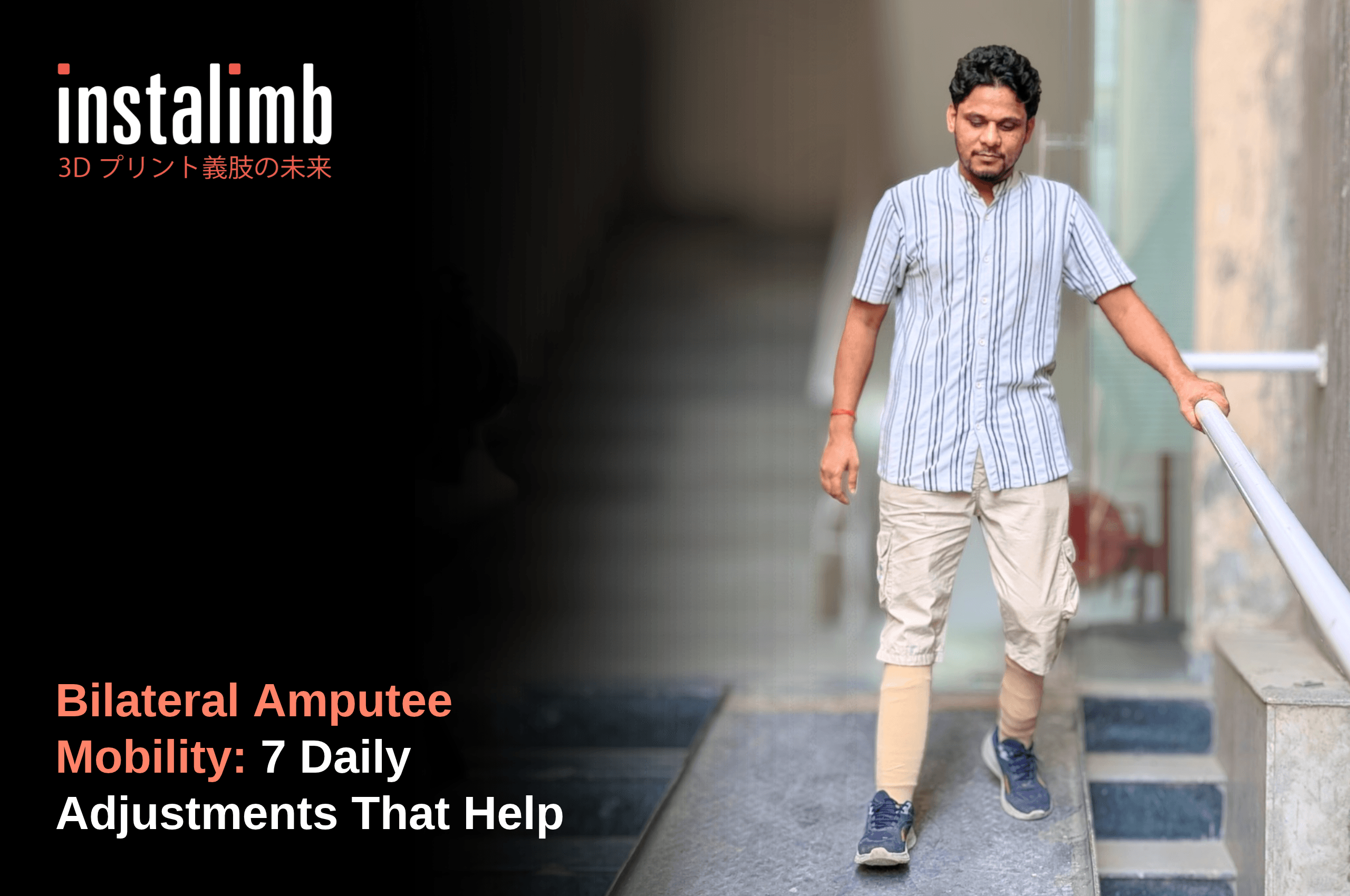
When you lose one leg, you learn to adapt. When you lose both, the rules change again. Bilateral amputee mobility asks more of your body, your home, and the people around you, all at once. If you or someone you love is navigating life on two prosthetic limbs, you are not alone, and there is a clear, practical way forward. Below, you will find the seven daily adjustments at the heart of this guide, spanning home safety, socket care, and caregiving, that genuinely help.
Understanding Bilateral Amputee Mobility: What to Expect
Bilateral amputee mobility refers to how a person moves, balances, and functions daily after losing both legs. This demands more energy, sharper balance, and precise socket fit on both sides compared with single-limb loss. Recovery generally takes longer and progresses in stages, with function and confidence, not speed, as the real markers of success.
Losing one leg changes how you move. Losing both changes how you move, balance, and plan your entire day.
With a single prosthetic limb, your sound leg still carries much of the load and gives you a stable reference point. With two prosthetic limbs, that reference point is gone, so your body has to relearn balance, weight shift, and rhythm from scratch on both sides at once.
Bilateral lower-limb amputation is uncommon in India, but it is still clinically significant. In a 12-year review of patients at the Artificial Limb Centre in Srinagar (Journal of Clinical and Diagnostic Research, 2023), researchers found that only about 3% of lower-limb amputees had lost both legs, while the rest had lost one.
The causes behind limb loss vary widely. Diabetic foot disease (long-term nerve and blood vessel damage from high blood sugar) causes an estimated 42% of amputations in India, according to 2026 research from Saveetha Medical College and Hospital in Chennai. Peripheral arterial disease (reduced blood flow to the limbs) is responsible for another 22%. The remainder splits across trauma, infection, and other causes.
Diabetic foot disease is widely regarded as one of the leading drivers of lower-limb amputation in India, though there is no single national registry that confirms exactly how it ranks. For context, India has an estimated 101 million people living with diabetes and another 136 million with prediabetes, according to the ICMR-INDIAB study published in The Lancet Diabetes & Endocrinology (2023). If you have lost one leg to diabetes or poor circulation, your risk of losing the other leg is higher too, which is part of why World Diabetes Day on 14 November is a fitting moment to raise this connection.
The 7 Daily Adjustments for Bilateral Amputee Mobility
Think of these as your quick-reference double amputee mobility tips, the seven small changes that make the biggest difference day to day. Each one is explained in more depth in the sections that follow.
-
Track volume changes in each leg separately, rather than assuming both heal at the same pace.
-
Fit grab rails on both sides of stairways and in the bathroom, not just one side.
-
Switch to a raised, Western-style toilet seat where possible.
-
Use a sturdy chair or stool for meals instead of floor seating, at least in the early months.
-
Choose non-slip mats and footwear, especially during festival and monsoon seasons.
-
Adjust your prosthetic sock ply more frequently as the weather cools, and check both limbs.
-
Share transfer and support duties across family members to protect the caregiver's own body.
The Energy and Balance Demands of Walking on Two Prosthetic Limbs
Walking on two prosthetic limbs takes substantially more cardiovascular effort than walking on one. Every limb and amputation level you add increases the energy your body has to spend on each step, a pattern researchers have tracked back to Waters' foundational 1992 work on amputee gait (the pattern and rhythm of your walk). If you are a bilateral transfemoral amputee, meaning you have lost both legs above the knee, you work considerably harder than someone with a single transtibial or below-knee limb. This is one reason many bilateral transfemoral users rely on shorter training prostheses or a wheelchair for longer distances while they build strength.
Balance adds another layer. Researchers at Coimbra University Hospital found in 2025 that on the Timed-Up-and-Go test, a standard timed balance and mobility check, transfemoral amputees took noticeably longer to complete it than transtibial amputees did. Fall risk in lower-limb prosthesis users is well documented, and past research suggests that over half fall at least once a year, so it helps to know this upfront rather than be caught off guard. Most of this research focuses on single-limb amputees rather than bilateral ones, which is exactly why supervised, professional gait training built around two prosthetic limbs is so valuable for you.
Getting the Fit Right, Twice Over: Sockets for Two Limbs
A single socket, the custom-fitted component connecting your residual limb (the part of your leg remaining after amputation) to the prosthetic leg, is already the biggest variable in comfortable walking. Two sockets double that complexity. Your residual limbs rarely heal or change volume at the same rate, especially when the original causes differed, for example, one leg lost to trauma and the other to diabetic complications.
Managing Asymmetric Healing and Volume Changes
It is common for one residual limb to shrink or swell faster than the other in the months after surgery. A socket that fits well in week three can feel loose or tight by week six, on one side only. Tracking managing volume changes in your residual limb on each leg separately, rather than assuming both follow the same timeline, helps you flag problems early instead of pushing through discomfort.
Why Socket Precision Matters More for Bilateral Fittings
Socket-fit precision matters twice as much for bilateral amputees, since two residual limbs, often of different lengths or amputation levels, must each be shaped for a safe, symmetrical gait. Many bilateral patients also manage an asymmetric pair, one below-knee and one above-knee limb, which makes matched components even more important. At Instalimb, we use AI-assisted 3D scanning and CAD design to capture each limb's exact contours to within 1mm, then 3D print each socket to match, so both limbs can be adjusted and retested through a trial-socket fitting process before final delivery. If something still feels off, learning how to tell if your socket isn't fitting right is a useful first step before any adjustment.
Everyday Adjustments at Home: India-Specific Considerations
Most Indian homes were not designed with two prosthetic limbs in mind. Multi-storey houses without lifts, squat-style toilets, and floor seating at mealtimes all ask more of your balance than a single flight of stairs in a Western-style home.
Floor Seating, Festivals, and Monsoon-Season Terrain
Diwali celebrations bring extended standing for rituals, plus oil and rangoli powder that make courtyards and entrances slippery, so this time of year calls for extra caution. Staying safe on festival terrain this Diwali is worth reading before the celebrations begin.
Monsoon season brings a different hazard: wet, uneven ground outdoors that is just as unforgiving on two prosthetic limbs. Then, as North and Central India cool through November and December, your residual limb volume often shifts again. Expect to adjust your prosthetic sock ply (the thickness of the sock worn between limb and socket) more frequently during this period, and check both limbs, since managing two sockets means twice the adjustments to track.
Supporting a Bilateral Amputee: The Caregiver's Role
Caring for a bilateral amputee often means more physical labour than caregivers expect: lifting, carrying, steadying, and catching, sometimes several times a day in the early months. This load falls disproportionately on family members in India, where paid home-health support is far less common than family caregiving. That effort is real, and it deserves recognition, not silent endurance.
Moving From Constant Support to Sustainable Partnership
The goal is not for you to carry this alone indefinitely. Learning proper transfer techniques from a physiotherapist, using grab bars and transfer aids, and sharing duties across family members all reduce strain on your own body. As your loved one's balance and transfer skills improve, your role can shift from constant physical support towards steady encouragement. Helping without overstepping as a caregiver explains how to find that balance.
Building Mobility and Confidence Over Time
Confidence on two prosthetic limbs builds in stages, not overnight. Most bilateral amputees in India begin with wheelchair or parallel-bar practice, move to supported standing, and then progress to short, assisted walks before building independent distance. Staged rehabilitation like this does not mean you are behind; it means you are progressing safely.
Physiotherapy and Gait-Training Milestones
Structured physiotherapy is central to this progress, and your first steps in prosthetic physiotherapy is a good place to begin if you haven't already. At Instalimb, we have designed over 500 prosthetics across Delhi, Gurugram, Hyderabad, Bangalore, Mumbai, and Vizag, and across that work we have seen that a precisely 3D-printed, well-matched pair of sockets, paired with consistent gait training, makes the biggest difference to how quickly someone regains confident, independent movement. Mental health matters here too. Frustration with a slower pace is normal, and it passes with steady practice.
Frequently Asked Questions (FAQ)
How long does recovery take after a bilateral amputation?
Recovery after bilateral amputation generally takes longer than after a single amputation, since both limbs need to heal, be fitted with sockets, and go through gait training before confident walking begins. Timelines vary with amputation level, overall health, and access to structured physiotherapy. Many bilateral amputees in India progress through staged rehabilitation, starting with wheelchair or parallel-bar practice before moving to prosthetic walking, with consistent practice shaping the pace of progress.
Is walking with two prosthetic legs harder than walking with one?
Yes, walking on two prosthetic legs requires substantially more cardiovascular effort than walking on one, because energy cost compounds with each limb and amputation level involved. Bilateral transfemoral users often rely on shorter training prostheses or a wheelchair for longer distances while building strength and endurance. With structured gait training and well-matched sockets, many bilateral amputees still achieve confident, independent mobility for daily tasks over time.
Why is prosthetic socket fitting harder for bilateral amputees?
Socket fitting is harder for bilateral amputees because two residual limbs, often differing in shape, length, or amputation level, must each reach a precise, comfortable fit at the same time. A poor fit on either side throws off balance and gait on both. This is why trial sockets and iterative adjustment matter more here, and why scanning technology that captures each limb's exact contours can shorten the path to a well-matched pair.
How can caregivers support a bilateral amputee without straining their own bodies?
Caregivers protect their own bodies by learning proper transfer and support techniques from a physiotherapist rather than relying on lifting strength alone, and by using grab bars, transfer boards, or raised seating to cut physical strain. Encouraging the bilateral amputee to build their own standing balance and transfer skills early reduces how much physical support they need long term. Sharing caregiving duties across family members also helps sustain support over time.
Can a bilateral amputee manage a multi-storey Indian home without a lift?
Yes, with planning: reorganising daily life around ground-floor rooms, adding grab rails and raised seating, and switching from squat-style to Western-style toilets make everyday movement safer in homes without lifts. Many bilateral amputees in India adapt existing multi-storey or joint-family homes with targeted changes rather than relocating. Occupational therapy guidance helps identify which specific modifications make the biggest difference for a particular home's layout.
What is daily life like for a bilateral amputee in India?
Daily life after bilateral amputation in India usually involves a mix of home adjustments, such as grab rails, raised seating, and non-slip flooring, staged physiotherapy to rebuild balance and endurance, and extra hands-on caregiver support in the early months. As fit and strength improve, most people return to work, family routines, and social life, though the pace depends on amputation level, overall health, and access to structured rehabilitation. With the right support, an independent daily routine is a realistic goal, not just an aspiration.
Moving Forward
Life after bilateral amputation asks a lot of you, physically, mentally, and practically, but it does not ask the impossible. With well-fitted sockets on both limbs, structured physiotherapy, sensible adjustments at home, and a caregiver who knows when to step in and when to step back, confident movement is realistic, not just hoped for. Progress may be slower than you expected, and that is normal, not a setback. Each steady step, literally and otherwise, is building towards a fuller, more independent daily life.
Check out our blog section for more!
So, if you‘re looking for a new artificial leg, interested in a free consultation, confused if your socket is the right fit, or have any other queries, now is the time to reach out to us and try a test socket free of cost. Step it up with Instalimb - Contact us today!
Recent Posts
November 5, 2026
October 30, 2026
October 23, 2026
October 22, 2026
October 14, 2026
October 13, 2026
October 8, 2026
October 6, 2026
