Our Blog
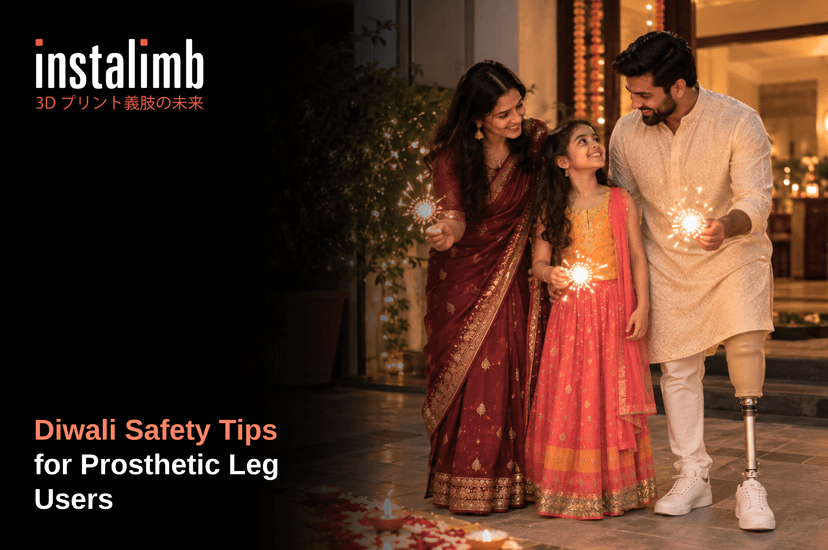
Diwali Safety Tips for Prosthetic Leg Users
Diwali is meant to be about light, family and celebration, not about wondering whether your socket will hold up through a long evening of puja and family gatherings. If you're looking for Diwali safety tips for prosthetic leg users, you're probably picturing yourself lighting diyas with the kids.
Maybe that means standing through aarti without shifting your weight every few minutes or walking across a flower and rangoli lined courtyard without a second thought. With a little preparation, all of that is well within reach this year.
Diwali Safety Tips for Prosthetic Leg Users: Quick Answer
Celebrating Diwali safely with a prosthetic leg means checking your socket fit before long puja sessions, keeping liners and cosmetic covers away from diyas and sparklers, wearing stable closed or strapped footwear instead of loose sandals and taking seated breaks to prevent sweat related socket slip during extended standing and walking.
Diwali brings long hours on your feet, open flames and crowded, poorly lit spaces, often within a few packed days. If you wear a below-knee or above-knee prosthetic leg, connected to your body through a socket (the custom-moulded shell around your residual limb, the remaining part of the leg after amputation), these conditions call for a little more planning. The risks that matter most are predictable and largely preventable, so here's exactly what to check before Dhanteras, Lakshmi Puja and the days around them.
Standing Through Puja and Long Gatherings Without Socket Pain
Why heat and standing time change how your socket fits
When you stand for long stretches, during aarti, while greeting guests or through a long Lakshmi Puja, your residual limb naturally swells a little and sweats more. Because the socket is a snug fit around that limb, even small changes in volume change how it feels.
This is one of the most common sources of socket discomfort reported by prosthesis users generally, not unique to Diwali. A well-fitted, precisely contoured socket reduces this risk more than footwear or posture changes alone, which is why socket fit is worth checking first if you're expecting a long evening on your feet.
A socket built with precise 3D-printed contouring, shaped to within a millimetre of your limb's exact measurements, naturally handles these small shifts better than a generic fit.
Simple mid-event checks
-
Build in a seated break every one to two hours if the evening runs long.
-
Loosen and reseat the socket, and let your skin breathe for a minute.
-
Check for any new pressure points before you stand again.
-
If slipping starts partway through the night, [common fixes for sweat-related socket slip] can help you adjust quickly without leaving the gathering.
Diyas, Sparklers and Flame Safety Near a Prosthetic Limb
Diwali burn injuries in India are not limited to firecrackers. According to hospital data reported by The Tribune after Delhi's Diwali 2025, diyas accounted for roughly 1 in 10 of the burn cases treated at Safdarjung Hospital, one of Delhi's largest. For anyone who lights diyas up close, that's worth taking seriously.
Why your liner and cosmetic cover deserve extra care near flame
Your liner (the soft sleeve worn over the residual limb, inside the socket) and cosmetic cover (the shell giving a prosthetic limb its natural shape) aren't the same material as a kurta or saree, so it's worth being just as careful, if not more, about keeping them clear of open flame. Wiping away soot or wax residue afterwards, as part of [keeping your socket and liner clean], also helps prevent skin irritation.
Reduced sensation and why a visual check matters
If you have reduced sensation in your residual limb, you may not feel a spark or rising heat near your prosthesis as quickly as you would on intact skin, which is why a quick visual check matters more than waiting to feel something.
Safe lighting posture and distance basics
-
Keep at least an arm's length between any open flame and your prosthetic leg.
-
Use a lighting wand or incense stick rather than bending in close.
-
Avoid letting your prosthetic side lean towards the diya tray or sparkler box.
Footwear and Festive Wear: Balancing Tradition and Fall Prevention
Sandals, juttis and kolhapuris vs closed or strapped shoes
Festive footwear is part of the fun, and there's no need to give up juttis or kolhapuris altogether. But open, backless or loosely fitted sandals give your foot less to hold onto than closed or strapped shoes, which matters more when you're navigating a crowded room or an unfamiliar courtyard on a prosthetic leg.
How festive footwear changes alignment and fall risk
Heel height changes how your prosthetic foot and socket align with the rest of your leg, even by a small amount. A pair you haven't worn before, especially with a different heel height to your everyday shoes, can shift your balance in ways you won't notice until you're already on an uneven floor.
If you're planning to wear something new for Diwali, try it at home first, ideally with input from your prosthetist (the clinician who fits and adjusts your prosthesis), and keep a backup pair of closed shoes nearby for later in the evening when fatigue sets in.
Navigating Crowded, Uneven or Poorly Lit Spaces on a Prosthetic Leg
Rangoli-lined floors, loose rugs and raised thresholds
Rangoli powder, flower petals and diya trays often sit right where people walk, and loose rugs or raised thresholds are easy to miss in a crowded room. None of this is specific to festival nights, but festive decorating adds more of it, in more places, for more hours than an ordinary evening. [Tips for walking on uneven terrain] are worth revisiting before a night of courtyard-hopping or temple visits.
Unfamiliar homes and staircases after dark
Visiting relatives or friends means navigating a layout you don't know, often with dimmer lighting than you're used to once the diyas take over from the main lights. Ask where the steps are before it gets dark, use handrails where they exist, and don't hesitate to ask someone to walk ahead of you on unfamiliar stairs.
A slower, steadier pace on unfamiliar ground beats rushing to keep up, and it's a sensible habit for a crowded festival night, prosthetic leg or not.
Managing Sweat, Skin and Socket Fit Across a Long Festive Day
A prosthetic socket creates a warm, enclosed interface against your residual limb. According to Merck Manuals' guidance on residual limb skin care, sweat during long festive activity can cause skin breakdown faster than on unaffected skin.
Hydration and skin checks between events
Drink water through the day, not just at mealtimes, since dehydration changes how your limb swells and sweats. Check your residual limb for redness, warmth or blistering between events: Merck Manuals recommends checking several times a day if you have reduced sensation, and at least once daily otherwise.
If you notice irritation, remove the prosthesis and have a prosthetist recheck the fit rather than pushing through. [Skin care tips for warm, sweat-prone days] cover this in more detail.
Carrying a spare liner or sock
A spare liner or prosthetic sock in your bag is a small thing that solves a real problem: if sweat builds up partway through the day, swapping it out restores comfort and fit without cutting your celebrations short.
When to Get Your Socket Checked Before Diwali
If your socket has felt even slightly off before Diwali (looser by evening, a new pressure point that wasn't there last year, or new rubbing after a change in weight or activity), this is the moment to get it checked. Don't wait until after the lights go out. Several of the [signs your socket may not be the right fit anymore] show up exactly during long, hot, high-activity days like Diwali.
At Instalimb, we've designed over 500 prosthetics across Delhi, Gurugram, Hyderabad, Bangalore, Mumbai and Vizag, and festival season is when socket fit questions peak.
Our 3D-printed sockets use AI-assisted scanning for a precise, custom fit, built to hold through heat, sweat and a long day on your feet. As the world's first 3D-printed prosthetic leg and socket provider, we recommend a test socket fitting as a simple way to confirm you're ready before the festivities begin.
FAQs
1. Is it safe to stand near diyas with a prosthetic leg?
Yes, with precautions, but diyas are a real injury risk: hospital data from Diwali 2025 shows diyas accounted for roughly 1 in 10 of the burn cases treated at Safdarjung Hospital, one of Delhi's largest. If you have reduced sensation in your residual limb, keep extra distance from open flames, avoid letting your cosmetic cover or liner brush against diyas and visually check your limb periodically rather than relying on feeling heat.
2. Can a prosthetic leg get damaged by firecrackers or sparks?
Sparks and embers can scorch or discolour your cosmetic cover and liner, though this depends on the specific materials used in your prosthesis. Keeping an arm's-length distance from firecrackers and avoiding direct contact with sparklers are the safest approach for both your skin and your prosthetic components.
3. Why does my socket feel uncomfortable after standing for hours during Diwali puja?
Standing for a while causes your residual limb to swell slightly and sweat more, which changes how your socket fits over several hours. This is a common, well-documented issue in prosthetic care that isn't specific to Diwali, and it's best managed with a socket that's properly shaped to your limb, plus periodic breaks to sit and check your skin.
4. What should you check on your skin after a long Diwali gathering?
Check your residual limb for redness, warmth, blistering or breaks in the skin, especially after extended wear in heat or moisture. If you have reduced sensation, check several times a day; otherwise, check at least once a day. If you notice irritation, burning or pain, remove your prosthesis and have a prosthetist recheck the fit.
5. Is traditional festive footwear (sandals, juttis, kolhapuris) safe to wear with a prosthetic leg?
Open or backless traditional footwear can affect your balance and alignment differently to closed shoes, particularly on uneven courtyards or rangoli-lined floors common during Diwali gatherings. Closed, stable footwear is generally safer for fall prevention, and any footwear change should ideally be checked with a prosthetist beforehand, since shoe height affects socket alignment.
Conclusion
None of this means Diwali should feel complicated. Most of what makes the festival safe and comfortable with a prosthetic leg comes down to one thing: a socket that's been precisely shaped, often with the help of 3D printing and AI-assisted fitting, to genuinely fit you, paired with a few sensible habits around flames, footwear and fatigue. Get those right, and you can focus on what Diwali is actually about: the lights, the people and the celebration.
Check out our blog section for more!

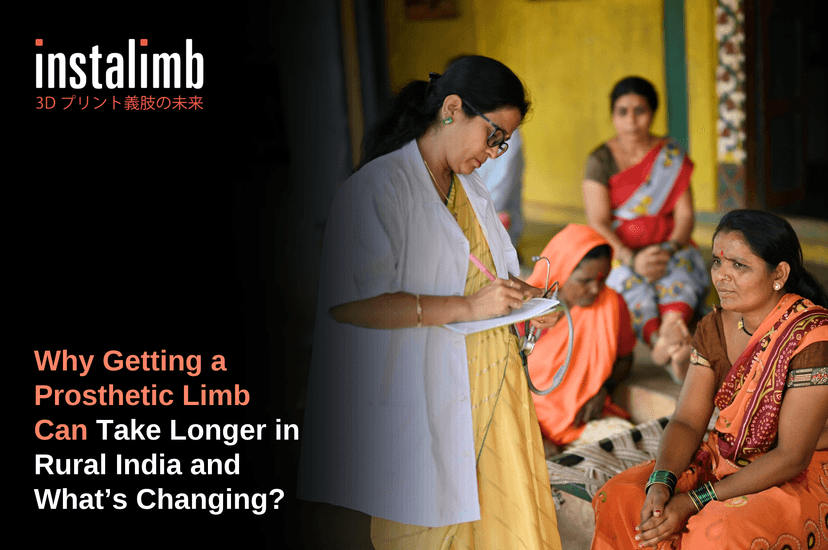
Why Getting a Prosthetic Limb Can Take Longer in Rural India and What’s Changing
For someone considering a prosthetic limb, the decision involves more than choosing a device. It may mean finding a trained provider, travelling for assessment and fitting, learning to use the prosthesis, and arranging adjustments or repairs later. Those steps can be harder when services are far from home or costs are difficult to manage.
There is an important evidence gap: India does not have a clear national measure comparing how quickly people in rural and urban areas receive or begin using prosthetic limbs. Research does show broader access barriers for assistive technology. Those findings can help explain why getting prosthetic care may be more difficult in some rural settings, but they are not prosthesis-specific adoption figures.
Awareness is part of the decision
People need clear, realistic information before deciding whether a prosthesis suits their goals. They may want to know what different devices can help with, how much practice is involved, what comfort and fit may feel like, and what care is needed over time. Seeing a device or speaking with a prosthesis user can help, but each person’s experience is different.
A 2023 study across eight Indian districts found higher unmet need for assistive technology among rural residents. The study covered many kinds of assistive products, not prosthetic limbs alone. It points to an access challenge, but it cannot tell us how many rural amputees want or receive a prosthesis. Read the study.
The care journey may involve repeated visits
A prosthesis is not simply handed over and finished. Assessment, fitting, training, adjustments, and repairs may all be part of the process. If a service is far away, each visit can take time and money and may mean arranging transport or time away from work, school, or caring responsibilities.
A survey of rehabilitation professionals in rural South India identified affordability, limited availability, wait times, and service capacity among barriers to providing assistive products locally. It covered different kinds of products and does not represent every district or amputee’s experience. Still, it highlights why access to nearby fitting and follow-up services matters. Read the study.
Culture and family views are not the whole story
Some research and professional reports describe acceptability and stigma as factors in assistive-product decisions. These concerns may shape a person’s experience, but they should not be used to characterise rural communities as a whole. People may also delay a decision while weighing cost, comfort, travel, daily needs, health, or the likelihood of getting repairs.
A person may choose a prosthesis, another mobility aid, a combination, or no prosthesis. The right decision is the one that fits their needs and preferences, made with good information and support if they want it.
What support routes exist?
India has formal assistance routes through the central government’s ADIP scheme. The Department of Empowerment of Persons with Disabilities lists prostheses among the assistive devices supported and describes implementing agencies and application routes, including ARJUN. Local availability, eligibility, documentation, waiting time, and follow-up can vary. Check the current details with the department or a nearby implementing agency. A scheme does not guarantee that fitting or repair services are close by. ADIP scheme information and application details.
Rural rehabilitation pilots and outreach models offer examples of ways services may be brought closer to communities. Their existence does not show that prosthetic access has improved everywhere or that every area has local prosthetic services. Read about a rural rehabilitation pilot in India.
Questions to ask before starting
If you are exploring a prosthesis, these questions may help you understand the full care journey:
-
Where will assessment, fitting, training, and follow-up take place?
-
How many visits might be needed, and what travel costs should I plan for?
-
What costs could come later for adjustments, repairs, or replacement parts?
-
Who should I contact if the prosthesis causes discomfort or needs repair?
-
Could another mobility aid or a combination fit my daily activities better?
-
Are there assistance schemes I may qualify for, and what documents are needed?
You can ask a prosthetist, rehabilitation professional, district hospital, or the relevant ADIP implementing agency. If you are unsure, ask for a written explanation of expected costs and follow-up before deciding.
Frequently Asked Questions (FAQ)
1. Is prosthetic adoption slower in rural India?
There is no clear national data comparing how quickly people in rural and urban India receive or begin using prosthetic limbs. Research does show broader assistive-technology access barriers affecting rural residents, but those findings are not specific to prostheses.
2. Why might getting a prosthesis be harder in some rural areas?
Distance to assessment and fitting services, travel costs, limited local availability, and access to follow-up or repairs may make the process more difficult. These challenges vary by location and individual circumstances.
3. Does receiving a prosthesis include training and follow-up?
The support provided can vary. Ask the service provider what assessment, fitting, training, adjustments, and follow-up are included and where those services will take place.
4. Can someone get financial assistance for a prosthesis in India?
The government’s ADIP scheme lists prostheses among the assistive devices it supports. Eligibility, documentation, implementing agencies, and local availability can vary, so check the current details with the official ADIP pages or a nearby implementing agency.
5. Does everyone with limb loss need a prosthesis?
No. A prosthesis is one option. Another mobility aid, a combination of aids, or no prosthesis may better suit someone’s needs and preferences. A rehabilitation professional can help discuss options based on the person’s goals.
The goal is an informed choice
Access to prosthetic care can depend on where services are located, what support is available, and whether the device fits a person’s life and priorities. Better information and local follow-up can make the decision process easier, but no single choice is right for everyone. A person’s goals, not whether they use a prosthesis, should guide the conversation.
Check out our blog section for more!
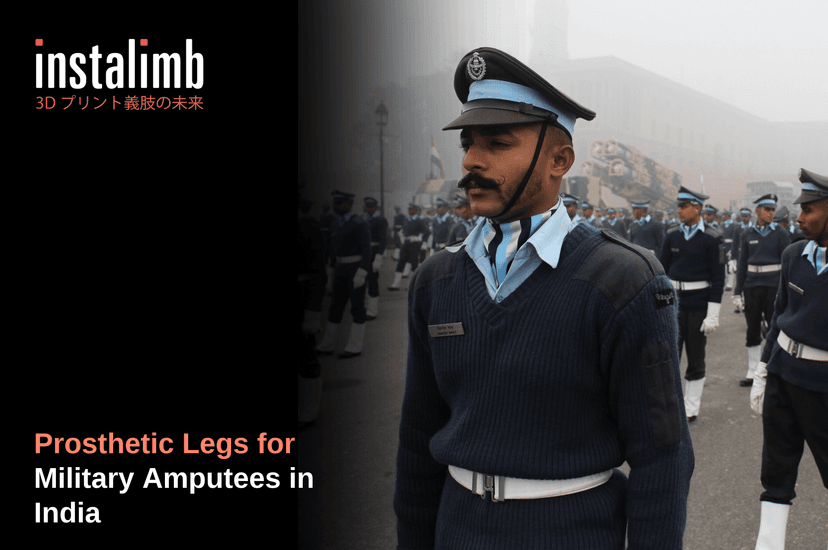
Prosthetic Legs for Military Amputees in India
Every year on 27 October, India marks Infantry Day. It honours soldiers who serve the nation on its toughest terrain.
Recovery from a service-related injury often continues well beyond the public eye. Soldiers wounded during Operation Sindoor are still working through rehabilitation at the Artificial Limb Centre in Pune today.
If you or someone you love is adjusting to life after a limb loss in service, this guide is for you. Finding the right prosthetic leg for military amputees in India is a practical step. You do not have to take it alone.
How Common Is Limb Loss Among India's Defence Personnel?
Around 200 Indian armed forces personnel are estimated to become permanently disabled from service-related injury every year, a commonly cited figure from military medical data. In counter-insurgency operations, limb injuries account for 61% of combat casualties. Blast and fragmentation injuries, such as IEDs and landmines, cause roughly two-thirds of these injuries, far more than bullets.
Limb loss among India's defence personnel is more common than most civilians realise. It rarely makes the news once the immediate crisis passes.
Service carries risks beyond combat alone. High-altitude postings, avalanche accidents, and road accidents during operations all contribute to permanent disability.
For every soldier whose story becomes public, many more quietly rebuild their lives away from the spotlight. Whether you are a serving Army officer, a Navy veteran connected to the Eastern Naval Command in Visakhapatnam (Vizag), an Air Force personnel member, or part of the Central Armed Police Forces, your experience fits a well-documented pattern of service-related limb loss across India.
From Battlefield to Operation Theatre: Why Blast Injuries Cause Most Amputations
Most military amputations in India begin far from a hospital, in the moments after an explosion or a fall.
The main causes of combat-related limb injury among Indian soldiers include:
-
Improvised explosive devices (IEDs) and landmines, which cause blast and fragmentation wounds
-
Artillery and shell fragments encountered during active operations
-
High-altitude accidents, including avalanches and falls, are common to postings such as Siachen
-
Road accidents during troop movement and routine operations
A study of counter-insurgency casualties at an Indian Army tertiary hospital, covering 2014 to 2019 and published in the Journal of Marine Medicine, found that limb injuries accounted for 61% of combat casualties. Among these injuries, explosives and fragmentation caused 67.4%, compared with 32.5% from bullets.
Blast waves and shrapnel tend to shatter bone and destroy soft tissue over a wide area. Surgeons are often left with no option but amputation to save the rest of the limb.
Separately, a pooled review of 14 studies, published in the International Journal of Community Medicine and Public Health, found that trauma is responsible for 73.1% of major limb amputations in India, and that lower-limb cases make up 90.8% of the total. This broader national pattern helps explain why lower-limb amputation is the most common outcome for wounded soldiers too.
Prosthetic Leg Options for Military Amputees in India
The right choice depends on where the amputation occurred.
Above-knee amputees have lost the leg above the knee joint. They need a prosthetic system with an artificial knee as well as a foot. This demands more balance and energy to walk naturally.
Below-knee amputees keep their own knee joint. This generally makes walking, running, and climbing stairs easier to relearn.
Both groups depend on one thing above all else: the socket. A socket is the part of the prosthetic that fits over the residual limb (what remains of the leg after amputation). It should fit like a precise, custom-shaped sleeve.
A socket that does not fit well is uncomfortable at best. At worst, it can cause skin damage, however advanced the knee or foot technology attached to it.
This is where above-knee and below-knee prosthetic care increasingly draws on 3D printing and AI-assisted scanning. Rather than shaping a socket by hand over several visits, these tools can capture the shape of a limb to within 1 mm of precision. They translate it into a socket design quickly. This matters for soldiers who may need to travel a long distance for every fitting appointment.
The Government Rehabilitation Journey: Artificial Limb Centre Pune and Beyond
For most Indian soldiers, the road to walking again starts at the Artificial Limb Centre (ALC) in Pune. This is the tri-service facility that has supported defence amputees for decades.
ALC Pune manages the acute phase of recovery, which typically includes:
-
Wound healing and surgical aftercare
-
Initial prosthetic fitting and alignment
-
Physiotherapy and gait (walking pattern) training
-
Guidance on caring for the residual limb day to day
This stage of care is thorough and well-resourced for serving personnel. The Army and Air Force, in particular, maintain structured follow-up systems.
Many veterans find that the real test begins after they leave ALC Pune and return home.
Residual limbs continue to change shape for months or years after amputation. Government-issued components wear down with daily use. Civilian life often demands different things from a prosthetic leg, whether that is standing for long shifts at a new job or keeping up with children.
This is the gap that organisations such as Jaipur Foot (BMVSS) and private clinics are built to fill. They offer ongoing access to socket replacement and refitting, long after formal government rehabilitation has ended.
Bravery Beyond the Battlefield: Stories That Inspire
Some stories of recovery become part of the national conversation, and rightly so.
Major D.P. Singh lost his leg above the knee while serving in the Kargil War in 1999. In the years since, he has become known across India as the “Blade Runner”, running marathons and speaking to audiences about rebuilding life after limb loss.
His journey shows what is possible. From a young officer wounded in one of India's most significant conflicts, he became an endurance athlete and motivational speaker. His story has shown a generation of amputees that disability is a state of mind, not a limitation.
More recently, soldiers wounded during Operation Sindoor in 2025 are still working through their recovery at the Artificial Limb Centre in Pune today, each on their own timeline. Their continued progress deserves the same respect as any story that makes the headlines, whether or not it ever does.
The CAPF Gap: Why Paramilitary Veterans Need More Support
Personnel from the Central Armed Police Forces, including the BSF, CRPF, and ITBP, face many of the same risks as Army soldiers. This is especially true in counter-insurgency operations.
Yet CAPF personnel often have less structured follow-up care once acute treatment ends. Unlike the tri-service rehabilitation system, CAPF pathways can vary by force and location.
Organisations such as the Aditya Mehta Foundation have stepped in to support CAPF veterans. Many are moving towards para-sport and returning to an active, mobile life.
If you served with a paramilitary force and feel your aftercare has been less consistent than you expected, that gap is real and recognised. It is not something you imagined.
Supporting the Family: The Caregiver's Role in Recovery
Recovery after limb loss is rarely a solo journey.
Caregivers, spouses, parents, and children carry their own weight. They adjust routines, learn new ways to help with mobility, and manage their own worry, all while trying to stay strong for the person in front of them.
It is possible, and healthy, to hold pride and grief at the same time. You can be deeply proud of your soldier's service and still grieve the version of daily life you knew before.
Connecting with an amputee community and peer support network can help. Whether through veteran associations or rehabilitation centres, this support can make the dual weight easier to carry for everyone in the family.
Frequently Asked Questions (FAQ)
Q1: How do soldiers in India get prosthetic limbs after a combat injury?
Soldiers who lose a limb in combat are typically first treated and fitted with an initial prosthesis at a government facility such as the Artificial Limb Centre (ALC) in Pune. ALC Pune specialises in defence-related rehabilitation. From there, many continue care through NGO programmes like Jaipur Foot (BMVSS) or move to private clinics for follow-up fittings, socket replacements, and newer technologies as their mobility needs change over time.
Q2: What happens to a soldier's prosthetic care after discharge from government rehab?
Government rehabilitation at centres like ALC Pune typically covers the acute phase. This includes initial amputation care, wound healing, and a first prosthetic fitting. After discharge, veterans and serving personnel often need ongoing care, as residual limbs change shape, as components wear out, or as they want higher-performance sockets for sport or daily life. This is where private clinics and organisations such as Jaipur Foot/BMVSS extend support.
Q3: Which government organisations support prosthetic limb access for Indian defence personnel?
Jaipur Foot (BMVSS) is India's largest limb-fitment organisation. It has rehabilitated more than 1.78 million amputees, including defence and paramilitary personnel referred through military and CAPF channels. The government's Artificial Limb Centre in Pune also provides a structured rehabilitation pathway.
Q4: What type of amputation do most Indian soldiers suffer in combat?
Most combat-related amputations among Indian soldiers are lower-limb. This is consistent with the broader national pattern, in which lower-limb amputations account for 90.8% of all major limb amputation cases in India. Limb injuries make up the majority of combat casualties. Explosive and fragmentation injuries, such as IEDs and landmines, cause roughly two-thirds of these wounds, far more than gunshot wounds.
Q5: Is there private or advanced prosthetic technology available for veterans in India beyond government care?
Yes. Private prosthetic clinics in India now offer advanced options such as precision-fit, 3D-printed sockets for below-knee and above-knee amputees. These can complement government-provided limbs with improved comfort and fit. DRDO is also funding next-generation research, including an AI-based powered prosthesis project at IIT Kharagpur (2025-2028). This reflects growing momentum towards modern prosthetic technology for defence amputees.
Moving Forward With Confidence
Whether you served for one year or twenty, in the Army, Navy, Air Force, or a paramilitary force, your life after limb loss is not a lesser version of what came before.
It is a new chapter. It is built on the same discipline and courage that carried you through your service.
As India marks another Infantry Day, that courage deserves to be met with the right support, the right fit, and the right technology. Walking forward should feel as natural as it always did.
Check out our blog section for more!


