Prosthetic Gym Workout: 7 Safe Tips for Leg Day
Includes AI-assisted content
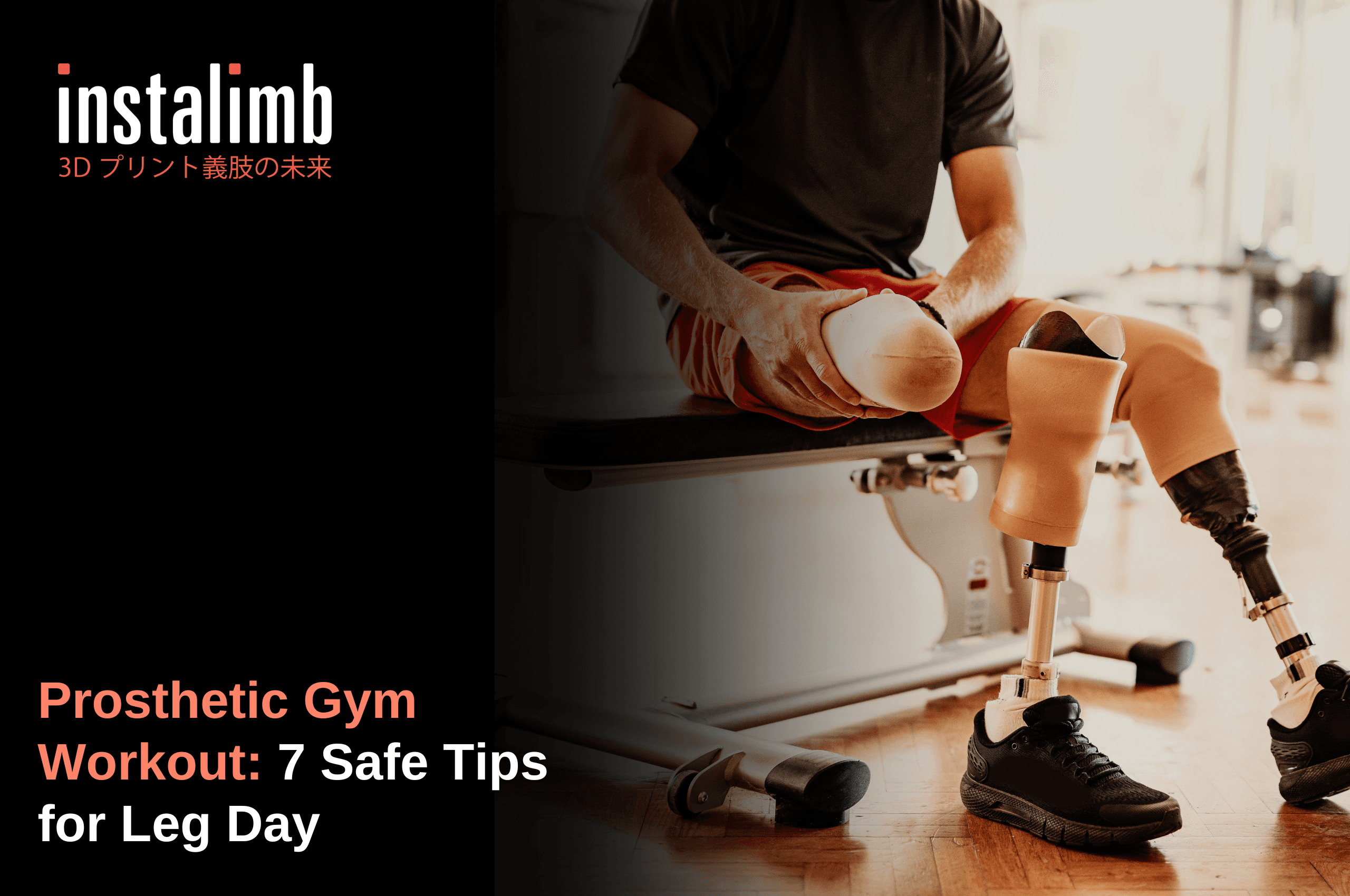
Walking back into the gym after amputation is intimidating enough. Add barbells, squat racks, and a leg day routine, and most amputees quietly skip lower body work altogether. A safe prosthetic gym workout is absolutely possible; you just need a few adjustments most trainers were never taught.
What Makes a Prosthetic Gym Workout Different?
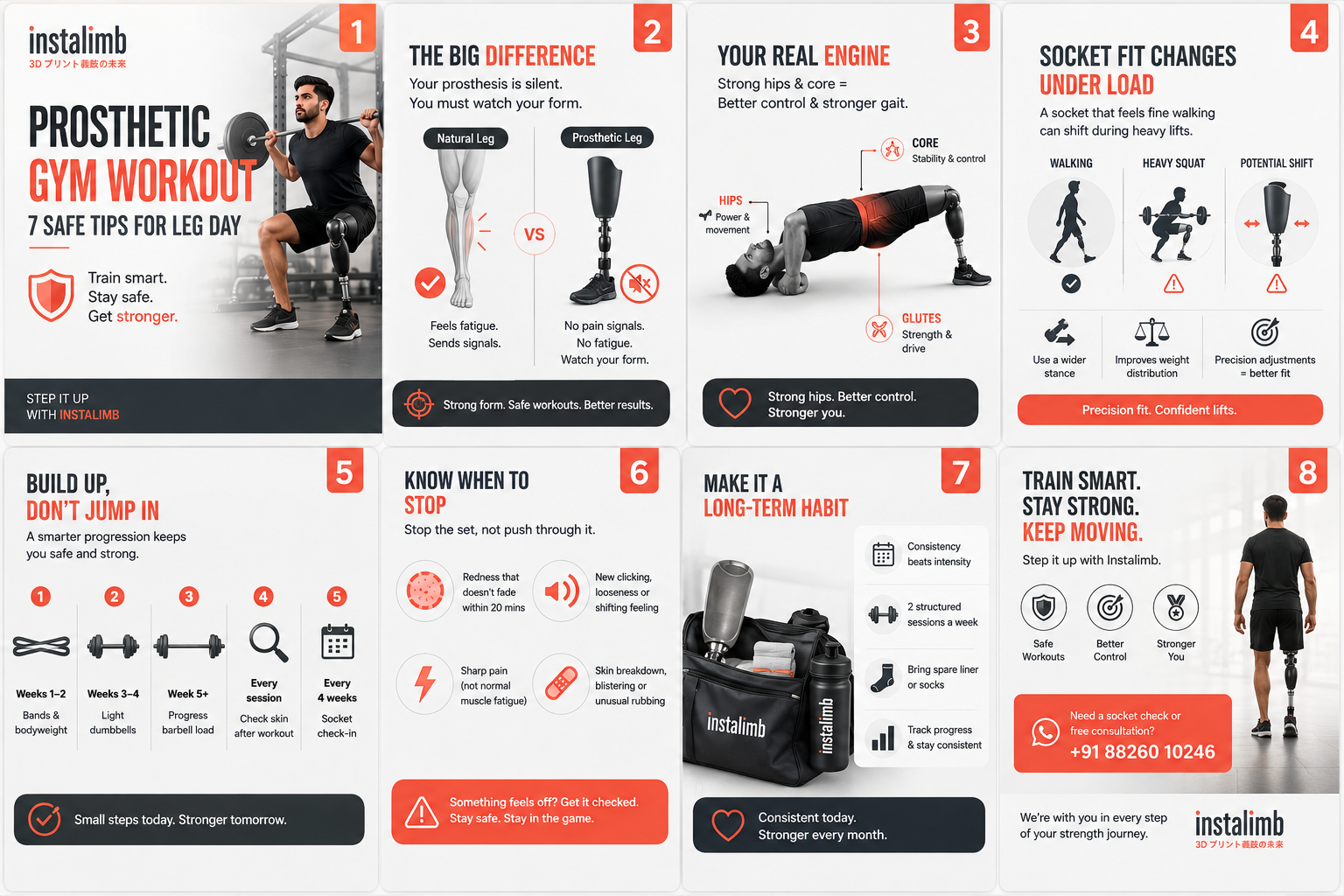
A prosthetic gym workout differs from a typical routine mainly in socket stability and hip or core engagement. Your prosthetic leg doesn't fatigue or send pain signals the way sound muscle does, so form breaks down silently. The fix is prioritising a wider stance, controlled tempo, and strength in the muscles that actually control your prosthesis: your hips, glutes, and core.
Think of your prosthetic knee or ankle as a smart but silent teammate. It won't tell you when it's overloaded, so you have to watch the form instead of waiting for feedback. Before adding weight to squats or lunges, loop in your prosthetist. A quick alignment check before leg day prevents most gym-related fit problems.
Why Hip and Core Strength Matter More Than Leg Strength
Above-knee amputees in particular often lean on momentum instead of muscle to swing the prosthetic knee through a stride. Physical therapy research consistently points to weak hip extensors and hamstrings as the main driver of that pattern, not the prosthesis itself.
Prioritise these muscle groups on leg day:
-
Glutes: hip bridges, glute bridges, cable kickbacks
-
Hip flexors and abductors: banded walks, standing hip flexion
-
Core: planks, dead bugs, standing cable rotations
Think of your hips as the engine and your prosthetic leg as the wheel. A strong engine controls the wheel; a weak one just gets dragged along. Building hip and core strength does more for your gait than isolated leg exercises ever will.
Socket Fit Changes Under Load: What to Watch For
A socket that fits perfectly for walking can still shift under the load of a heavy squat. Heavier lifts push more force through the socket wall, and an interface that felt fine on a walk can suddenly feel loose mid-rep.
A systematic review published in the National Library of Medicine's PMC database looked at resistance training in people with lower limb amputations and found consistent strength and functional gains, while also flagging socket fit and alignment as recurring safety factors clinicians need to monitor as load increases.
A slightly wider stance during squats and lunges improves your base of support and evens out weight distribution. At Instalimb, socket adjustments are made against a digital file with 1mm-level precision, so even small shifts in your residual limb from a new training routine can be corrected quickly instead of guessed at.
Your First Month of Leg Day: A Safer Progression
At Instalimb, we've designed over 500 prosthetics across Delhi, Gurugram, Hyderabad, Bangalore, Mumbai, and Vizag, and getting active patients back to structured training safely is part of everyday practice. Jumping straight into heavy squats is how most gym injuries start, prosthetic or not. Build up in layers instead:
-
Weeks 1-2: bodyweight and resistance bands only, focused on tempo and balance
-
Weeks 3-4: add light dumbbells, and keep your stance slightly wider than usual
-
Week 5 onward: progress barbell load only after your prosthetist confirms alignment is holding
-
Every session: check your residual limb skin for redness or rubbing once you're done
-
Every 4 weeks: book a quick socket check, since muscle gained from training can change your limb volume
Skipping the check-in step is the single most common reason a good gym routine turns into a skin problem.
When to Pause and Call Your Prosthetist
Some warning signs mean stop the set, not push through it:
-
Redness that doesn't fade within 20 minutes of removing your liner
-
A new clicking, looseness, or shifting feeling mid-lift
-
Sharp pain, as opposed to normal muscle fatigue
-
Any skin breakdown, blistering, or unusual rubbing
None of these mean you have to quit leg day. They mean it's time for a quick prosthetist visit before your next session, not after three more weeks of pushing through it.
Making Leg Day a Long-Term Habit
Consistency beats intensity when you're rebuilding strength with a prosthesis. Two structured sessions a week that you actually attend will do more for your gait than one brutal session you dread and skip.
Bring a spare liner or socks to the gym, the same way you would to a long day out. Sweat changes your residual limb volume mid-workout, and a spare sock lets you adjust fit between sets instead of finishing on a socket that's gone loose.
Your prosthetic leg got you back on your feet. Leg day, tracked with your prosthetist and the digital fitting records your clinic keeps on file, is how you make sure it stays strong beneath you.
Frequently Asked Questions
Is it safe to do squats and lunges with a prosthetic leg?
Yes, with the right preparation. Squats and lunges are safe for most prosthetic users once your prosthetist confirms your socket and alignment can handle load-bearing movement. Start with a wider stance for balance, use lighter resistance while you dial in form, and increase weight gradually rather than jumping straight to heavy sets.
Which muscles should amputees focus on for leg day?
Hip and core muscles deserve the most attention, since they control how your prosthetic leg moves during walking and lifting. Glute bridges, banded hip work, and core stability exercises like planks build the strength that actually improves your gait, more directly than isolated leg machines do.
How do I know if my socket fit is a problem during workouts?
Watch for redness that doesn't fade within 20 minutes, a new clicking or loose feeling mid-exercise, or sharp pain during a lift. Any of these signal it's time for a quick prosthetist check before your next gym session, not after pushing through several more weeks of training.
Do I need a different prosthetic leg for weightlifting?
Not necessarily, but some experienced lifters do use a more rigid setup for heavy leg day, since everyday walking components prioritise flexibility over stiffness. Talk to your prosthetist about whether your current device suits progressive loading or whether an alignment adjustment is enough for now.
How often should I get my socket checked once I start training regularly?
Plan on a check-in roughly every four weeks once you begin a new strength routine. Muscle gain and fluid shifts from regular training can change your residual limb volume, which affects socket fit even if nothing feels obviously wrong yet.
Leg day was never meant to be off limits after amputation. With the right pacing, a little extra attention to hip and core strength, and a prosthetist who's part of your training plan, the gym becomes just another place where you show up stronger than you did last month.
Check out our blog section for more!
So, if you're looking for a new artificial leg, interested in a free consultation, confused if your socket is the right fit, or have any other queries, now is the time to reach out to us and try a test socket free of cost. Step it up with Instalimb.
Contact us today!
So, if you‘re looking for a new artificial leg, interested in a free consultation, confused if your socket is the right fit, or have any other queries, now is the time to reach out to us and try a test socket free of cost. Step it up with Instalimb - Contact us today!
Recent Posts
August 20, 2026
August 18, 2026
August 11, 2026
August 6, 2026
July 31, 2026
July 27, 2026
July 21, 2026
July 17, 2026
July 15, 2026