Our Blog
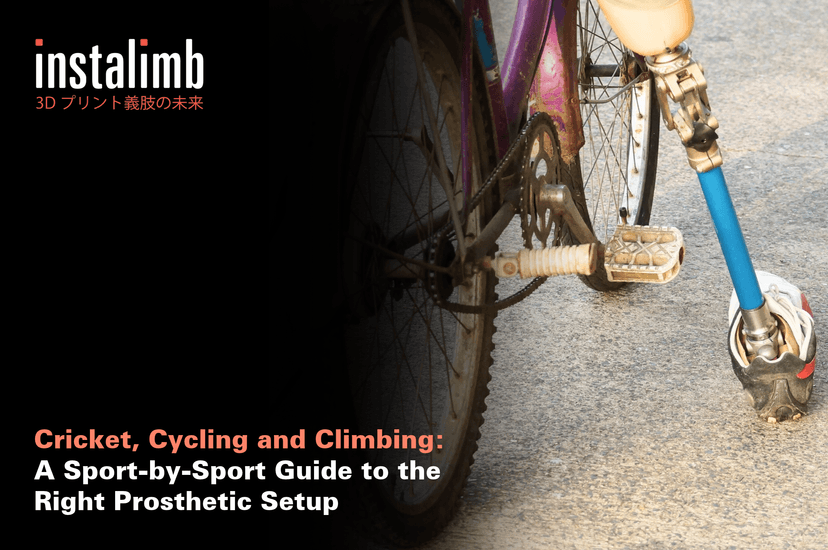
Prosthetic for Sports: A Guide to Cricket, Cycling and Climbing
Getting back to a sport you love after limb loss isn't about owning one magic leg; it's about matching the right setup, the right foot, and sometimes a different socket adjustment to the sport you actually want to play.
Prosthetic setups for sport aren't one-size-fits-all, and cricket, cycling, and climbing each ask something different of your leg, your socket, and your confidence.
Why One Prosthetic Setup Doesn't Fit Every Sport?
Your everyday walking prosthetic is built for steady, predictable loading: one foot in front of the other, all day long. Cricket asks for sudden sprints and sharp turns, cycling asks for smooth, repetitive pedalling, and climbing asks for grip and stability on uneven rock, so each sport puts very different stress through your leg.
That's why many active amputees eventually add a sport-specific foot, a firmer liner, or a quick-change attachment, rather than expecting one leg to do everything equally well. Just as you wouldn't wear the shoes from a five-day cricket match on a Himalayan trek, the setup that gets you through your commute isn't necessarily the one you want on the pitch or the trail.
Cricket: Building a Setup That Can Take a Hit
Cricket in India has a real, organised home for players with disabilities. By April 2022, more than 2,500 cricketers with disabilities had registered to play organised cricket across the country, and that number has almost certainly grown since. If you're picturing yourself back at the crease, you're joining a genuinely large community, not starting from scratch.
Batting and fielding both demand quick changes of direction, short sprints between wickets, and the odd sudden stop; loads your everyday walking foot usually isn't designed to absorb. A sturdier, more responsive foot and a snug, well-aligned socket matter here more than almost anywhere else, since a loose socket during a run between wickets is both uncomfortable and genuinely risky.
Local clubs in cities such as Bengaluru, Delhi, and Hyderabad now run regular matches and nets sessions for players with limb differences, so the easiest way to test a cricket-specific setup is usually to find [a nearby para-cricket club] and simply turn up for a session. Give your socket and your confidence a few matches to settle in together.
Cycling: Pedalling With Confidence
Cycling tends to be one of the friendlier sports to return to after limb loss, because pedalling is a smooth, repetitive, low-impact motion rather than the sudden loading of running or cricket. Aditya Mehta, a below-knee amputee and one of India's best-known para-cyclists, has shown just how far that can go: he became the first Indian para-cyclist to medal at the Asian Paralympic Games, and later cycled the length of India, roughly 1,450 kilometres, on one leg.
The main decision for cycling is usually the pedal attachment rather than the foot itself. A dedicated pedal-compatible foot, or a simple toe-clip setup, keeps your prosthetic foot securely positioned through every rotation, which matters far more over a long ride than it might seem on a short test lap. Above-knee amputees often find a slightly stiffer knee setting helps with pedalling stability, so it's worth discussing [choosing the right prosthetic foot for cycling] specifically with your prosthetist rather than assuming your everyday walking settings will carry over.
Climbing and Trekking: Grip, Stability, and Altitude
Climbing and trekking put different demands on your legs again: grip on uneven, often unpredictable surfaces, ankle flexibility to adapt to each footing, and extra stability on slopes rather than flat ground. October and November are generally the prime trekking months in the Indian Himalayas, once the monsoon clears and before the heaviest winter snow arrives, which makes this a good season to start planning a trip.
You don't need to plan this alone, either. Treks for All, an initiative that organises accessible Himalayan treks for amputees and wheelchair users, has helped prove that a disability doesn't rule out the mountains. Read more about [planning an accessible Himalayan trek] before you go. A rugged, multi-axis foot with more ankle give usually serves climbing and trekking far better than a smooth walking foot, and a well-fitted, properly broken-in socket matters even more at altitude, where cold and swelling can both affect how your limb sits inside it.
The Quick-Change Adapter: One Socket, Several Sports
You don't necessarily need an entirely separate leg for every sport you play. Many active users rely on a single well-fitted socket paired with a quick-change adapter, a fitting that lets you swap the foot or attachment at the bottom of your leg in minutes, rather than owning several complete prosthetics.
A walking foot is built for all-day comfort and steady, even loading. A running blade, by contrast, is built to store and release energy with each stride, which makes it better suited to sprinting between wickets or on a running track, but less comfortable for standing around for hours. Understanding [walking foot vs running blade] helps you choose the right attachment for each sport, rather than relying on your everyday foot for everything you do.
Managing Sweat and Friction During Active Play
Any extended match, ride, or climb brings more sweat than an ordinary day, and sweat is usually what causes socket slippage and skin irritation, rather than the activity itself. Three things make the biggest difference: a moisture-wicking liner rather than a standard one, a spare liner or sock to change into at half-time or a rest stop, and a quick skin check once you're done, looking for redness, rubbing, or blistering before it becomes a bigger problem.
If your socket feels looser by the end of a match or a trek than it did at the start, that's usually sweat and swelling rather than a fault in the fitting itself, though it's worth mentioning at your next check-up if the pattern repeats. Our [guide to prosthetic liner care and sweat management] covers this in more detail. Keeping a change of liner in your kit bag is a small habit that prevents a surprising number of avoidable problems.
What the Research Actually Shows?
A 2024 review in Frontiers in Rehabilitation Sciences looked specifically at running-specific prosthetic feet and how their stiffness and energy return relate to athletic performance. Its honest conclusion was that the evidence is still too varied for one blanket rule, which in practice means a setup chosen with your own prosthetist, based on your own sport, body, and goals, matters more than following generic advice online.
India's para-athletes are proving what the right setup and serious training can achieve on the biggest stages. At the 2025 World Para Athletics Championships, India recorded its best-ever medal haul, 22 medals including six golds, and Indian athletes also competed at the 2026 Asian Para Games this year. None of that happens with an ill-fitting, one-size-fits-all leg; it happens with equipment matched carefully to the sport and the athlete.
Khelo India and the Rise of Grassroots Para Sports
You don't have to be chasing a national medal for any of this to matter. The Khelo India Para Games, run under the government's wider Khelo India scheme, have steadily expanded access to organised para sports at the grassroots level, giving far more amputees across the country a genuine route into competitive and recreational sport than existed even a few years ago.
That growing access matters because sport-specific equipment only helps if you actually get to play. Local clubs, state-level para sports associations, and programmes like Khelo India are collectively making it easier to find teammates, coaching, and a place to simply try a sport again: cricket nets on a Sunday morning, a cycling club, or a local trekking group.
Getting Your Sport-Specific Setup Right
Getting any of this right starts with an accurate socket, since every sport-specific foot or attachment only performs as well as the fit it's built on. At Instalimb, our 3D-printing and AI-assisted scanning check and adjust your socket to within roughly 1mm, so a cricket-ready, cycling-ready, or trekking ready setup starts from a base that actually matches your limb, not a generic mould.
The smartest first step is usually to try a test socket fitting and talk through which sport, or sports, you're aiming to get back to, so your prosthetist can recommend the right foot, liner, or attachment for exactly that goal.
Frequently Asked Questions
Q1: Can someone with a prosthetic leg play competitive cricket in India?
Yes. Organised cricket for players with disabilities has grown substantially in India, with more than 2,500 cricketers with disabilities registered to play by April 2022, and the number has likely grown since. Local clubs in cities such as Bengaluru, Delhi, and Hyderabad run regular matches, and a sturdier, more responsive prosthetic foot alongside a snug, well-aligned socket makes the sudden sprints and direction changes of batting and fielding considerably safer and more comfortable.
Q2: What's the difference between a walking foot and a running blade?
A walking foot is designed for steady, all-day comfort during ordinary walking, while a running blade is designed to store and release energy with each stride, which suits sprinting or running but feels less comfortable for long periods of standing or walking. Many active amputees use a quick-change adapter to swap between the two depending on what they're doing that day, rather than relying on one foot for every activity.
Q3: How often should I switch prosthetic feet or attachments for different sports?
There's no fixed rule, since it depends on how often you play and how different your sports are from one another. If you play one sport regularly, a dedicated foot or attachment for it, swapped in with a quick-change adapter before each session, is usually worth the small extra effort. If you only play occasionally, your prosthetist can help you decide whether a dedicated attachment is worth it or whether your everyday foot will do for now.
Q4: Is it safe to trek or climb with a prosthetic leg?
Yes, with the right preparation. A rugged, multi-axis foot with better ankle flexibility handles uneven ground far better than a standard walking foot, and a well-broken-in, properly fitted socket matters even more at altitude, where cold and swelling can affect fit. Programmes such as Treks for All have organised accessible Himalayan treks for amputees and wheelchair users, and October and November are generally the best months to go, once the monsoon clears and before heavy winter snow sets in.
Q5: How do I stop my socket slipping or causing skin irritation during sport?
Sweat, not the sport itself, usually causes slipping and irritation. A moisture-wicking liner, a spare liner or sock to change into at a break, and a quick skin check straight after your match, ride, or climb will catch most problems early. If your socket consistently feels looser by the end of an activity than it did at the start, mention the pattern to your prosthetist at your next check-up rather than just tightening a strap and carrying on.
Your Next Step
Getting back to cricket, cycling, or climbing after limb loss isn't about finding one perfect leg that does everything; it's about matching the right foot, socket adjustment, or attachment to the sport you actually want to play, and giving yourself a few sessions to let your setup and your confidence settle in together.
The right sport-specific setup, built on an accurately fitted socket, often makes the difference between forcing your way through a match or trek and genuinely enjoying it again.
Check out our blog section for more!

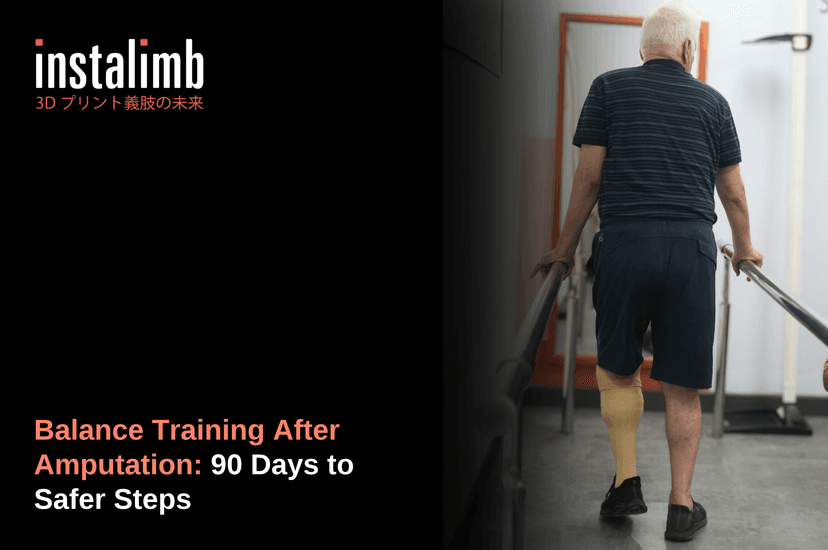
Balance Training After Amputation: 90 Days to Safer Steps
If you've started flinching at uneven pavement or gripping the handrail a little tighter than you used to, you're not imagining it, and you're not failing at this. Nearly half of all lower-limb amputees report falling at least once, and most of those falls happen while balance, muscle memory, and prosthetic fit are all still settling into place.
Balance training after amputation isn't something you either have a knack for or don't; it's a skill you build in a predictable order, and the first 90 days are where most of that groundwork gets laid.
Why New Prosthetic Users Fall More Often?
Research published in the journal Prosthetics and Orthotics International found that 46% of lower-limb amputees had fallen at least once, with tripping over an object responsible for 62.5% of those falls. If that sounds like your own experience, you're far from alone in this.
Above-knee (transfemoral) amputees fall significantly more often than below-knee (transtibial) amputees, so if you're adjusting to a higher amputation level, the extra caution you're feeling right now makes sense.
Physiotherapists sometimes use two simple timed tests to get an early sense of who is most at risk, though it's worth noting the evidence behind them is thin: it comes from a single small study of just 21 new unilateral lower-limb amputees followed for six months. Treat the numbers below as a useful signal to raise with your own team, not a fixed prediction about you.
The Timed Up and Go (TUG) test times how long it takes to stand from a chair, walk three metres, turn around, and sit back down. In that study, every transfemoral amputee who took 9.44 seconds or longer went on to fall within six months.
The Four Square Step Test (FSST), which times quick steps in and out of a small square pattern, predicted fallers among transtibial amputees with 83% accuracy at a threshold of 12.83 seconds. If your prosthetist or physiotherapist runs either test with you, think of it as an early check-in rather than a judgement on your progress.
This matters even more if you're going through this in India, which recorded an estimated 2 million traumatic amputations in 2019, the highest burden of any country studied, with road traffic injuries causing 85.4% of cases. You're part of a very large, very real population here, not a rare exception.
A 2026 pooled review of Indian studies in the International Journal of Community Medicine and Public Health looked at 7,272 patients with major limb amputations, 90.8% of whom were lower-limb amputees. Across that whole group, the average age was around 45.4 years.
In other words, most people working through this early stretch alongside you are working-age adults rebuilding their mobility for careers and families, not easing quietly into retirement.
Balance Training After Amputation: A Week-by-Week First 90 Days Timeline
Balance training after amputation generally follows a predictable arc, even though everyone's pace differs slightly. Here's roughly what the first three months tend to look like.
Weeks 1-4: Building Confidence on a Stable Base
The first month is about relearning the basics on solid, predictable ground, usually inside a clinic or at home with support nearby. You'll practise shifting your weight evenly between both legs, standing unsupported for short periods, and taking slow, deliberate steps between parallel bars or with a walker.
This is also when your prosthetist checks your gait and socket fit closely, using tools like 3D scanning to catch a shift of even a millimetre before it becomes a habit. Following [a structured physiotherapy plan] during these early weeks, rather than improvising exercises alone, is one of the strongest predictors of how smoothly the next two months go.
Weeks 5-8: Progressing to Uneven Surfaces and Dynamic Movement
By the second month, most new users move from flat, familiar ground to gentler challenges: grass, gravel, ramps, and short flights of stairs. Exercises now add movement while standing, like turning your head while walking, catching a light ball, or practising single-leg stance on a cushion.
This is where proprioception, your body's sense of where your limb is in space without looking at it, starts rebuilding through repetition. It's normal for confidence to dip here even as your physical ability improves, since your brain is managing more variables at once.
Weeks 9-12: Real-World Terrain and Independence
The final stretch is about testing everything in real conditions: crowded markets, public transport, uneven footpaths, and the specific layout of your own home. You'll likely start walking longer distances without a companion close by and navigating stairs without a handrail on both sides.
Fatigue becomes the bigger variable now, since tired muscles and a tired mind both react slower to the unexpected. Most new users reach a meaningfully more independent gait by the end of month three, though the exact timeline depends on amputation level, fitness, and how early any socket-fit issue gets caught and corrected.
Is it you, or is it your socket? The Hidden Cause of Instability
If you're doing every exercise correctly and still losing your balance more than expected, it's worth asking a different question: is this about effort, or is it about fit? Balance instability in this early window is frequently a socket-fit problem rather than a training failure.
Your residual limb's volume keeps changing during early rehabilitation as post-surgical swelling reduces, and even a shift of one or two millimetres inside the socket forces unconscious micro-corrections with every step you take. Multiply that by thousands of steps a day, and it's easy to see why you'd feel unsteady without knowing why.
This is exactly the gap a well-fitted socket is meant to close. A well-fitted socket is the foundation that all your balance training sits on, not an afterthought, for once the exercises are mastered.
At Instalimb, we have designed over 500 prosthetics across Delhi, Gurugram, Hyderabad, Bangalore, Mumbai, and Vizag, using Japanese-engineered 3D printing and AI-assisted scanning to check and adjust socket fit to within roughly 1mm as your limb changes shape, through a test-socket fitting process built for exactly this early, unstable stage. If something feels off, it usually isn't you.
Making an Indian Home Fall-Safe: Squat Toilets, Stairs, and Floor-Seating
Making your home safer doesn't have to mean rearranging your whole life or feeling like a burden on your family. Most Indian homes have specific pinch points that generic fall-prevention advice overlooks entirely: squat toilets, floor-seating, and stairs without a rail on both sides.
[The squat-to-stand transition] asks your prosthetic knee and socket to manage a deep, less-stable single-leg load, which makes it one of the highest-risk movements in the first 90 days. A few practical changes go a long way:
-
Install a raised toilet seat, a Western-style commode attachment, or a sturdy grab rail near the squat toilet
-
Swap floor seating for a stable chair with armrests during the first few weeks, even if it isn't your usual habit
-
Add non-slip strips or mats to marble flooring, bathroom tiles, and stair edges, which become genuinely dangerous when even slightly wet
-
Keep walkways clear of loose footwear, wires, and low furniture, especially in dim light
-
Ask for a grab rail on both sides of any staircase you use daily
None of this is about becoming dependent. It's about removing unnecessary risk while your balance is still building, so your energy goes into training, not tripping.
Seasonal and Terrain Risk Factors Across India
Where you live changes what fall risk looks like during these three months. In Delhi-NCR and Gurugram, winter brings cold mornings that stiffen joints and reduce sensation in your residual limb, plus fog that cuts visibility on your usual walking route. Dry winter skin also cracks more easily, which can affect how your socket sits against your skin.
If you notice [a socket that feels loose in cold weather], it's worth a fit check rather than just tightening a strap and carrying on.
This is also a good moment to use Instalimb's test-socket process, which checks and adjusts fit to within about 1mm using 3D-printed test sockets, so a seasonal change in limb volume doesn't quietly undo weeks of balance training.
Further south, in Hyderabad, Bangalore, and Vizag, winters are milder, but monsoon-damaged pavements and uneven kerbs remain a year-round hazard. Mumbai's humidity and monsoon-cracked walkways create similar footing problems even outside the coldest months.
[Walking safely on uneven terrain], wherever you are, means shorter steps, a slightly wider stance, and extra caution at kerb edges and surface transitions.
The WHO's Falls Fact Sheet notes that South-East Asia and the Western Pacific together account for roughly 62% of the world's 842,000 annual fall deaths, and ICMR data shows winter hospital admissions among seniors in India rise by 15 to 20%, so this isn't a minor seasonal footnote.
The Caregiver's Role: Supporting Without Overprotecting
In many Indian households, several generations share a home, and everyone from a spouse to a parent to an adult child often wants to help. That instinct is valuable, but there's a real difference between support and overprotection, and finding that line is its own skill for a caregiver to learn.
Hovering nearby during every step, finishing tasks before they're attempted, or insisting on an arm that isn't actually needed can quietly slow down balance training, even when it comes from love.
[How to support without overstepping] usually means staying close enough to help during the hardest moments, like the first few weeks of stairs or squat-toilet transitions, while stepping back once a task has been practised safely.
Ask what kind of help is actually wanted, rather than assuming. The goal for everyone in the household is the same: independence, not distance.
When to Worry, and When Fear of Falling Is Normal
Some fear of falling in the first weeks is normal, and even useful, since it makes you more careful on genuinely risky terrain. This fear typically eases as your balance training progresses through the first 90 days, not because the risk disappears overnight, but because your body and your confidence start moving at the same pace.
What's worth flagging to your prosthetist or physiotherapist is fear that isn't easing, or the opposite: a sudden drop in caution paired with repeated near-falls, which research links to higher actual fall risk.
If you find yourself avoiding normal daily movement altogether, or if a specific activity like stairs or squat toilets consistently triggers a stumble rather than just nerves, that's a signal worth acting on rather than pushing through alone. You don't have to white-knuckle your way through this.
Frequently Asked Questions
Q1: How common are falls after a lower-limb amputation?
Falls are common after lower-limb amputation. One widely cited study found 46% of lower-limb amputees had fallen, most often by tripping over an object (62.5% of cases). Above-knee (transfemoral) amputees fall more frequently than below-knee (transtibial) amputees, and risk is highest in the first few months after amputation, while balance, gait, and socket fit are still being established.
Q2: What is the Timed Up and Go test and why does it matter for amputees?
The Timed Up and Go (TUG) test times how long it takes to stand from a chair, walk 3 metres, turn, walk back, and sit down, and it is used clinically to predict fall risk in new amputees. In one study, every transfemoral amputee who took 9.44 seconds or longer went on to fall within 6 months, making it a useful early warning sign worth discussing with a prosthetist or physiotherapist.
Q3: Why do I keep losing my balance even though I'm doing my exercises?
Balance problems in the first 90 days are often not about effort. They can be a sign that the prosthetic socket no longer fits correctly. Limb volume changes significantly during early rehabilitation as swelling reduces, so a socket that fitted well three weeks ago can become loose or misaligned, forcing small unconscious corrections with every step that feels like "bad balance". A test-socket fit check can rule this out as the real cause.
Q4: How do I make an Indian home safer for a new amputee (squat toilets, stairs, floor-seating)?
Home safety for a new lower-limb amputee in India should start with the transitions that carry the most fall risk: squat toilets, getting up from floor-seating, and climbing stairs, since these involve a deep, less-stable single-leg load that standard advice often skips. Install a raised toilet seat or grab rail, keep a stable chair nearby instead of floor-seating in the first weeks, and add non-slip strips to marble flooring and stair edges.
Q5: Does cold winter weather increase fall risk for prosthetic users?
Yes. Cold weather raises fall risk for lower-limb amputees in several ways: it stiffens joints and reduces sensation in the residual limb, dry winter skin is more prone to cracking (which can affect socket fit), and in northern India, fog reduces outdoor visibility. ICMR data cited by Business Today also notes winter hospital admissions among seniors rise 15 to 20%, so early morning caution and a cold-weather socket check are worth the extra few minutes.
Conclusion
Balance after amputation isn't something you either have or don't have; it's something you rebuild, deliberately, over roughly 90 days, with the right exercises, the right home adjustments, and a socket that actually fits the limb you have today, not the one you had a month ago.
Falls in the first 90 days are common, predictable, and largely preventable, which means the fear around them doesn't have to run the show. With International Day of Persons with Disabilities approaching on 3 December, it's a fitting moment to recognise how far steady, well-supported rehabilitation can take you.
Check out our blog section for more!
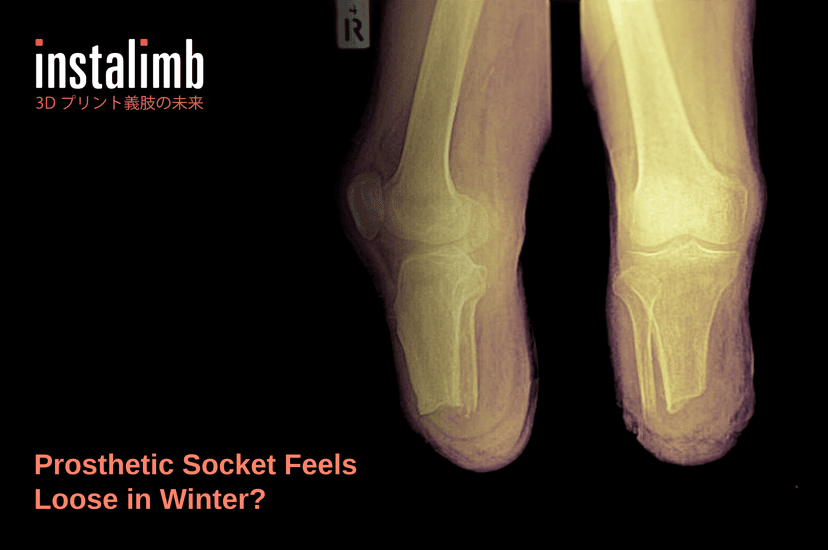
Prosthetic Socket Feels Loose in Winter?
If your prosthetic socket feels loose in winter, you are not imagining it, and nothing about your prosthesis is broken. Amputees across Delhi, Gurugram and other North Indian cities often notice their once-snug socket shifting or slipping once the cold sets in. There is a real, well-documented reason for this, and it is entirely manageable.
Why a Prosthetic Socket Feels Loose in Winter
A prosthetic socket feels loose in winter because cold triggers vasoconstriction, the narrowing of blood vessels in your skin and tissue. Vasoconstriction reduces blood flow to the area, and less blood in the tissue can mean less tissue volume, so a socket that fitted snugly before the cold can start to feel loose.
This is a well-documented physiological response, not a flaw in your prosthesis. Your body narrows blood vessels near the skin to conserve core heat, and your residual limb is no exception. Transfemoral (above-knee) and transtibial (below-knee) amputees both experience this, though the degree varies with individual circulation, climate and how long you stay in the cold.
Research published in the Journal of Physiological Sciences by Yamazaki, Kinoshita and Sone (2009) found that local cooling can reduce skin and soft-tissue blood flow by roughly 60 to 70 per cent compared with a warm baseline. This finding comes from general population research, rather than from studies of amputees or residual limbs specifically.
It is precisely this kind of predictable circulatory variability that shapes how we design 3D-printed sockets at Instalimb from your very first scan.
What Happens Inside Your Residual Limb When It Gets Cold
Think of your residual limb as a sponge whose size is always slightly shifting. Even on an ordinary day, [residual limb volume can fluctuate by several per cent in a single day] from activity, doffing (taking the prosthesis off) and rest.
A 2021 Scientific Reports study by Paternò and colleagues tracked 24 transfemoral amputees. They recorded volume increases of up to 5.92 per cent within 10 to 30 minutes of removing the prosthesis. Day-to-day swings of -4 to +3 per cent also occur from ordinary activity alone.
Cold exposure plausibly stacks on top of this everyday fluctuation, through the same reduced blood flow described above. The researchers themselves flagged temperature as a plausible added factor. They had not directly measured it, so the link is logical rather than directly proven: less blood in the tissue plausibly means less volume, and less volume means a looser socket.
This combination of normal daily swings plus cold-linked shrinkage is why a socket that fitted perfectly in October can feel different by December.
Why India's Climate Makes This Worse, or Milder, Depending on Where You Live?
India's winter is not one season; it is several, and where you live changes how much this affects you. North India's cold-wave season typically hits Haryana, Rajasthan, Delhi and Gujarat hardest, sharpening the cold snap across the region.
Further south, winters are far gentler, but daily temperature swings, especially moving between air-conditioned spaces and warm outdoor air, still matter. For more precautions through the season, see [our general winter safety checklist].
Delhi and Gurugram: Sharp Cold Waves, AC-to-Outdoor Swings and Wedding-Season Evenings
If you live across Delhi-NCR, including Gurugram, you are heading into the sharpest part of this year's cold-wave window. The India Meteorological Department (IMD) issues cold-wave alerts for exactly this region each winter, which is the same window that tends to drive this fit issue. November to January also brings North India's wedding season, with long outdoor evenings as temperatures drop. Standing for hours at an evening function is exactly the kind of sustained cold exposure that can leave your socket feeling loose partway through the night.
Hyderabad, Bangalore, Mumbai and Vizag: A Milder but Real Version
Winters in Hyderabad, Bangalore, Mumbai and Vizag are far gentler, but do not assume you are exempt. A cool morning walk, or stepping from an air-conditioned office or car into warm air and back again, still triggers repeated, smaller rounds of vasoconstriction. Across a full day, these smaller swings can add up to the same loose, slipping feeling that North Indian amputees notice more dramatically.
Diabetic and Vascular Amputees: A Higher-Alert Group
If you live with diabetes or a vascular condition, winter deserves extra vigilance. A University of Washington study found amputees with diabetic or traumatic limb loss had cold-detection thresholds 1.6 to 1.8 degrees Celsius less sensitive than able-bodied people. The same study also found altered blood-flow responses to cold in the residual limb.
It is a small-sample finding, but a consistent warning sign: you may not notice cold-triggered volume loss until your socket already feels loose or skin irritation has begun.
This matters more in India than almost anywhere. A 2026 systematic review of 7,272 Indian amputees, published in the International Journal of Community Medicine and Public Health, found that 26.9 per cent of cases were linked to diabetes or vascular disease. Separately, a global analysis cited by Scroll.in in March 2025 found that India recorded the highest traumatic-amputation burden of 204 countries and territories studied in 2019.
Building [daily diabetic foot care habits] into your winter routine, alongside regular skin checks, helps you catch problems early.
Signs Your Socket Fit Has Changed
A loose socket does not always announce itself loudly. Watch for these changes, especially on cold mornings or after time outdoors:
-
Shifting or rotation: your foot or knee turning slightly out of alignment as you walk
-
Pistoning: a pumping, up-and-down sliding sensation as your limb moves inside the socket with each step, a sign of extra space inside
-
New rubbing or pressure spots: areas that felt fine in warmer weather suddenly feel irritated
-
Fresh blisters or redness: skin marks appearing in new places, often where the socket now sits unevenly
-
A general sense of instability: the socket feeling less secure than usual, especially when standing still
If you notice two or more of these together, pay closer attention rather than assuming it will pass on its own.
Is This Normal, or Should You Be Worried?
In most cases, the answer is reassuring: your prosthesis is not faulty. Cold-induced vasoconstriction is simply a predictable, reversible seasonal change, and it affects transfemoral and transtibial amputees across India and beyond. The looseness typically eases once your limb warms back up.
That said, normal does not mean ignorable. Treat it as a safety flag if you notice new skin breakdown, persistent pain, a socket unstable enough to risk a fall or looseness that does not improve even in warmer parts of the day. If walking feels unsafe, stop and address the fit before continuing, rather than pushing through and risking injury.
What to Do About a Loose Winter Socket
At Instalimb, we have designed over 500 prosthetics across Delhi, Gurugram, Hyderabad, Bangalore, Mumbai and Vizag, and winter fit questions are among the most common we hear from patients this time of year.
For mild looseness, a short-term fix often helps. Adding an extra sock ply, a thin prosthetic sock layer that takes up the space your shrunken limb has left behind, or adjusting your liner, can restore a snug fit within minutes.
If the looseness is significant, recurring or affecting your balance, involve your prosthetist rather than compensating indefinitely with extra socks.
This is where precision design matters. Instalimb builds your 3D-printed socket from your own individual 3D scan, with millimetre-level, AI- and ML-assisted customisation designed around your unique limb shape. Because the starting fit is so exact, normal seasonal changes represent a smaller deviation from your design than with a generically moulded socket.
If winter has already changed how your socket fits, [book a test socket fitting] and let us help you stay steady all season.
Frequently Asked Questions
Why does my prosthetic socket feel loose in winter?
Cold temperatures trigger vasoconstriction, the narrowing of blood vessels in the residual limb's skin and tissue, which reduces blood flow and can lead to a loss of limb volume during cold exposure. This volume loss means less tissue fills the socket, producing a looser fit. The effect is temporary and reverses once the limb warms, but it can affect walking safety and socket comfort during cold mornings, evenings or air-conditioned-to-outdoor transitions.
Is it normal for my prosthesis to fit differently in cold weather?
Yes, it is a normal and widely reported seasonal change, not a sign of a damaged or poorly made socket. Cold-induced vasoconstriction reduces blood flow and limb volume, so the same socket that fits snugly in warm weather can feel loose when temperatures drop, especially in North Indian cities during the cold-wave season or after leaving an air-conditioned space in Hyderabad, Bangalore or Vizag.
Is it safe to walk on a prosthetic leg that feels loose?
Walking on a noticeably loose socket carries real risk: it increases rubbing, blisters, pistoning (the limb sliding inside the socket) and loss of balance, so it should not be ignored. A thin extra sock ply can help temporarily, but persistent looseness or instability should be checked by a prosthetist. Until then, walk cautiously, especially on stairs or uneven ground, and avoid ignoring new rubbing or skin marks.
Will my socket keep loosening every winter?
For most amputees, yes, some winter loosening tends to return every year, since cold-induced vasoconstriction follows the same seasonal pattern each time rather than being a one-off fitting mistake. How much it affects daily life depends on local climate, individual circulation and how closely the socket matches residual limb shape; a precisely customised socket with sufficient volume-management options can reduce how disruptive this seasonal change feels year to year.
Do diabetic or vascular amputees need to worry more about winter socket fit?
Yes, amputees with diabetes or vascular disease can have altered cold sensation and circulation in the residual limb, meaning they may not notice the cold-triggered shrinkage until the socket already feels loose or skin irritation has started. Combined with India's relatively high share of diabetes-related amputations, this makes regular limb and skin checks through winter especially important for this group, alongside routine prosthetist follow-up.
Conclusion
A loose prosthetic socket in winter is not a setback; it is simply your body responding to the season the way bodies do. Understanding the science behind it means you can act early, adjust with confidence and keep walking safely all winter long. Instalimb combines Japanese 3D-printing technology with AI-assisted, millimetre-precise design so your socket is built to handle exactly this kind of change, whatever city you call home.
Check out our blog section for more!