Swimming With a Prosthetic Leg: Safety Guide
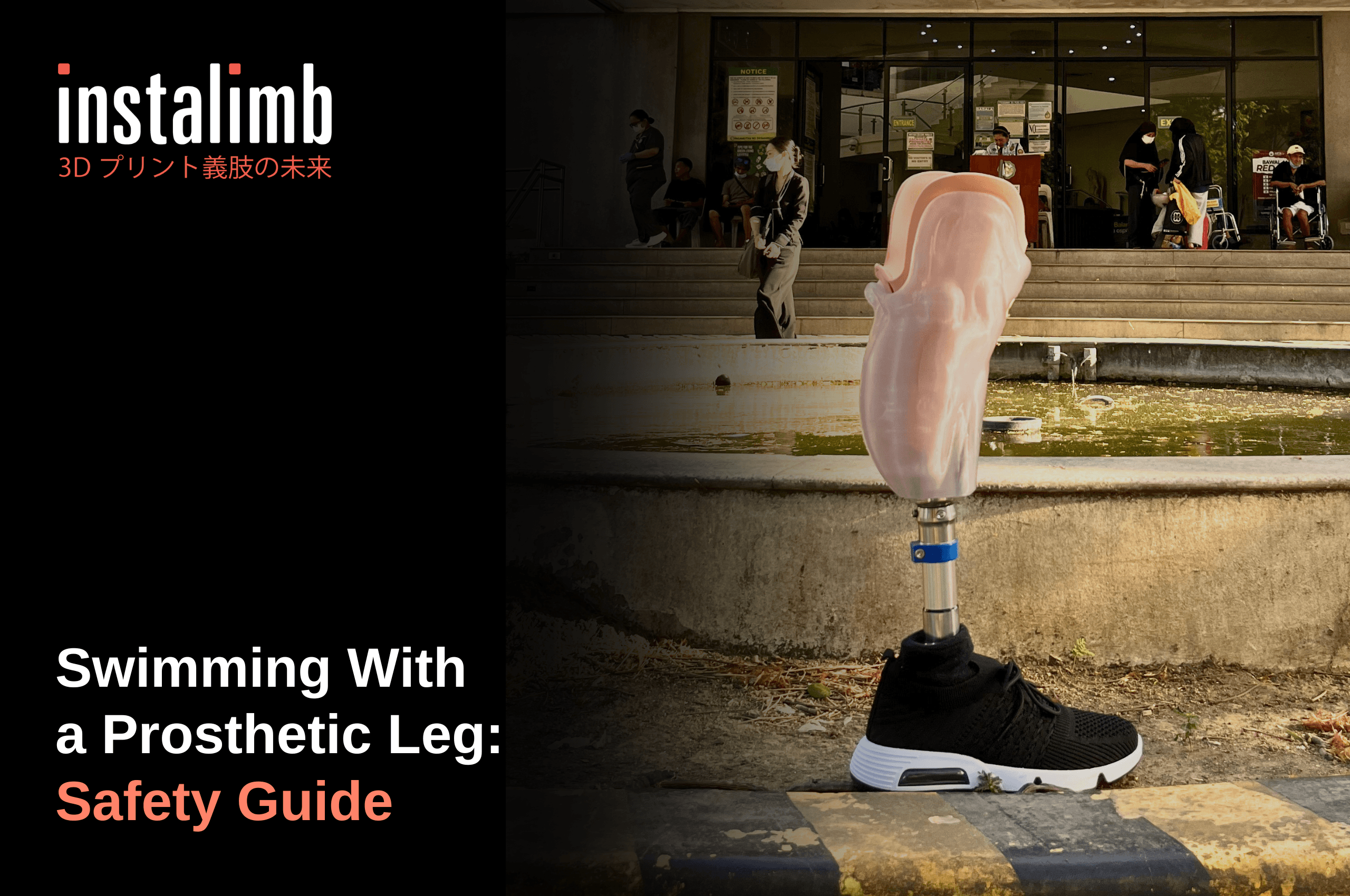
The first time you stand at the edge of a pool after limb loss, one question usually stops you: can you actually get in? Swimming with a prosthetic leg is absolutely possible, and for most amputees it becomes one of the kindest forms of exercise available, whether you keep your leg on with a water-ready design or take it off and swim freely. Let us walk you through both paths so you can choose what feels right for your body.
What Is a Water-Resistant Prosthetic Leg?
A water-resistant prosthetic leg, often called a swim leg or water leg, is a prosthesis built or adapted with corrosion-resistant parts, small drainage holes, and a grippy sole for use in a pool, at the beach, or in the shower. The drainage holes let water pass through so the limb does not turn into an unwieldy float.
Think of it less like your everyday walking leg and more like a pair of water shoes built specifically for your body. It trades a bit of everyday polish for parts that can handle chlorine, salt, and repeated wetting without rusting or swelling. Some amputees keep a dedicated water leg for this purpose, while others simply remove their regular leg and swim without it.
Why Swimming Is Good for Amputees
Water does something land exercise cannot: it holds you up. Buoyancy supports your body weight, so there is no impact on your residual limb, joints, or lower back while you move. Research on aquatic exercise for people with lower limb amputation has shown meaningful improvements in both physical function and psychosocial wellbeing compared with staying inactive.
Hydrotherapy sessions guided by a physiotherapist can also improve circulation, ease muscle tension, and build cardiovascular endurance in a way that feels gentle rather than punishing. For many amputees, the pool becomes the one place where their body feels weightless instead of watched.
Swimming With Your Prosthetic Leg On
If you want to keep your leg on in the water, a proper water-ready design changes the experience. One notable innovation is a 3D-printed swim prosthesis lined with small conical channels that let water pass through, creating natural drag and propulsion as you kick, tested successfully with amputee swimmers and published in a peer-reviewed rehabilitation journal.
This is exactly the kind of design thinking behind Instalimb. As the world's first 3D-printed prosthetic leg provider, powered by Japanese technology, we use 3D-CAD and AI to shape sockets at 1mm-level precision, which makes it possible to build drainage channels and water-friendly features into a custom design rather than forcing a generic shape onto your limb. If a water leg interests you, it is worth raising with your prosthetist during a fitting.
Swimming Without Your Prosthetic Leg
Many amputees prefer to simply remove their leg and swim unassisted, using arm strength, a pool noodle, or a friend's support to get in and out safely. This avoids any concern about corrosion or long-term wear on your everyday leg altogether.
-
Choose a pool with steps or a ramp rather than a high ladder for easier entry and exit.
-
Ask a lifeguard or companion to stay nearby the first few times you swim without your leg.
-
Practice hopping or crawling safely to and from the water's edge before you attempt it alone.
There is no single right way to swim as an amputee. The best method is whichever one lets you relax and actually enjoy the water.
Protecting Your Skin and Socket After Swimming
Water, chlorine, and monsoon-season humidity across Indian cities can all affect the skin on your residual limb, so a little aftercare goes a long way. Rinse your residual limb with clean water after a pool or sea swim, dry it completely, and check for redness, softening, or irritation before you put your regular liner back on.
If you swam in a natural water body, be extra careful about cuts or scrapes, since standing water can carry infection risk. A dry, well-inspected limb is what keeps your next fitting comfortable, not just your next swim. Our post on [skin care do's and don'ts after amputation] covers this in more detail.
Frequently Asked Questions
Can you swim with a prosthetic leg?
Yes, you can swim with a prosthetic leg using a water-resistant or swim-specific design with drainage holes and corrosion-resistant parts, or you can remove your regular leg and swim without it. Both approaches are common and safe with the right precautions, and the choice usually comes down to personal comfort and how you plan to move in the water.
What is a water leg or swim leg?
A water leg, also called a swim leg, is a prosthesis built or adapted for wet conditions with corrosion-resistant components, drainage holes that let water flow through instead of trapping it, and a grippy sole for pool decks or wet surfaces. It is designed to handle repeated exposure to chlorine, salt water, and moisture without damage.
Is swimming good exercise for amputees?
Yes, swimming is considered one of the best exercises for amputees because water buoyancy supports body weight and removes impact on the residual limb and joints. Research on aquatic exercise for people with lower limb amputation shows it can improve both physical function and psychosocial wellbeing compared with inactivity or land-based exercise alone.
How do you protect your skin after swimming with a prosthetic leg?
Protect your skin by rinsing your residual limb with clean water right after swimming, drying it fully, and checking closely for redness, softening, or small cuts before reapplying your liner. This matters even more after swimming in chlorinated pools or natural water bodies, where moisture and bacteria can irritate sensitive skin.
Can children with prosthetic legs swim safely?
Yes, children with prosthetic legs can swim safely with adult supervision, either using a properly fitted water-ready design or removing the prosthetic and swimming unassisted with support. Swimming is often encouraged for children because the low-impact nature of water play supports joint health while they stay active and social with peers.
Conclusion
The water does not care what your leg looks like, only that you show up. Whether you swim with a water-ready design or without your prosthetic at all, the pool can become a place of ease instead of hesitation. With the right precautions and a little planning, your next swim is well within reach.
Check out our blog section for more!
So, if you‘re looking for a new artificial leg, interested in a free consultation, confused if your socket is the right fit, or have any other queries, now is the time to reach out to us and try a test socket free of cost. Step it up with Instalimb - Contact us today!
Recent Posts
July 27, 2026
July 21, 2026
July 17, 2026
July 15, 2026
June 30, 2026
June 18, 2026