Dry Cracked Skin on Residual Limb: Winter Care Tips
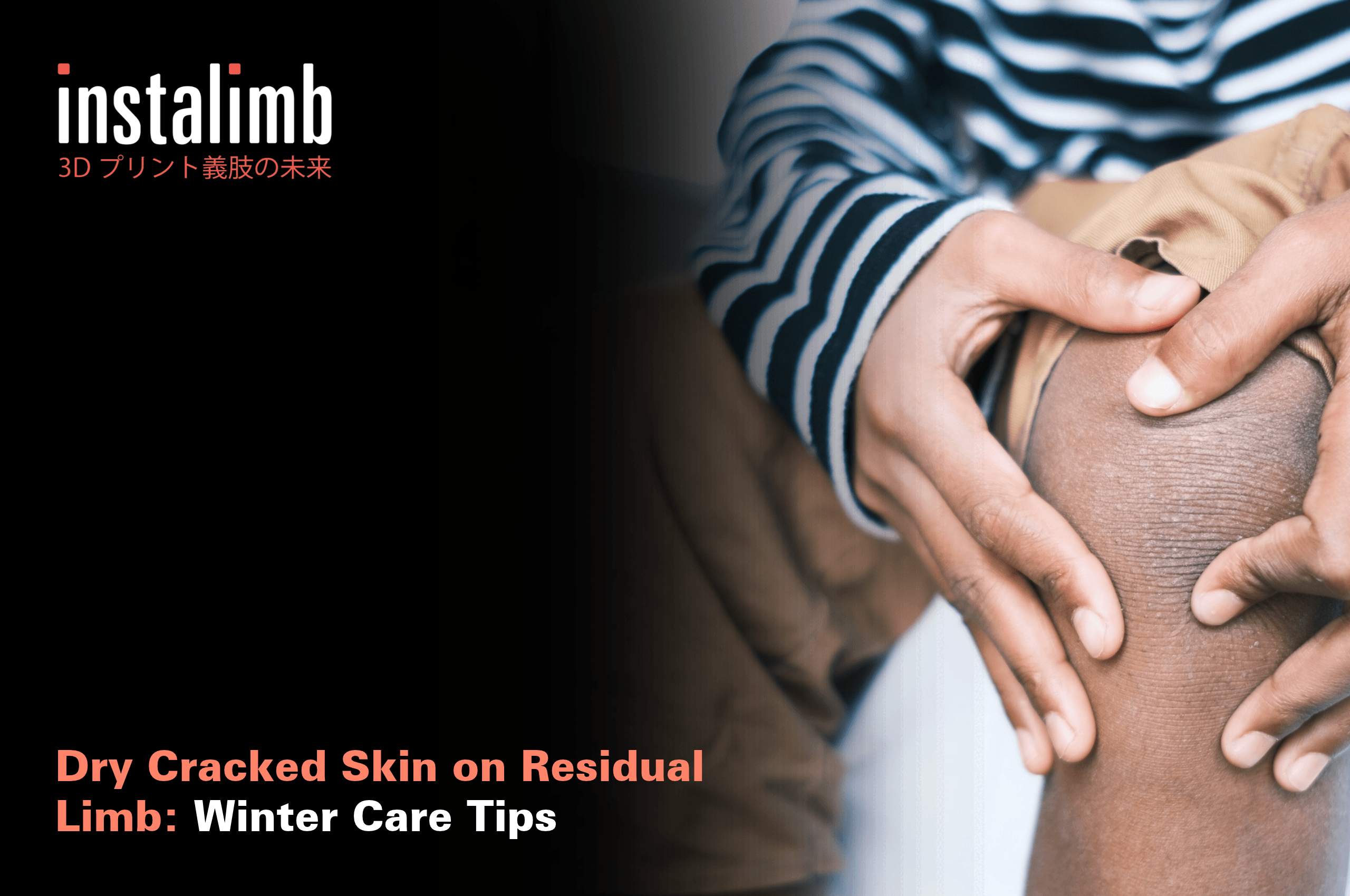
If the skin on your residual limb feels tight, flaky, or painfully cracked this winter, you are far from alone. As temperatures drop across Delhi, Gurugram, Hyderabad, Bangalore, Mumbai, and Vizag, dry, cracked skin on the residual limb becomes one of the most common complaints among prosthesis users in India.
The good news is that with the right daily care and the right socket fit, this is very much manageable. It is not something you simply have to endure.
What Causes Dry, Cracked Skin on the Residual Limb in Winter?
In winter, cold air and indoor heating lower humidity and reduce your skin's natural moisture and lipid production. Inside a prosthetic socket, friction and pressure strip away what little natural oil remains, weakening the skin barrier. This raises water loss through the skin, leaving residual limb skin prone to cracking, irritation, and sores.
Across India, prosthesis users describe winter changes to the residual limb (sometimes called the stump) in strikingly similar terms. Three overlapping factors are usually at play:
-
Cold, dry air and indoor heating. Heaters, hot showers, and harsh wind wear down the skin's protective barrier. This speeds up transepidermal water loss (TEWL): how fast moisture escapes through the skin, much like a cracked lid lets a pot boil dry faster. As TEWL climbs and your skin's own lipid production drops in winter, skin becomes drier and tighter. It is then more likely to crack, a condition known medically as xerosis (Gade et al., StatPearls, 2023).
-
Socket friction on already-dry skin. Daily friction and pressure inside the socket strip away natural oils faster than cold air alone. This is why up to 75% of people who use a lower-limb prosthesis report some kind of skin problem, with more than 80% of these linked directly to the prosthesis itself (Lannan & Meyerle, Cutis, 2019).
-
Diabetes and other risk factors. Xerosis is especially common in people with diabetes. Since diabetes is the leading cause of limb loss in India, many amputees are already managing skin that dries out and heals more slowly than average.
Dry Skin or Something More? When Cracking Signals a Problem
Not all winter dryness is cause for worry, but it helps to know the difference between ordinary flakiness and an early warning sign.
Mild dryness, light flaking, and occasional tightness after a long day in your socket are common and usually respond well to a good moisturising routine. A developing pressure sore feels different: a spot that stays red, tender, or warm even after you remove the prosthesis, or a crack that will not close over with regular care.
Dermatologists call severe, deep cracking eczema craquelé (picture dry, cracked earth after a drought), a pattern that worsens in cold weather and needs more than routine moisturising to heal.
Watch for these red flags:
-
Pain, stinging, or burning at one specific spot
-
An unusual smell, discharge, or oozing from a crack
-
Numbness, or skin that looks different but does not hurt, which is common with reduced sensation
-
A crack or sore that keeps reopening in exactly the same place
That last point matters more than people realise. If dryness and cracking keep returning to one specific spot, it is rarely just a skin care issue.
It usually means your limb's shape has shifted slightly with the season and the socket is now pressing unevenly, a pattern we explore in our post on why sockets can feel loose in cold weather. Instalimb builds sockets using 3D printing and AI-assisted scanning to within 1mm of your limb's exact shape. Because of this precision, even a small shift can be caught and corrected, rather than left to keep damaging the same patch of skin.
A Daily Winter Skin Care Routine for the Residual Limb
A simple, consistent routine protects your skin far better than reacting once cracks appear. For a complete breakdown, see our full post-amputation skin care do's and don'ts; here is the winter-specific version.
Morning
-
Check the limb in good light before putting on the prosthesis, looking for redness, dryness, or cracks
-
Apply a thin layer of moisturiser and let it absorb fully before donning your liner, so the skin is not slippery inside the socket
Evening
-
Clean the limb gently with a mild, fragrance-free cleanser to remove sweat and friction residue
-
Moisturise again while the skin is still slightly damp, which locks in moisture far better than applying cream to bone-dry skin
Choosing a moisturiser: look for fragrance-free creams built around ceramides or urea, both of which support the skin's natural barrier. Avoid heavily perfumed lotions or products with high alcohol content, which dry the skin further.
Bathing and hygiene: keep showers warm rather than hot, since very hot water strips the natural oils you need most. Dry the limb thoroughly, including skin folds, before dressing or donning the socket, since trapped moisture is just as damaging as dryness itself. As Dr Chiranjiv Chhabra of Alive Wellness Clinics put it in a recent interview, “in winter, prevention works better than repair.”
North vs South India: Adjusting Care by Climate
Winter does not feel the same everywhere in India, so your skincare should flex with it.
In Delhi-NCR, including Gurugram, winter nights can fall close to freezing, and homes and offices often run heaters for weeks at a stretch. Indoor heating dries the air further, and North India's heavier winter pollution adds another irritant that can aggravate already sensitive skin. If you live in this region, expect to moisturise more often and more generously, and keep a closer watch for cracking at pressure points.
Hyderabad, Bangalore, Mumbai, and Visakhapatnam see milder winters, but do not assume your skin is safe. Fans, air conditioning used out of habit, and indoor heating on cooler nights can still dry the skin around the socket, even when the outdoor air feels comfortable. The lesson across every city is the same: residual limb skin care is a year-round habit, not just a North Indian concern.
Extra Care for Diabetic Amputees and Caregivers
Diabetes changes how closely you need to watch your skin. Diabetic neuropathy, nerve damage that reduces sensation, means many people cannot feel a crack forming until it has already become a sore. Combined with slower healing, this makes winter skin care a genuine priority rather than an afterthought. See our five daily habits for diabetic limb care for a fuller routine.
Caregivers play a crucial role here, especially for elderly or diabetic amputees who may not notice changes themselves. A simple daily checklist helps:
-
Look over the entire limb in good light, not just where the socket sits
-
Feel for warmth, swelling, or hardened patches, not only visible redness
-
Check skin folds and the socket's edge, where moisture often collects
-
Ask directly whether anything feels different, since some changes are felt before they are seen
For a complete walkthrough of this role, read our caregiver guide for amputees. A few extra minutes each day can prevent a small crack from becoming a much bigger setback.
When to See a Prosthetist or a Dermatologist?
Knowing who to call and when takes the guesswork out of a stressful moment.
See a doctor promptly if you notice open cracks with bleeding, pus, spreading redness, warmth, swelling, or fever. These can signal infection and need quick attention, particularly if you have diabetes.
See a prosthetist if dryness or soreness keeps clustering at the same contact point, returns every winter, or shows up alongside a socket that suddenly feels tighter or looser than usual. This combination usually points to a fit issue, not just a skincare gap. At Instalimb, every clinic offers a test socket fitting, letting you check your limb's current shape and skin condition against your existing socket well before dryness forces a pause in walking.
Frequently Asked Questions
Q1: Is dry, cracked skin on my residual limb normal in winter, or is it a sign of a problem?
Some winter dryness is normal, but cracked, painful, or bleeding skin is not and needs attention. Cold air, low humidity, and indoor heating lower the skin's moisture and natural lipid production, a condition called xerosis. Friction and trapped moisture inside a prosthetic socket make this worse. If dryness progresses to visible cracks, redness, or soreness at socket contact points, treat it as a signal to check both your skin care routine and your socket fit, not something to wait out.
Q2: How can I prevent and treat cracked skin on a residual limb in winter?
Prevention centres on daily moisturising with a fragrance-free, ceramide- or urea-based cream. Apply it right after removing the prosthesis, while skin is still slightly damp, and clean gently beforehand to remove sweat and friction residue. Avoid very hot showers, which strip natural oils, and check the liner and socket for rough edges that cause friction. As the earlier dermatologist's advice sums up, a little daily prevention beats repairing damage later, so a consistent routine matters more than reacting once cracks appear.
Q3: Will cracked skin on my residual limb stop me from wearing my prosthetic leg?
Yes, if the cracks are deep, painful, or at risk of infection, most prosthetists and doctors recommend resting the limb from the socket until it heals. Continued pressure and friction on broken skin can deepen the crack or introduce infection, especially for people with diabetes. Mild dryness without open skin usually does not require stopping use, but it still calls for closer checks, better moisturising, and a socket-fit review, since healing can take days to weeks depending on severity.
Q4: How is cracked skin linked to a loose or ill-fitting prosthetic socket?
Cracked skin is often a downstream sign that the socket no longer matches the residual limb's current shape. Cold weather can cause limb-volume changes that alter fit alongside skin dryness. A socket that sits unevenly concentrates friction and pressure on specific skin areas, accelerating cracking in spots that would otherwise just be dry. If cracking recurs at the same point on the limb each winter, it is worth having the socket reassessed rather than only treating the skin.
Q5: When should I see a doctor or my prosthetist about residual limb skin problems?
See a doctor promptly if skin shows open cracks with bleeding, pus, increasing redness, warmth, swelling, or fever. These signs can signal infection, which is especially important to catch early for amputees with diabetes. See a prosthetist when dryness or soreness clusters at specific contact points, recurs each winter, or coincides with the socket feeling tighter or looser than before, since this points to a fit issue rather than skin care alone. Caregivers should check the limb daily for any of these changes.
Conclusion
Dry, cracked skin on the residual limb is one of the most common challenges of an Indian winter. It is also one of the most fixable.
With a steady daily routine, close attention to warning signs, and a socket that still matches your limb's shape, you can keep walking through the coldest months without interruption. At Instalimb, we have designed over 500 prosthetics across Delhi, Hyderabad, Bangalore, Mumbai, and Vizag. We combine 3D printing and AI-assisted scanning to build sockets with 1mm precision, so your fit keeps pace with your skin and your life through every season.
Check out our blog section for more!
So, if you‘re looking for a new artificial leg, interested in a free consultation, confused if your socket is the right fit, or have any other queries, now is the time to reach out to us and try a test socket free of cost. Step it up with Instalimb - Contact us today!
Recent Posts
November 26, 2026
November 19, 2026
November 18, 2026
November 12, 2026
November 10, 2026
November 5, 2026
November 5, 2026
October 30, 2026
October 23, 2026