Prosthetic Leg Fall Prevention: Winter Safety Guide
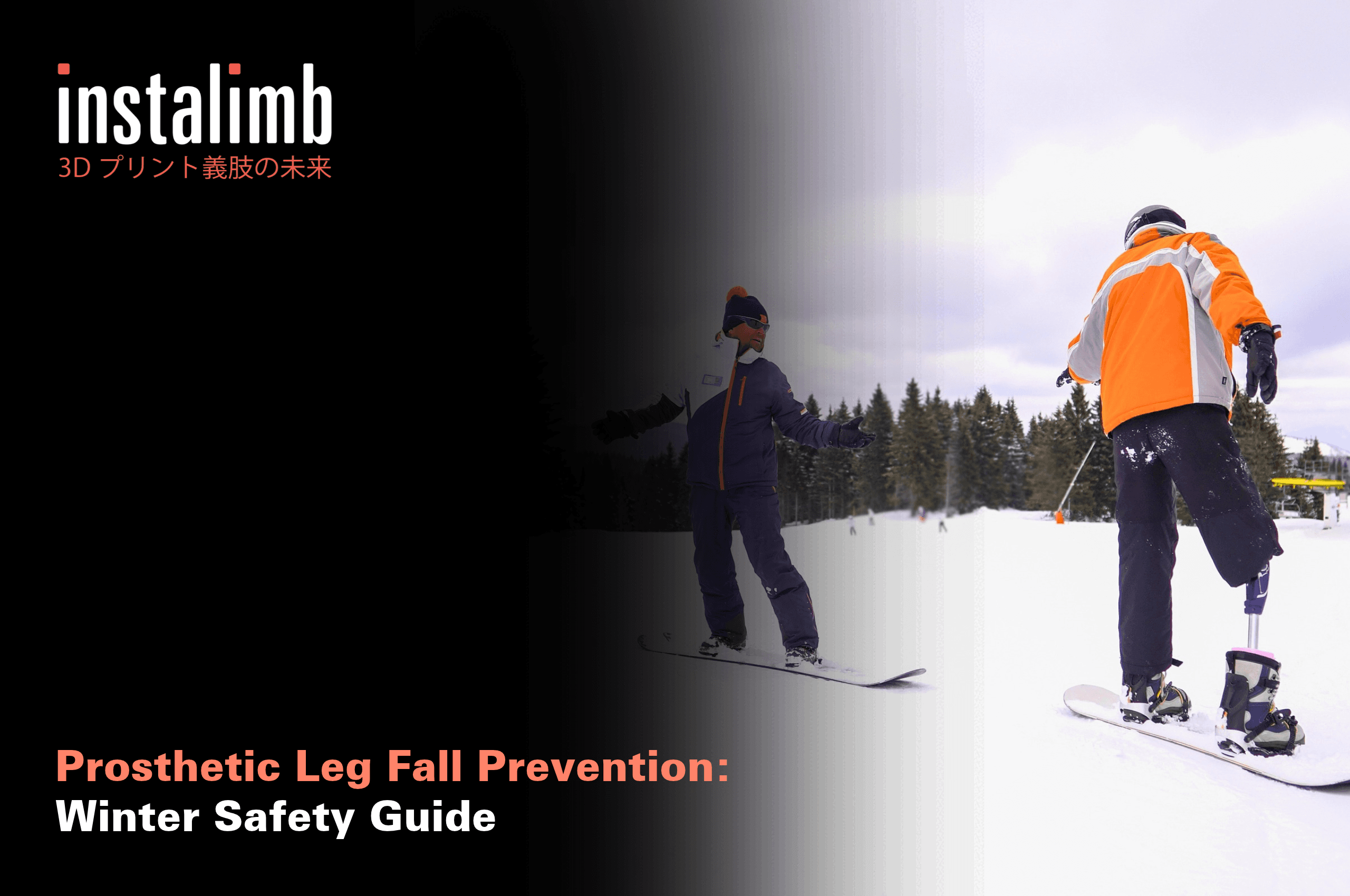
If you've ever held your breath at the top of a frosty step or a wet stone ghat, wondering whether your prosthetic foot will hold, you're not imagining the risk. Prosthetic leg fall prevention matters most exactly where Indian winters get tricky: frosty hill-town steps in Shimla and Manali, misty mossy stone in Ooty and Munnar and crowded market lanes with no handrail in sight. The good news is that most falls in these settings are preventable with the right preparation, not luck.
Why Walking on Ice with a Prosthetic Leg Feels Riskier Than It Looks?
A prosthetic foot cannot feel ice, mist or wet stone the way skin does, so a slip often begins before you notice anything is wrong. Combine that missing sensory feedback with the naturally slower, more deliberate gait most amputees already use, itself a recognised fall-risk marker, and icy or wet ground becomes measurably riskier than dry, level pavement.
Think of it like wearing noise-cancelling headphones near traffic: the sensory channel that would normally warn you is simply switched off. Your eyes and your sound-side leg end up doing extra work, scanning the path two or three steps ahead instead of reacting in the moment.
This is especially true in hill towns. Even a short visit to Shimla or Manali often means stepping straight from a warm plains climate onto frost-covered stone, with no day to acclimatise.
The risk is higher still for some users. Above-knee amputees face a materially higher fall risk on uneven, sloped or wet ground than below-knee users. They must actively stabilise an artificial knee joint as well as the foot and ankle.
This is also where precision fitting matters most. Instalimb's 3D-printed sockets are aligned using AI-assisted measurements accurate to within 1mm, built specifically to hold steady when the ground does not.
The Real Fall-Risk Numbers for Amputees, in India and Globally
The numbers back up what your instincts are already telling you, and they're worth pausing on rather than skimming past. The World Health Organization's Falls fact sheet estimates roughly 842,000 fall deaths worldwide each year, making falls the second-leading cause of unintentional injury death globally, with the South-East Asia region, which includes India, carrying the largest regional share of any WHO region.
For lower-limb amputees specifically, the risk runs higher still. More than half of people with lower-limb amputation fall at least once a year, according to a 2025 review in Cureus (Santos-Faria et al.).
Among older, geriatric amputees specifically, the figure climbs to around 80%; 64% fall more than once in a year. These numbers come from a 2020 review in Current Geriatrics Reports (Clemens, Doerger & Lee), citing earlier research by Ulger and colleagues.
Closer to home, a 2022 BMC Public Health study looked at older adults across seven Indian states (Srivastava & Muhammad). It found that walking disability nearly doubled the odds of a fall-related injury.
One simple screening tool is worth knowing: the Timed Up and Go (TUG) test. You rise from a chair, walk three metres, turn and sit back down.
The same 2025 Cureus review found that a TUG time of 18 seconds or longer is linked to meaningfully higher annual fall risk. At that cutoff, the test caught every faller in the study, a 100% sensitivity rate.
Two Kinds of Slippery: Snow and Black Ice vs Misty Wet Stone
Not all winter danger looks the same, and knowing which kind you're walking into changes how you prepare. In the northern hill-station belt, Shimla, Manali and the higher districts of Himachal Pradesh, including Lahaul-Spiti, authorities issue recurring black ice advisories through the season. Black ice forms when rain, dew or mist freezes into a thin, often invisible layer on roads, stone paths and steps. It is particularly dangerous for prosthetic users because a prosthetic foot has no sensory nerve endings to warn of a slip the way a natural foot can.
South Indian hill stations tell a different story. Ooty and Munnar rarely see snow or ice in winter, but heavy dew, mist and wet, mossy stone paths through December create their own slip hazard, one that's often underestimated because there is no snow in sight.
Whichever kind of slippery you are heading towards, the same uneven-terrain techniques apply: shorter steps, a wider stance and full attention on the path ahead.
Prosthetic Leg Fall Prevention: Your Pre-Travel Checklist
A little preparation before you travel does more for fall prevention than anything you can do once you're on an icy step. Run through this checklist one to two weeks before departure:
-
Add a traction aid, such as ice grips or a cleated rubber oversole, to your existing prosthetic foot shell or shoe, rather than assuming you need an entirely new foot.
-
Book a pre-hill-season test fitting and alignment check, since cold weather can already loosen your socket fit even before slippery ground enters the equation.
-
Ask specifically about above-knee versus below-knee precautions, since an above-knee amputee stabilising an artificial knee joint needs a different safety margin from a below-knee user.
-
Pack a walking aid such as a cane, even if you rarely use one at home, for the extra point of contact that icy steps demand.
-
Choose footwear with genuine tread, not smooth leather soles, and check it against your prosthetic foot's usual fit.
This is the same kind of precision check your prosthetist can run before you travel. At Instalimb, our team has designed over 500 prosthetics across Delhi, Gurugram, Hyderabad, Bangalore, Mumbai and Vizag. A seasonal fit-and-alignment check is a routine, five-minute part of what we do, not an inconvenience.
On the Ground: Market Lanes, Temple Steps, Wedding Functions and Bus Stands
Once you've managed to get to the hill station safely, whether by train, bus or taxi, the risk shifts to ordinary, everyday moments. The real test begins once you're actually in town. Temple and ghat steps are frequently wet from ritual water use, and local etiquette may ask you to remove footwear or wear only socks, removing your traction entirely. Ask a companion to check the step surface first, and consider slip-resistant socks if barefoot stone is unavoidable.
Crowded market lanes and bus-stand platforms rarely have handrails, and the uneven, sloped stone common in older hill towns can hide ice in shaded corners even when the main road looks dry. Slow down deliberately in shaded patches and doorways, where frost lingers longest.
Wedding season brings its own test: formal footwear is rarely built for grip. Pack a spare pair with a proper sole for the ceremony's outdoor portions, and switch back only if the ground is genuinely dry.
If You Do Slip: Fall Recovery and When to Call Your Prosthetist
If a slip does happen, how you recover matters as much as preventing it in the first place. Stay still for a moment first, and then work through this order:
-
Check your residual limb, socket edges and sound-side joints for pain or swelling before attempting to stand, since adrenaline can mask an injury in the first minute.
-
Use a railing, step or a companion's arm to push up slowly, rather than twisting the prosthetic knee or ankle to recover balance.
-
Inspect the prosthesis itself for cracks, looseness or an unusual sound before walking on it again.
Call your prosthetist rather than pushing through the day if you notice new pain, a socket that suddenly feels different or any visible damage.
The Caregiver's Role: What Actually Helps
If you're travelling with someone who uses a prosthetic leg, your instinct may be to hover or hold their arm the entire time, but that isn't always what helps most. Scouting the path two or three steps ahead and naming hazards out loud, “wet patch on your left”, give them the information their prosthetic foot cannot.
Carry a spare traction aid or cane rather than offering your arm as the only support, since that preserves their independence while still adding a safety margin. For guidance on how to help without overstepping, read up on the balance between support and independence before you travel, not after a fall.
Frequently Asked Questions
Q1: Can I wear my regular prosthetic foot on ice and snow, or do I need a special one?
Most people do not need a new prosthetic foot for a short hill-station trip. The simplest, most effective fix is adding a traction aid, such as ice grips or a cleated rubber oversole, to the existing foot shell or shoe. For an extended stay in a snow-and-ice region, ask a prosthetist about a textured winter sole, but a seasonal fit check matters more than new componentry.
Q2: Why can't I feel when my prosthetic foot is about to slip?
A prosthetic foot has no nerve endings, so it cannot send the same real-time traction and pressure signals a natural foot sends to the brain before a slip happens.
Prosthetic users compensate visually, by scanning the path ahead, slowing down on wet or icy patches and adding a cane or handrail for extra points of contact, since the foot itself gives no early warning.
Q3: Are above-knee amputees more likely to fall on ice than below-knee amputees?
Yes. Above-knee (transfemoral) amputees face a higher fall risk on uneven, sloped or wet ground than below-knee (transtibial) amputees. They must control an artificial knee joint as well as the foot and ankle, which leaves less margin to recover from a sudden slip.
This makes slower walking, traction aids and a pre-trip check-in with your prosthetist especially important for transfemoral travellers.
Q4: What should I do if I fall on a temple step, ghat or crowded market lane?
Stay still for a moment and check the residual limb, socket edges and sound-side joints for pain or swelling before standing, since adrenaline can mask an injury in the first minute.
Use a railing, step or a companion's arm to push up slowly rather than twisting the prosthetic knee or ankle, and have a prosthetist check the limb and prosthesis afterwards even if nothing looks visibly wrong.
Q5: How can I prepare my prosthesis before a winter trip to a hill station like Shimla, Manali or Ooty?
Book a fit-and-alignment review with your prosthetist a week or two before departure. They can test your socket fit, foot alignment and traction, since a minor fit issue on flat ground becomes far riskier on icy steps or wet stone.
Pack a traction aid for the foot sole and bring a walking aid such as a cane. Plan your footwear around local floor norms too, like temple, ghat or hotel steps.
Conclusion
A hill-town winter trip doesn't have to be something you approach with dread. With the right traction aid, a seasonal alignment check and a little situational awareness on temple steps and market lanes, you can walk into Shimla's frost or Ooty's mist with confidence instead of hesitation. Instalimb's 3D-printed, AI-aligned fit is built for exactly these moments, so fall prevention becomes less about avoiding the mountains and more about showing up for them prepared.
Check out our blog section for more!
So, if you‘re looking for a new artificial leg, interested in a free consultation, confused if your socket is the right fit, or have any other queries, now is the time to reach out to us and try a test socket free of cost. Step it up with Instalimb - Contact us today!
Recent Posts
November 25, 2026
November 19, 2026
November 18, 2026
November 12, 2026
November 10, 2026
November 5, 2026
November 5, 2026
October 30, 2026
October 23, 2026